

Virtual Modagoodē. Virtual Museum
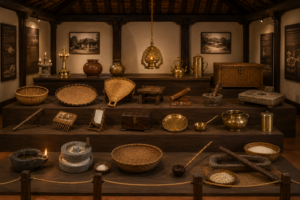
The “ Virtual Modha Goodē listing ” is an attempt made to create a virtual museum and would like to accommodate lots of parameters that will facilitate visitors across the globe. Virtual Museum Visitors will now get to know the location of the artifact as the mapping of the artifact to the location of the artifact will be done as a value addition to the Virtual Modagoodē. This helps researchers in reaching out to their interested articles and gain information
A Seperate Modha Goode is creates under the main secton of Kodavaclan
Contents
Alphabetically
A
- Aal Potti (ಆಲ್ ಪೊಟ್ಟಿ)
- Aal Potti refers to a traditional wooden cupboard used in Kodava households for storing clothes, valuables, and household essentials. Typically crafted from sturdy local wood, it reflects the simplicity and durability of Kodava domestic furniture, often passed down through generations.
- Aare Changole (ಆರೆ ಚಂಗೋಲೆ)
- Aare Changole is a decorative chain-like ornament worn across the chele when men are dressed in the traditional white kupya. It enhances the ceremonial appearance and signifies pride in Kodava identity and attire..
- Agistike (ಅಗಸ್ಟಿಕೆ )
- Agistike refers to burning embers, commonly preserved from the household fireplace. These embers were traditionally used to rekindle fire, symbolizing continuity of the hearth and the central role of fire in Kodava homes.
- Achi koll (ಅಚ್ಚಿ ಕೊಲ್)
- Achi Koll is a slender implement used to fill gunpowder into rifles. It reflects the martial traditions of the Kodavas, where precision and preparedness in handling firearms were essential.
- Adike Kattari (ಅಡಿಕೆ ಕಟ್ಟಾರಿ)
- Adike Kattari is a specialized nipper used to cut areca nuts. As areca nut consumption is deeply embedded in Kodava culture, this tool was an essential part of everyday life and hospitality practices.
- Adaph (ಅಡಾಫ್)
- Adaph is a traditional shoulder bag used for carrying personal items, tools, or provisions. It was commonly used during travel, agricultural work, and hunting expeditions.
- Adoori (ಅದೂರಿ)
- Adoori is a cloth tied around the udder of a cow to prevent the calf from suckling milk before it is collected. This practice reflects traditional methods of livestock management in Kodagu.
- Adcha (ಅಡ್ಚ)
- Adcha is a type of trap used for catching wild animals. It represents indigenous knowledge of forest life and survival techniques practiced in the hilly terrains of Kodagu
- Akki Pittari / Akki Potti (ಅಕ್ಕಿ ಪಿಟ್ಟಾರಿ / ಅಕ್ಕಿ ಪೊಟ್ಟಿ)
- Akki Pittari or Akki Potti is a wooden storage box used to store rice, the staple food of the region. These containers were designed to protect grain from moisture and pests, ensuring long-term preservation.
- Akki Batti (ಅಕ್ಕಿ ಬಟ್ಟಿ)
- Akki Batti is a basket made of bamboo, cane, or reed, traditionally used for storing rice. It is often coated with cow dung to enhance durability and protect against insects, showcasing sustainable practices.
- Akki Komme (ಅಕ್ಕಿ ಕೊಮ್ಮೆ)
- Akki Komme is a large lidded basket made from bamboo or cane, used for storing rice and grains. Its size and structure make it ideal for bulk storage in agrarian households.
- Ambali Kaikane (ಅಂಬಳಿ ಕೈಕಣೆ )
- Ambali Chatuwa is a ladle used in the preparation of ambali, a traditional porridge. It reflects the culinary practices of Kodava households, where simple and nourishing foods were common
- Ambthotti (ಅಂಬ್ತೊಟ್ಟಿ)
- Ambthotti is a quiver used to carry arrows. It forms part of traditional hunting equipment and symbolizes the warrior heritage of the Kodavas
- Ambh Bill (ಅಂಭ್ ಬಿಲ್)
- Ambh Bill refers to a bow used in hunting and warfare. It represents one of the earliest forms of weaponry used in Kodagu.
- Andhkode (ಅನ್ಧಕೊಡೆ)
- Andkode is an umbrella-like ceremonial object made of palm leaves, held over idols during temple processions. It signifies reverence and honor in religious practices.
- Andhol (ಅಂಡೋಲ್)
- Ceremonial Andhol (ಅಂಡೋಲ್): A traditional wooden, bamboo and cane palanquin used to carry deities or honoured persons during ceremonial occasions and processions.
- Funeral Andhol (ಅಂಡೋಲ್): A traditional bamboo-and-cane platform used to respectfully carry the deceased during funeral rites, later commonly referred to as Chatta (ಚಟ್ಟ).
- Anjar Baal ಅಂಜರ್ ಬಾಳ್
- A small traditional knife tied to the leg of a cock during a cockfight.
- Arpa kall (ಅರ್ಪ ಕಲ್ಲು)
- Arpa Kall is a traditional grinding stone used for processing grains and spices. It was an essential tool in every household kitchen before mechanized grinding became common.
- Attani
- A traditional tree-top shelter used by farmers to keep watch over growing crops.
- Avlaki oleke (ಅವಲಕ್ಕಿ ಒಲೆಕೆ)
- Avlaki Oleke is a wooden baton used in the preparation of flattened rice (avlaki). It highlights traditional food processing techniques practiced in Kodagu.
B
- Baal charate (Kaikane ) (ಬಾಳ್ ಚರಟೆ / ಕೈಕಣೆ)
- Baal Charate, also known as Kaikane, is a traditional ladle made from a coconut shell attached to a bamboo handle. It was widely used in Kodava kitchens for serving liquids such as curries and ambali, reflecting the resourceful use of natural materials.
- Batti (ಬಟ್ಟಿ)
- Batti refers to a large basket or pan made from bamboo, cane, or reed. It is typically coated with cow dung to improve durability and resistance to pests, and is commonly used for storing and handling agricultural produce.
- Balnji (ಬಳಂಜಿ)
- Balnji is a large semi spherical basket like enclosure woven from bamboo strips with open spaces. It is traditionally used for storage, drying, or protecting agricultural produce, particularly in outdoor settings.
- Beejo Kall / Beejwa kal
- Grinding stone used to make flour in kitchen
- Bindige
- Pot to carry water or to draw water from the well
- Biraali potti
- Storage unit made of cane storage unit used for keeping clothes and household textiles.
- Bille
- Bille is a traditional flat, round gold ornament worn along a bride’s plait.
- Bogani
- Large Basinn used for hosehold activities.
- Bolcha ಬೊಳ್ಚ
- lamp
- Mann Bolcha
- Lamp Made of Mud / Clay
- Kall Bolcha
- Lamp Made of stoneThook Bolcha (ತೂಕ್ ಬೊಳ್ಚ)
- Thook Bolcha (ತೂಕ್ ಬೊಳ್ಚ)
- Hanging lamp made of Bronze / Brass
- Thaliyathakki bolcha
- A silver or bell metal plate with a layer of rice with a small mud or brass oil lamp lit with wicks betel leaves – betel nut
- Kuth Bolcha
- Standing lamp made Bronze, Brass or even steel now a days
- Ceemanne / Thiri Bolcha
- Lamp used with kerosene oil during nights
- Mann Bolcha
- lamp
- Bolcha parr
- lamp holder
C
- Chandukha ಚಂದುಖ
- Chandukha is a traditional storage container used in Kodava households for keeping valuable and important belongings. Different forms of Chandukha were made using materials such as wood, mud and iron.
- Chatti
- vessel
- Mann Chatti
- Mann Chatti is a traditional vessel made from mud or clay. Earthen vessels were once an important part of household life, particularly in kitchens where naturally made vessels were used for a variety of purposes.
- Baal Chatti
- Baal Chatti is a traditional cooking vessel distinguished by its long handle.The handle allowed the vessel to be held and moved while cooking, providing greater control and keeping the user farther away from the heat.
- Cheen Chatti
- Cheen Chatti is a traditional metal vessel associated with an interesting local story about its name and origin.
- Mann Chatti
- vessel
- Chele
- Chele is a waist band to secure the kupya worn by Kodava men.
- Cheepu
- Jwellery storage unit
- Cholle
- small conical cup made from leaf
- Chombh
- Small metal Pot to draw water
- Chowri
- False hair
- Chowri
- Fly Whisk
D
E
- Eli kathari
- The Eli Kathari is a traditional mouse trap once used in Kodava households and agricultural spaces to control rodents.
- Enne charak
- Used to heat hair oil (usually for brides and pregnant women)
G
- Gejje thand
- Sacred wand
- Gujaayee
- earthern water pot
H
- Hande
- Large Vessel to heat water
K
- Kaachankal mooppe
- unit to store liquor made of mud or dry bottle guard
- Kadawoo
- wooden slippers
- Kadiyo kall
- grinding stone
- Kadthale
- Sword used during thirola
- Kaikane ( Baal Charate )
- Kaikane, is a traditional ladle made from a coconut shell attached to a bamboo handle. It was widely used in Kodava kitchens for serving liquids such as curries and ambali, reflecting the resourceful use of natural materials.
- Kaikane Neele
- Ladle rack
- Kaiko0l
- stick used for neutralizing a bull
- Kall kaatchwa kudi
- used to make liquor
- kall mana
- unit of measure (weight)
- Kanjikala
- storage unit for rice porridge
- Kark poda
- fish trap
- Kathi nale
- knife/dagger/sword hanger
- Kathi
- Odi kathi
- sword used by kodava during warfare
- Peeche kathi
- Pule kathi
- knife used to collect leaves from tall trees and cutting bamboo
- Pill kathi
- used to cut paddy and grass
- Aamb kathi
- used for kailpodh festival / used by women during warfare
- Paliya kathi
- A stool like wooden platform mounted with knife & cocnut grater
- Odi kathi
- Kattole
- Kattole is referred to door frame. A rectangular frame into which a door is fitted.
- Kindi
- A small metal pot or vessel with a narrow spout.
- Keer
- Parle Balli keer ಬಿಲ್ಲೆ ಪರಲೆಬಳ್ಳಿ ಕೇರ್
- Kodiyaale kutt
- mortar and pestle specially used for Bettle leaves
- Kodiyaale Cheela
- Pouch specially used for carrying Bettle leaves & areca nuts
- Kokoriya
- large wooden ladle
- Kokke kool
- Kokke Thand kool ಕೊಕ್ಕೆ ಥಂಡ್ ಕೋಲ್ walking stick
- Kombh Vadya
- Musical Instrument used during valaga
- Komme
- grocery storage unit made of cane used to keep otti, rice etc
- Kool chibbi
- rice strainer
- Kooparr
- wodden plate used to strain rice while cooking
- Koramb
- unit to store fish catch
- Koramba Kode / Kori kode
- umbrella like item placed on one’s head to protect against rain; and were commonly used in the ancient days.
- Kotta
- Kuri kotta
- used to carry kuri ( basma ) ( Vibhuthi )
- Chand kota
- used to carry sandal wood paste
- Bandha / Sambrani kotta
- used to carry dhuppa ( Resin powder )
- Chill kotta
- used to carry gun powder and pellets.
- Kuri kotta
- Kothiri
- Traditional Temporary Ritual Wick
- Kudke
- cooling mud pot
- Kull kudike
- unit of storage for small rice
- Kumbala komme
- Storage unit in shape of pumpkin, made of cane
- Kuthi
- Container made from hollowed bamboo
- Kupaya
- Kodava man’s traditional formal attire
- Kuri mukali
- tristool used at wedding for the bride & the bridegroom
M
- Maalmatta poti
- jewellery box made of bamboo/cane
- Maana
- unit of measure (2 paawu)
- Mambata
- vessel for pregnant women to eat rice
- Mamblocha
- earthen lamp
- Mande Thuni
- Mande-tuni is a gilted turban
- Mandh koll
- stirrer for curd, used to fill gunpowder to rifles
- Mangaruva
- earthen pot
- Mathh
- sword used for firewood
- Methe (Thalmethe)
- Pillow
- Mimbaal
- knife used for specially for cleaning fish ( Sometimes for other meat too )
- Morekuthi
- butter churner
- Mori
- Flute like instrument used in valaga
- Mukkali
- A tripod stool.
- Muskoli ಮುಸ್ಕೊಲಿ
- Muskoli is a traditional red ceremonial cloth used by both Kodava brides and grooms during weddings.
N
- Naengi uyyapaar
- used to loosen mud
- Nalekerr
- Rope to tie the cradle
- Noga
- a thick stick put on top of the bulls neck to navigate them during irrigation period
- Nooputt Ural / Nooputt ora
- equipment made out of wood to make string rice hoppers (noolput)
O
- Oleke
- baton/wooden rod for separating the husk from the rice
- Ole
- Fireplace
P
- Paani kall
- unit of measure (weight)
- Paath mora
- sieve used to separate paddy and husk
- Paav kall
- unit of measure (weight)
- Paliya
- low level stool
- Pandhi Dhoni
- Vessel to feed pigs
- Panemgathi
- used to retrieve toddy
- Pare
- unit of measure (10 serr)
- Pombala potti
- jewellery box made of bamboo/cane in two layers
- Pondhaya chanduka
- wooden box used to store valuables like jewels and money
- Pondhi
- fire ball or firing the gun or in a bow and arrow
- Pooliya
- Puthari kuthi
- article used during puthari
- Puthari pache
- basket used during puthari season / used to store fresh paddy
S
- Sekala/ chekala
- Vessel used to bake with steam
- Seerr
- unit of measure
T
- Thaala
- Cymbals used along with the valaga
- Thaliya
- Plate
- Thaye bollaange
- land leveller
- Thennkala
- vessel to breed honey bees (hive)
- Thokk
- Thiri thokk
- muzzel loaded macthlock gun
- Cape Thook / Kepp thokk
- muzzel loading Capslock gun
- Jood kolo thokk
- double barrel gun
- Thook Neele
- Gun Rack
- Thiri thokk
-
- a round pad made from soft material, placed on the head to cushion the load while carrying heavy loads on head
- Thodang
- it is worn by the bridegroom on his wedding which is made of silver.
- Thoorathand
- walking stick
- Thott
- cradle
- Thookathra kall
- weights to weigh anything
- Thood
- Ancient Torch
- Thuliya
- paddy storage unit made of cane
- Thupp kolaambi
- spittoon
- Thoorathra Thate
- plate made of cane
U
- Udhi
- rope used for hanging butter/ butter pot holder unit to store cardamom cow bells
- Ubbandi
- Ubbandi refers to two flat wooden or stone structures with uniform openings through which wooden/bamboo poles are slid
V
- Vanali
- vessel to sieve rice
- Vastra or Check vastra (Headdress)
- Gilted turban
- Vastra – Women
Y
- Yeela jaradi
- apparatus used to separate cardamom and its flower
- Yala kuke
- unit to store cardamom
- Yeth thate
- cow bells
Categories: History, Kodava Thakk, Statistics, Tourism
Comments
Leave a comment!Login for Post Comment
Last posts