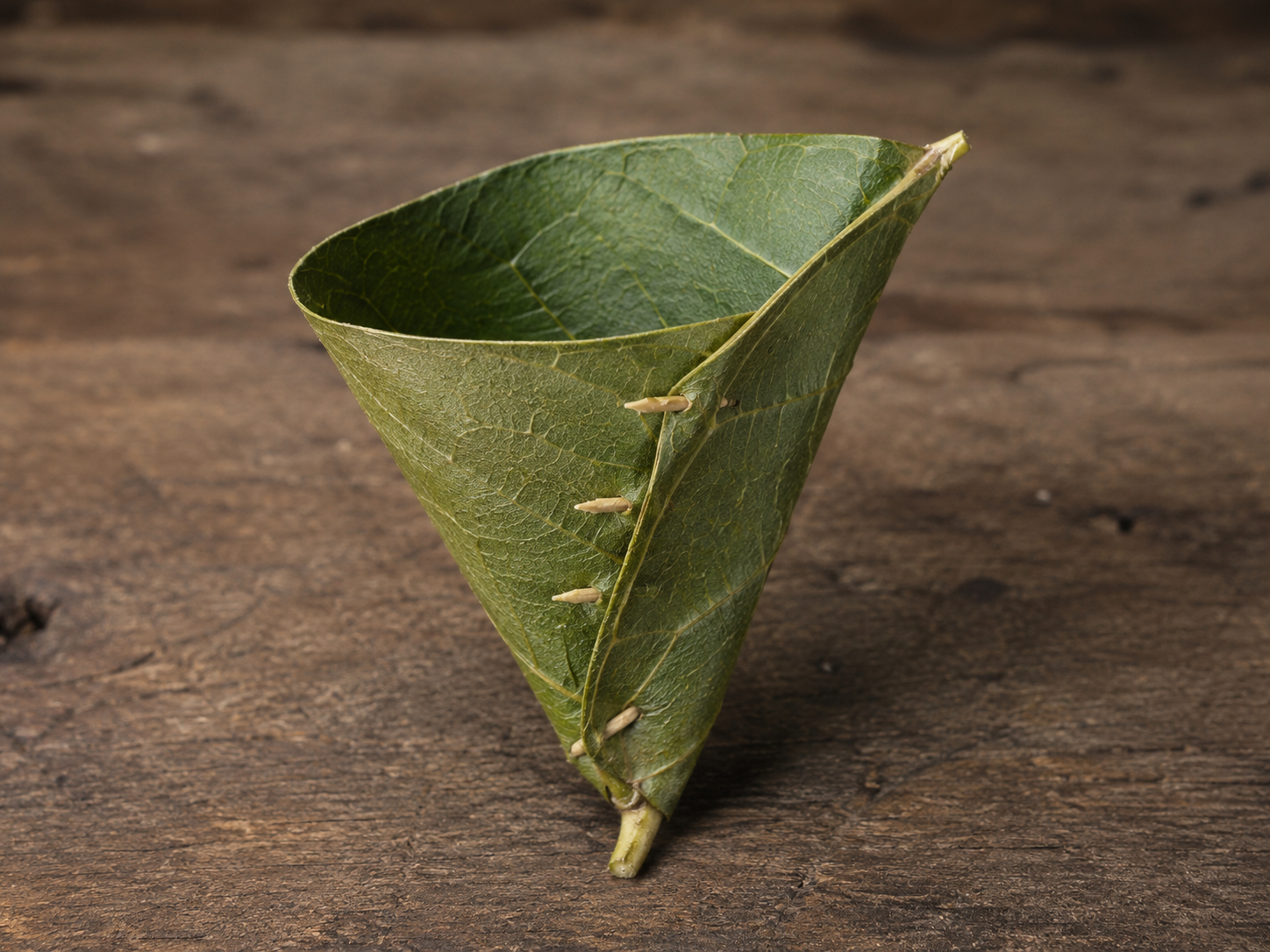
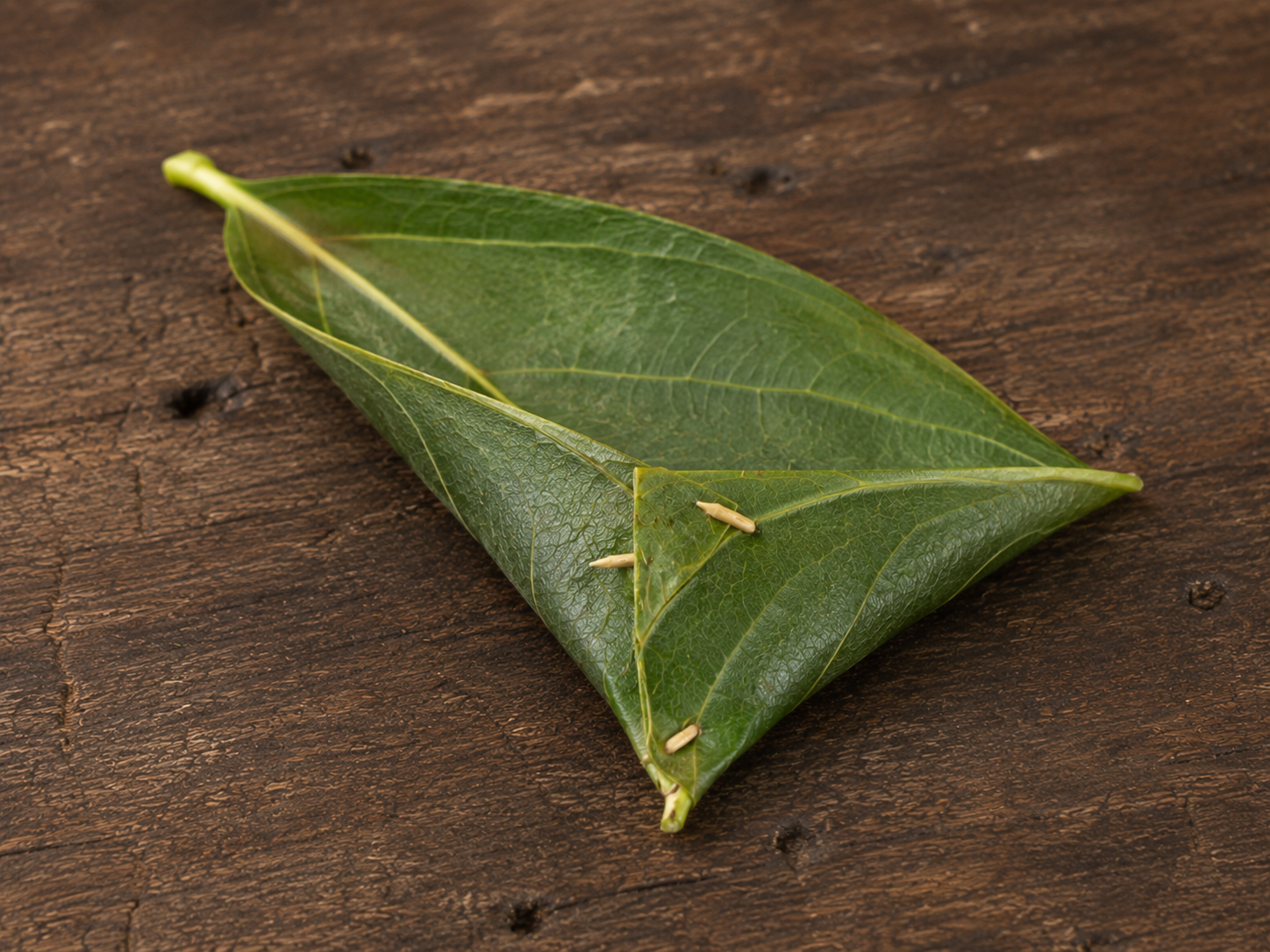
The Cholle is a simple yet distinctive example of traditional Kodava ingenuity. Made from a leaf and shaped into a small cone or cup, it served as a temporary vessel when small quantities of liquid or offerings had to be separately presented.
Its importance is particularly visible in Kodava ritual practices. KodavaClan's documentation of Maadha Padathi records cholle being used for water and alcohol during the ritual, while the Guru Kaarana Kodpo Padathi similarly describes cholle being placed with ritual offerings, including one containing water and another containing alcohol.
The object demonstrates how everyday materials from the natural environment could be transformed into functional ritual objects without the need for manufactured containers.
Traditional use: Cholle was used as a small disposable vessel during traditional ceremonies and ritual offerings. Documented examples specifically mention cholle containing water and alcohol during ritual proceedings.
It could therefore serve the practical purpose of keeping small quantities of liquids or offerings separately presented during a ritual
Cultural significance: A suitable leaf is selected and shaped by folding and forming it into a small cone or cup. The edges are secured sufficiently to retain the desired shape and allow the vessel to hold a small quantity of liquid.
Historical context: The Cholle represents the practical use of natural materials in Kodava domestic and ritual life. Its presence in ritual practices shows that even a very simple temporary object could have a defined place within ceremonial proceedings.
Its use for separately presenting water and alcohol also demonstrates the importance of distinguishing particular offerings during traditional rituals.
The Cholle belongs to a period when many household and ceremonial requirements were met using locally available natural materials.
Unlike permanent vessels made from metal, clay or wood, a leaf cup could be prepared when required and returned naturally to the environment after use. Its continued appearance in documented Kodava rituals provides evidence of the practical material culture surrounding traditional ceremonies.
Reason for decline: The Cholle belongs to a period when many household and ceremonial requirements were met using locally available natural materials.
Unlike permanent vessels made from metal, clay or wood, a leaf cup could be prepared when required and returned naturally to the environment after use. Its continued appearance in documented Kodava rituals provides evidence of the practical material culture surrounding traditional ceremonies.
The temporary nature of a leaf vessel also makes it less convenient for everyday use than a reusable manufactured cup. As traditional ritual practices became less dependent on older material customs, knowledge of making such simple leaf vessels could gradually disappear.
Revival efforts: Cholle can be revived by documenting the traditional method of making it from elders and ritual practitioners, teaching the technique to younger generations and demonstrating its use during cultural programmes.
Its use can also be encouraged during appropriate traditional ceremonies and heritage demonstrations, particularly where a biodegradable traditional vessel is culturally appropriate.
You are preserving Cholle — Leaf Cup / Leaf Cone Cup.