A living archive of Kodagu — objects, memories, skills and the voices of the people who kept them. See what's on display →
Andhol
Ritual & Ceremony · Ceremonial Objects / Traditional Transport

Andhol ಆಂಧೋಲ್

Ceremonial Palanquin
Also written: ಆಂಧೋಲ್

Virtual Museum of
Kodava Heritage

Help Preserve

This Piece of Kodava Heritage

Your support helps us preserve our heritage
for today and future generations.

Support as
a Custodian
₹1,500
per artifact
About the Object

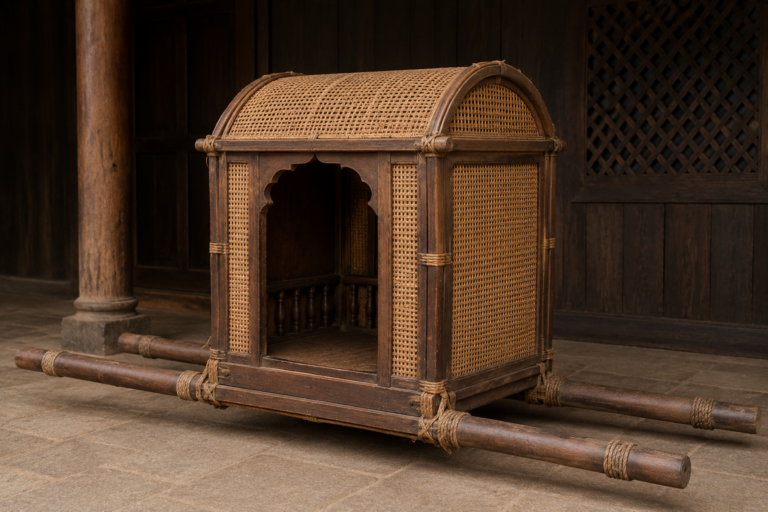
The Andhol is a traditional palanquin-like structure used to carry a deity, revered person or honoured individual during ceremonial occasions and processions.

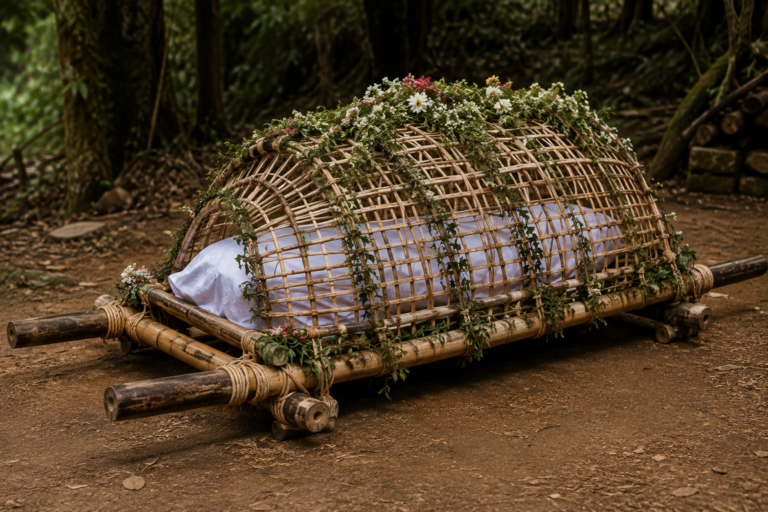
The Andhol is a traditional elevated carrying structure associated with ceremonial and religious occasions in Kodagu. Unlike a funeral palanquin, it is carried by several people using long supporting poles extending from either side. Its elevated seating structure allows the person or sacred object being carried to remain clearly visible during a procession. Traditionally made using wood, bamboo and cane, the Andhol combines practical construction with an appearance suited to occasions of honour and reverence.

How It Was Used

Cultural significance: The Andhol was more than a means of transportation. Being carried in an Andhol was a visible expression of honour, reverence and social importance. When carrying a deity, it became part of a sacred procession; when carrying an honoured person, it represented the respect accorded to that individual by the community.

Historical context: The Andhol belongs to the traditional ceremonial culture of Kodagu, where community participation and public processions played an important role in religious and social occasions. Its use reflects an earlier practice of visibly honouring deities and distinguished individuals through ceremonial carrying

Material & Making
WoodBambooCane

A sturdy wooden framework was constructed to form the elevated seating structure. Cane or bamboo panels were woven into the framework, while traditional joinery and rope bindings were used to strengthen and secure the structure. Long supporting poles were fitted on either side for the bearers. Where present, the upper portion could have a curved or domed form.

Who Used It? / Where? / When?
OwnershipNot yet recorded
Period Ancient
Status of traditionNearly extinct
Sources
KodavaClan archive
Entered from the KodavaClan Modha Goodē reference glossary, as supplied by the curator.
Reference link