A living archive of Kodagu — objects, memories, skills and the voices of the people who kept them. See what's on display →
Explore / Ritual & Ceremony / Puthari Pache
Puthari Pache
Ritual & Ceremony

Puthari Pache

Puthari Harvest Object
Also written: Puthari Pache ಪುತ್ತರಿ ಪಚ್ಚೆ

Virtual Museum of
Kodava Heritage

Help Preserve

This Piece of Kodava Heritage

Your support helps us preserve our heritage
for today and future generations.

Support as
a Custodian
₹1,500
per artifact
About the Object

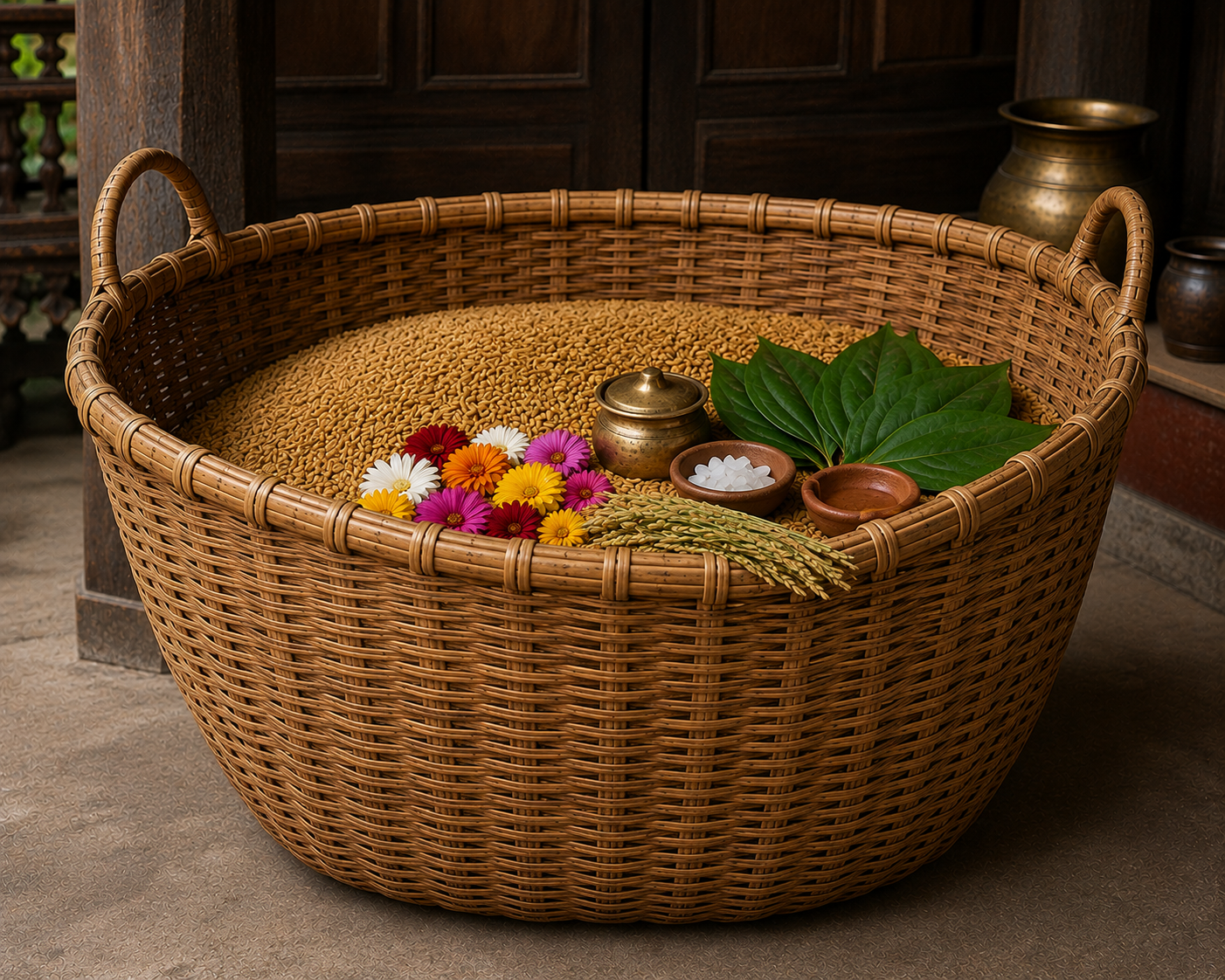
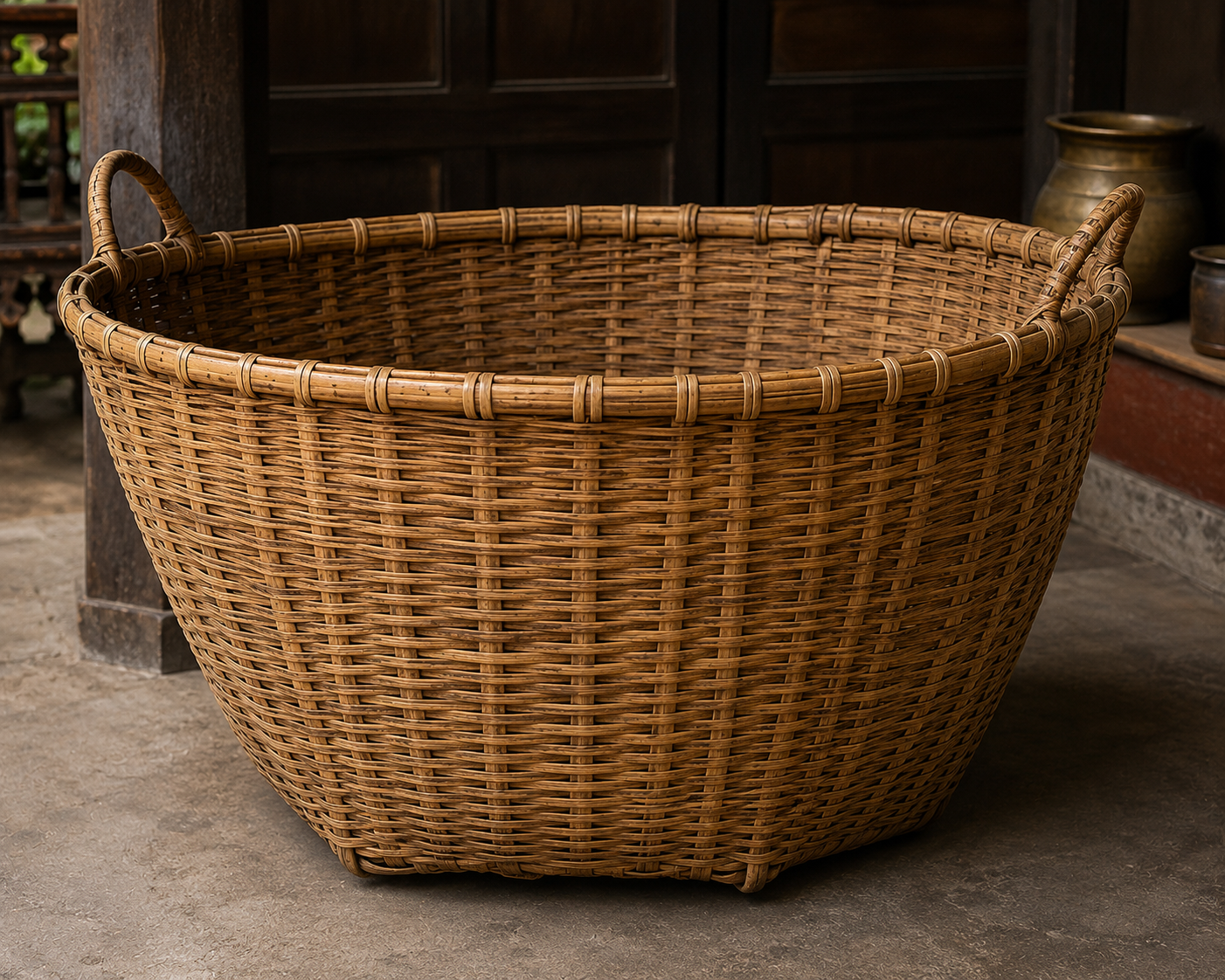
Puthari Pache is a large traditional basket woven from cane and used during the Puthari (harvest festival).

Puthari Pache is a large traditional basket woven from cane and used during the Puthari (harvest festival). It was taken out specifically for the festival and served as a large carrying and storage basket for the paddy harvest and the various articles required for the Puthari rituals.
The Puthari Pache was used to carry and hold newly harvested paddy and ritual articles needed during the Puthari celebrations. It was brought out as part of the family's traditional preparations for the harvest rituals and was an important practical object associated with the festival.

How It Was Used

Cultural significance: The Puthari Pache represents the close connection between Kodava agricultural life, the paddy harvest and ritual traditions. It is more than a storage basket; its use during Puthari connects an everyday material—cane—with one of the most significant annual celebrations in the Kodava cultural calendar of Brichyar

Material & Making
BambooCane

Cane was collected, prepared and split into suitable strips. The strips were carefully woven by hand to form a large, sturdy basket capable of carrying paddy and multiple ritual items. Its size and construction made it suitable for transporting substantial quantities while remaining relatively lightweight

Who Used It? / Where? / When?
OwnershipNot yet recorded
Period Ancient
Status of traditionStill used ceremonially
The Tradition Today

Reason for decline: The use of Puthari Pache has declined with changes in agricultural practices, household lifestyles and the availability of modern plastic and manufactured containers. As fewer families handle paddy in the traditional manner and many ritual preparations have become simplified, the need for a large handwoven basket specifically associated with Puthari has diminished

Revival efforts: The Puthari Pache can be preserved by documenting surviving baskets, recording their dimensions and weaving techniques, and collecting oral histories from families who continue to use them. Traditional cane artisans can be encouraged to recreate the basket, while demonstrations and workshops during Puthari celebrations can introduce younger generations to its purpose and making.

Sources
Source not recorded