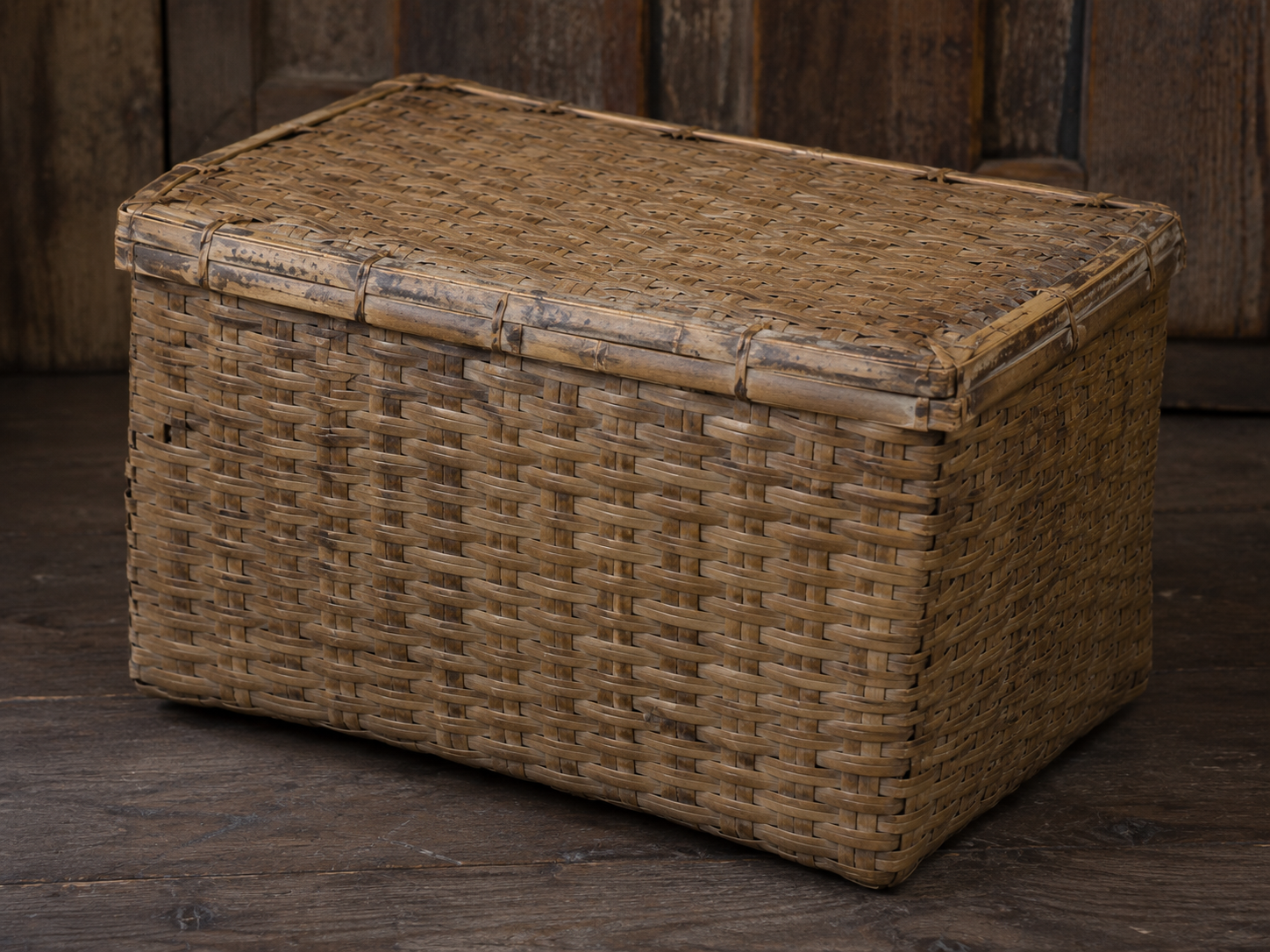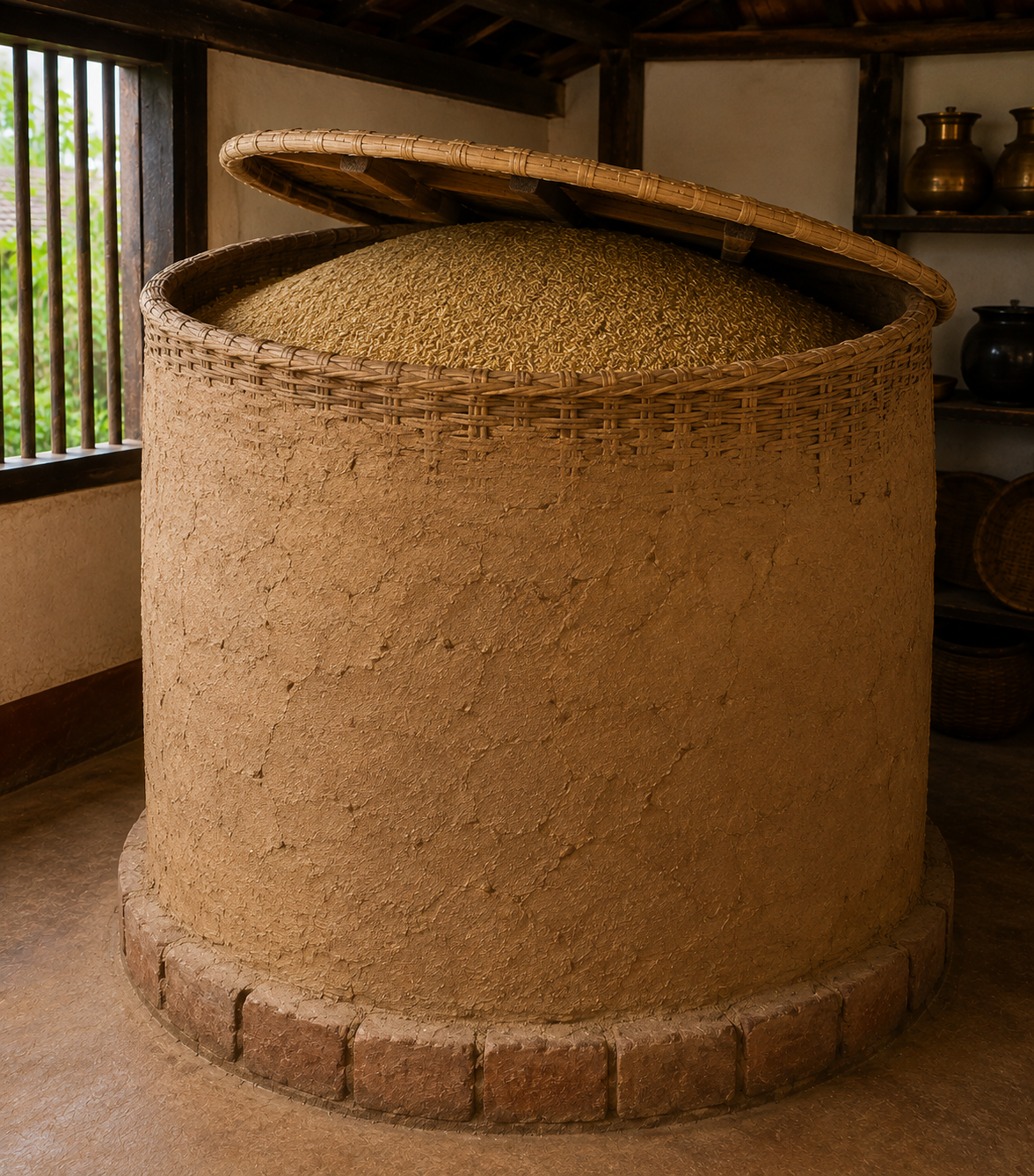
A Thuliya is a cylindrical storage structure traditionally constructed by weaving bamboo strips or reeds. The woven structure is generally plastered with mud, creating a more enclosed and protective storage space for paddy.
Traditional use: The principal purpose of the Thuliya was to store harvested paddy. The same type of construction was also used for drying paddy. The Thuliya was used not only for storage but also for drying, making it an important part of traditional paddy handling after harvest
Cultural significance: Thuliya is significant as an example of traditional Kodagu agricultural architecture and indigenous storage technology. Its use of woven bamboo or reed, mud plaster and locally available foundation materials demonstrates how earlier communities developed practical systems for storing and drying paddy using resources available in their surroundings.
Historical context: The Thuliya represents an older form of indigenous grain-storage technology, using locally available bamboo, reed, mud and stone or brick rather than modern manufactured storage materials. The Kodagu Heritage source records it under Kodava Thakk
The basic structure was formed by weaving bamboo strips or reeds into a cylindrical enclosure. The woven walls were then plastered with mud, providing a more solid and enclosed storage structure
Reason for decline: A possible research question for future documentation would be whether modern paddy storage methods and changes in agricultural practices have reduced the need for these traditional granaries.
You are preserving Thuliya ( Thuyya ) — storage basket.