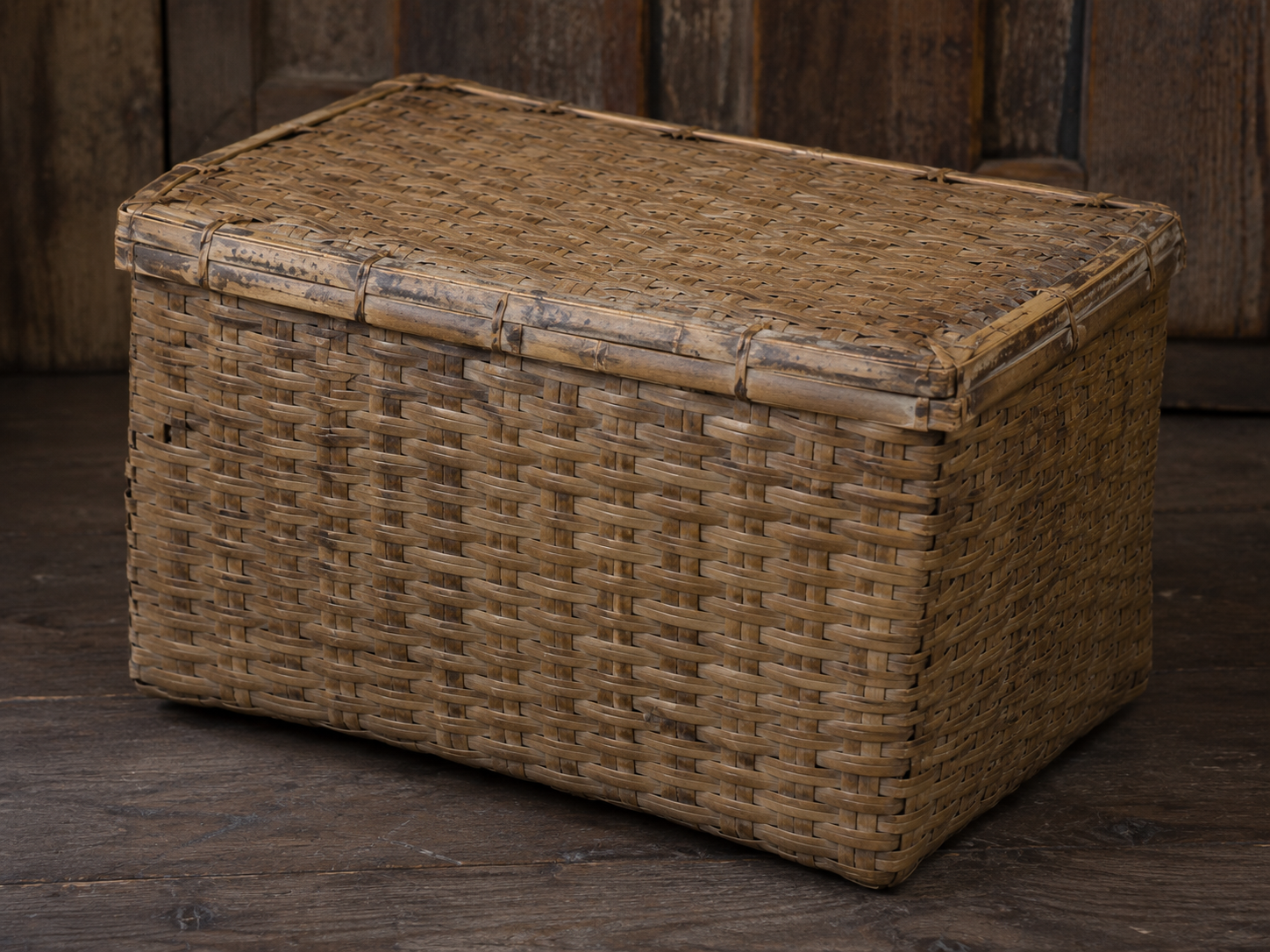
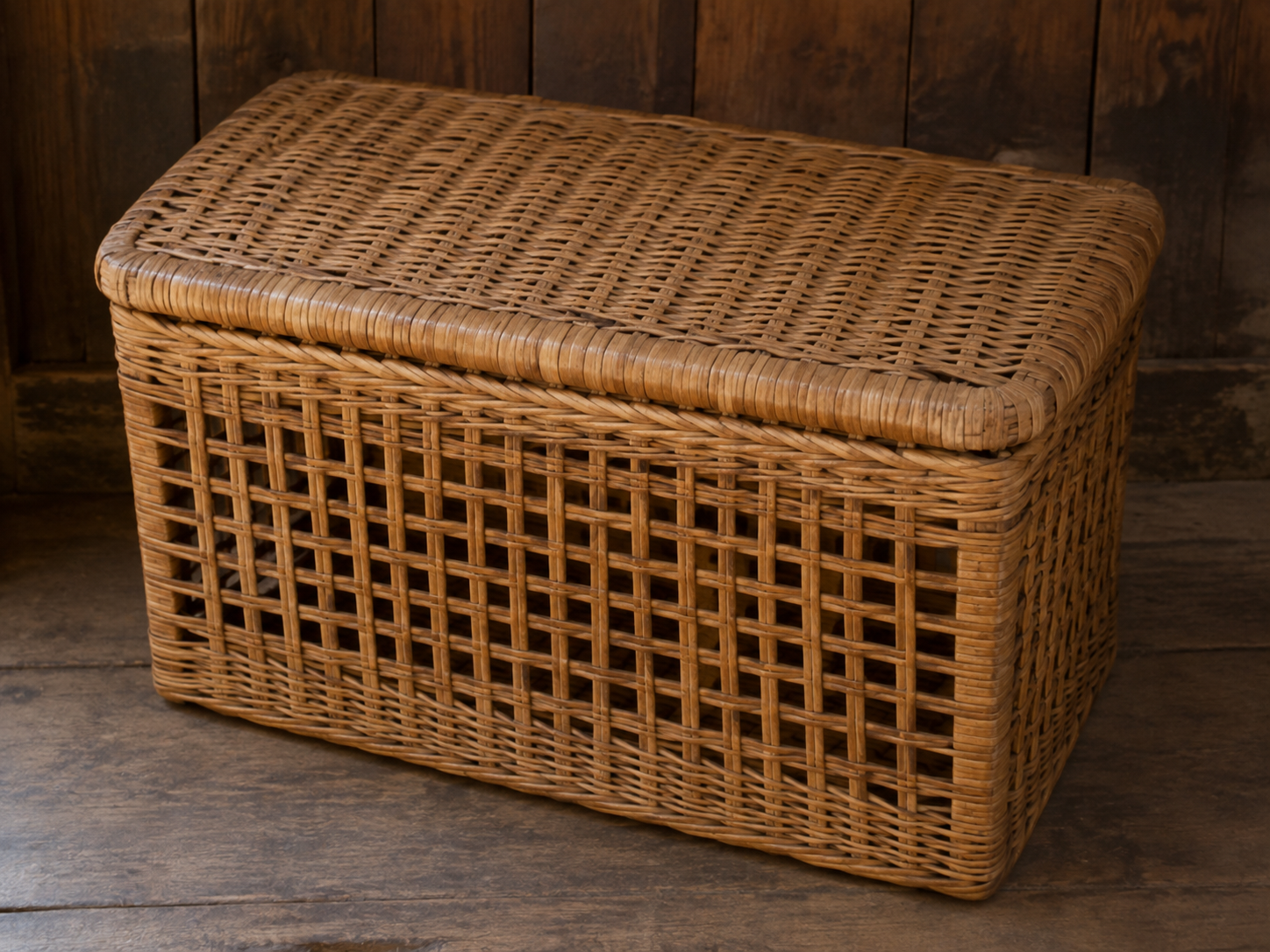
Biraali Potti was a practical household storage article found in traditional homes of Kodagu. Made from locally available cane, it combined lightness with strength and provided a ventilated space for storing clothing and textiles. The woven construction allowed air to circulate through the stored materials.
Before modern cupboards, steel almirahs and plastic containers became common, cane storage articles such as the Biraali Potti formed part of everyday domestic life. Its form reflects a traditional approach to household objects in which locally available natural materials were transformed into durable and functional articles.
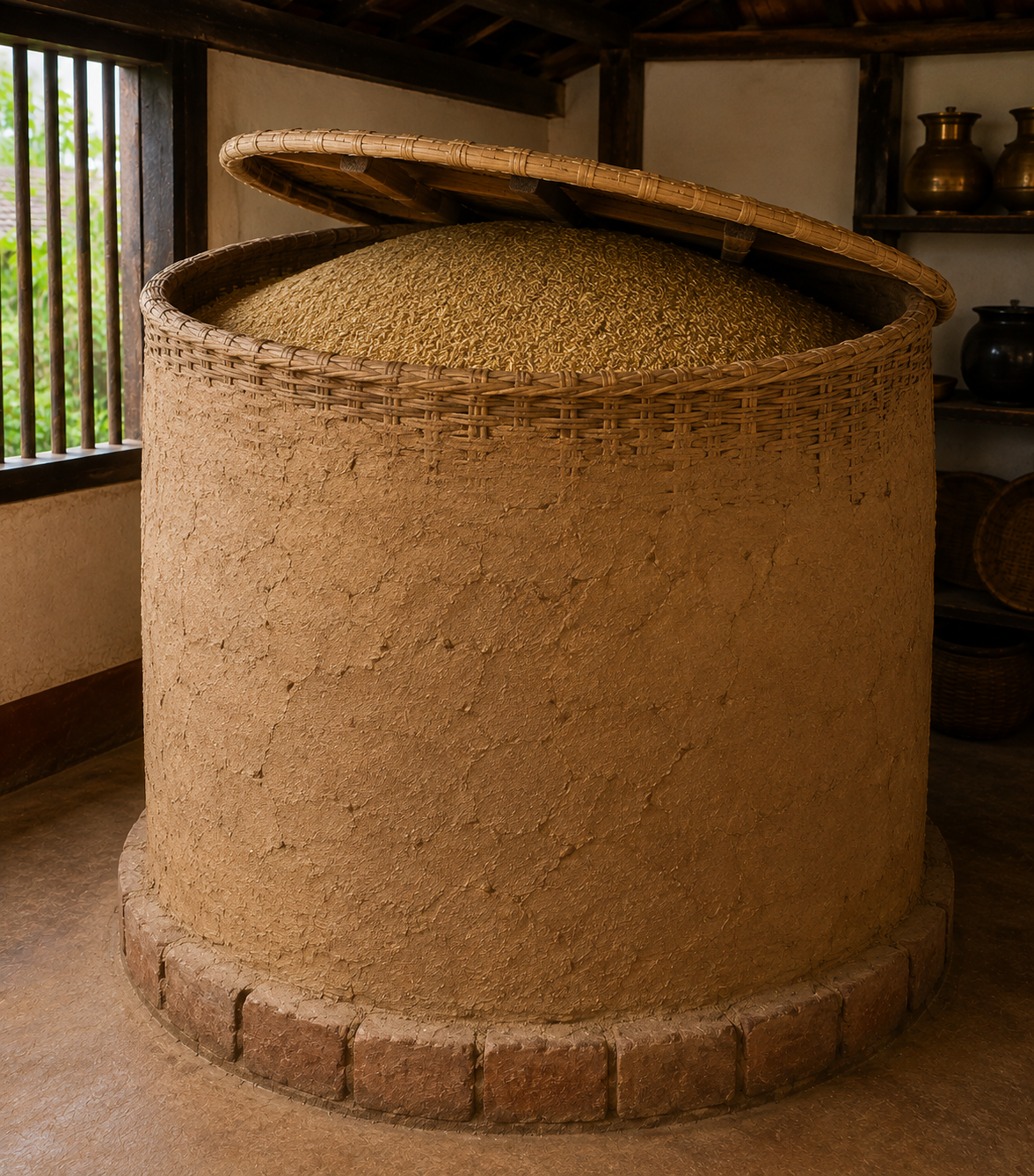
Traditional use: A woven cane storage structure designed as a larger household container. Its open woven surface provided ventilation while the overall structure offered enclosed storage for clothes and textiles.
Storing clothes and garments
Keeping household textiles organised
Protecting clothing within the home
Providing ventilated storage for fabrics
Cultural significance: Biraali Potti represents the practical domestic culture of earlier Kodava households. Its use of natural cane demonstrates how everyday storage requirements were met through locally available materials and traditional craftsmanship.
Historical context: Biraali Potti belongs to an earlier period of domestic life when household articles were commonly made from natural materials. It was used before modern cupboards, steel storage units, plastic containers and modular storage systems became widespread. Biraali Potti is an important example of the everyday material culture of Kodagu. Although it was a simple household storage article, it demonstrates the traditional use of locally available cane, skilled hand-weaving and naturally ventilated storage. Its decline also records the transformation of Kodava homes from handmade natural household objects to modern manufactured storage systems
Cane was prepared into flexible strips and carefully bent, joined and woven to create the storage structure. The strips were interlaced to form a strong but lightweight body. The making process required knowledge of cane preparation, bending, joining and weaving.
Reason for decline: The use of Biraali Potti declined as wooden cupboards, steel almirahs, plastic containers and modern modular storage systems replaced traditional cane storage. Changing house designs and lifestyles, together with declining demand for handmade household products and fewer practising cane artisans, further contributed to its disappearance from everyday use.
Revival efforts: Revival could focus on documenting surviving examples, recording the knowledge of remaining cane artisans, teaching traditional cane weaving to younger generations, and introducing Biraali Potti as a heritage craft and sustainable storage product. Existing examples can also be displayed in ancestral homes, museums and heritage exhibitions.
You are preserving Biraali Potti — Traditional Cane Clothes Storage Unit.