Storage · Traditional Grain Storage
Akki Potti, ಅಕ್ಕಿ ಪಿಟ್ಟಾರಿ
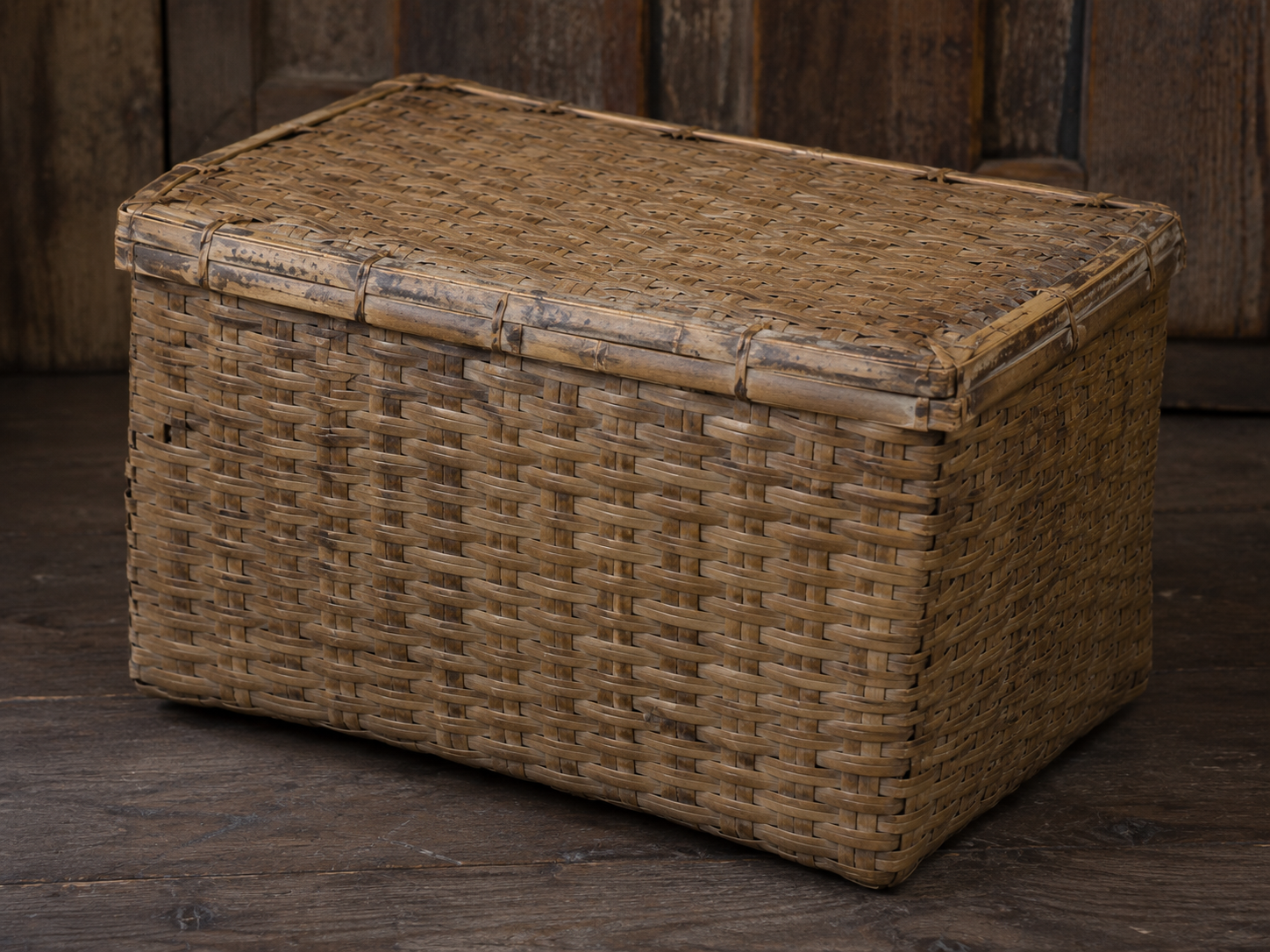
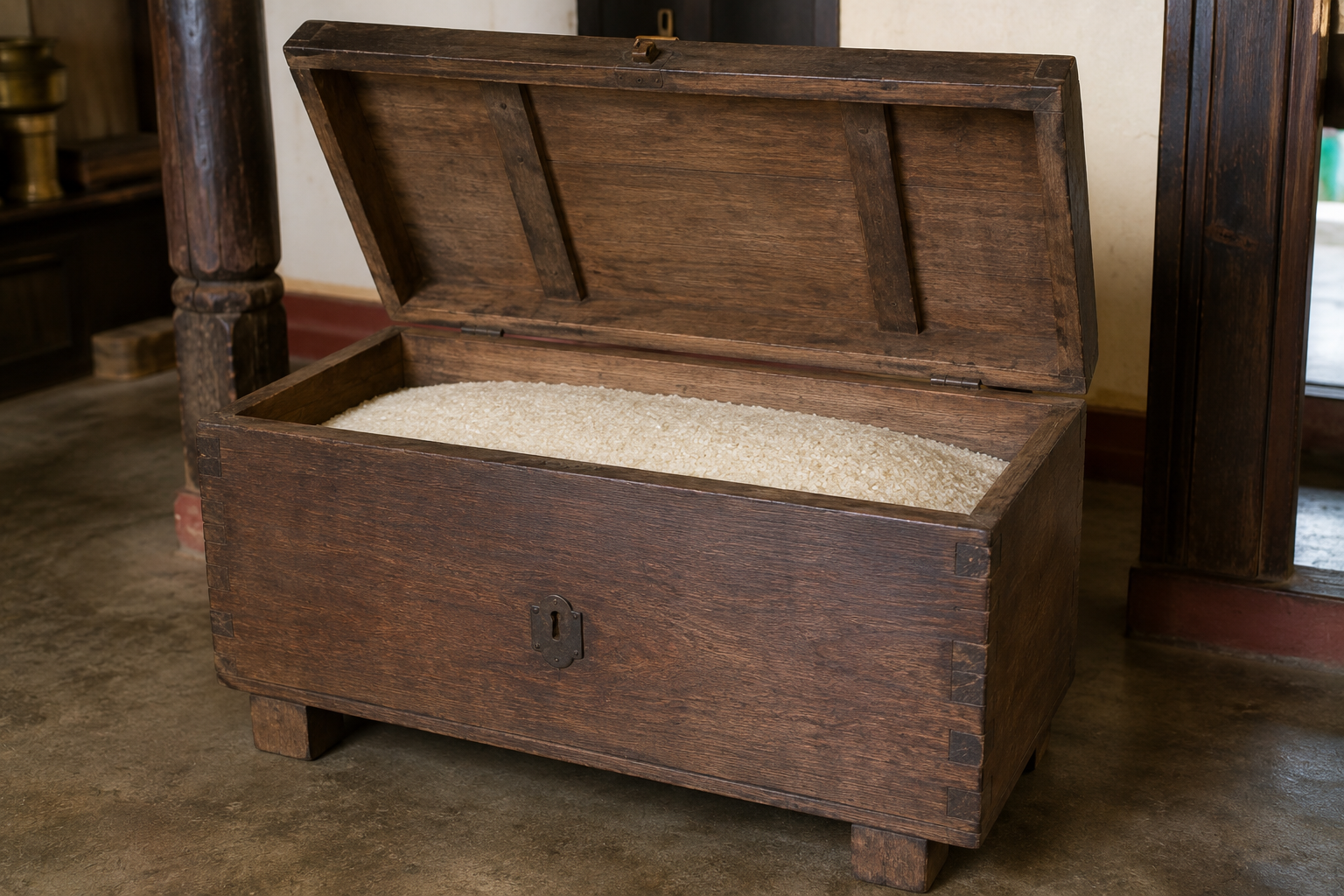
Wooden Rice Storage Box
Also written: ಅಕ್ಕಿ ಪಿಟ್ಟಾರಿ / ಅಕ್ಕಿ ಪೊಟ್ಟಿ, Akki Potti
Preserved by a custodian
| ||||||||||||||||||||||||
| ||||||||||||||||||||||||
The Akki Pittari was an important part of traditional Kodava household grain storage. In earlier times, many Kodava households cultivated their own rice. After harvesting and processing the grain, a portion was retained for household consumption and for replanting.
The Akki Pittari provided a dedicated storage space for the household's daily or weekly reserve of rice. Its sturdy wooden construction and secure lid helped protect the grain from humidity, insects and rodents, allowing the household to maintain a supply of rice for an extended period.
The container was therefore more than a simple storage box. It formed part of the traditional agricultural cycle—from cultivation and harvesting to storage and eventual consumption
Traditional use: Storing rice and other grains
Keeping a household reserve of rice
Protecting grain from moisture and humidity
Protecting stored grain from insects and rodents
Storing grain for household consumption
Supporting the traditional cycle of harvesting, storage and consumption
In earlier household practice, grain was also retained for replanting
Cultural significance: The Akki Pittari represents the traditional food security and self-sufficiency of Kodava households. Rice harvested from the fields represented months of agricultural work, making the safe storage of the grain an important household responsibility.
It also reflects the close connection between the Kodava household and the agricultural landscape of Kodagu, particularly its paddy fields and traditional rice cultivation.
Historical context: Rice cultivation has long been closely connected with the landscape and rural life of Kodagu. Traditionally, many households cultivated and stored their own rice.
The Akki Pittari represents the storage stage of this agricultural cycle. Once rice had been harvested and processed, a portion was carefully stored within the household so that food remained available between harvests
The Akki Pittari was traditionally constructed by joining sturdy wooden boards to form an enclosed storage container. Thick wooden walls and a secure lid provided protection for the grain.
Traditional carpentry techniques allowed these containers to remain functional for many years. The size could vary according to the household and the quantity of grain to be stored
Reason for decline: Traditional wooden grain-storage containers have become increasingly uncommon as modern metal, plastic and concrete storage systems have replaced them.
Changes in household agriculture and the reduced dependence of families on storing their own harvests have also contributed to the decline of this traditional storage practice.
Revival efforts: Existing Akki Pittaris preserved in old houses and Ainmanes should be documented and conserved as examples of traditional Kodava agricultural and domestic heritage.
Revival can include retaining original containers where they survive, recreating them using traditional carpentry techniques, and displaying them in traditional kitchens, Ainmanes, heritage centres and museums. Recording the knowledge of elders and traditional carpenters can also help preserve the craftsmanship associated with these containers.