Storage · Bags & Carrying Accessories
Adaph
Traditional Shoulder Bag
Also written: ಅಡಾಫ್
Preserved by a custodian
| ||||||||||||||||||||||||
| ||||||||||||||||||||||||
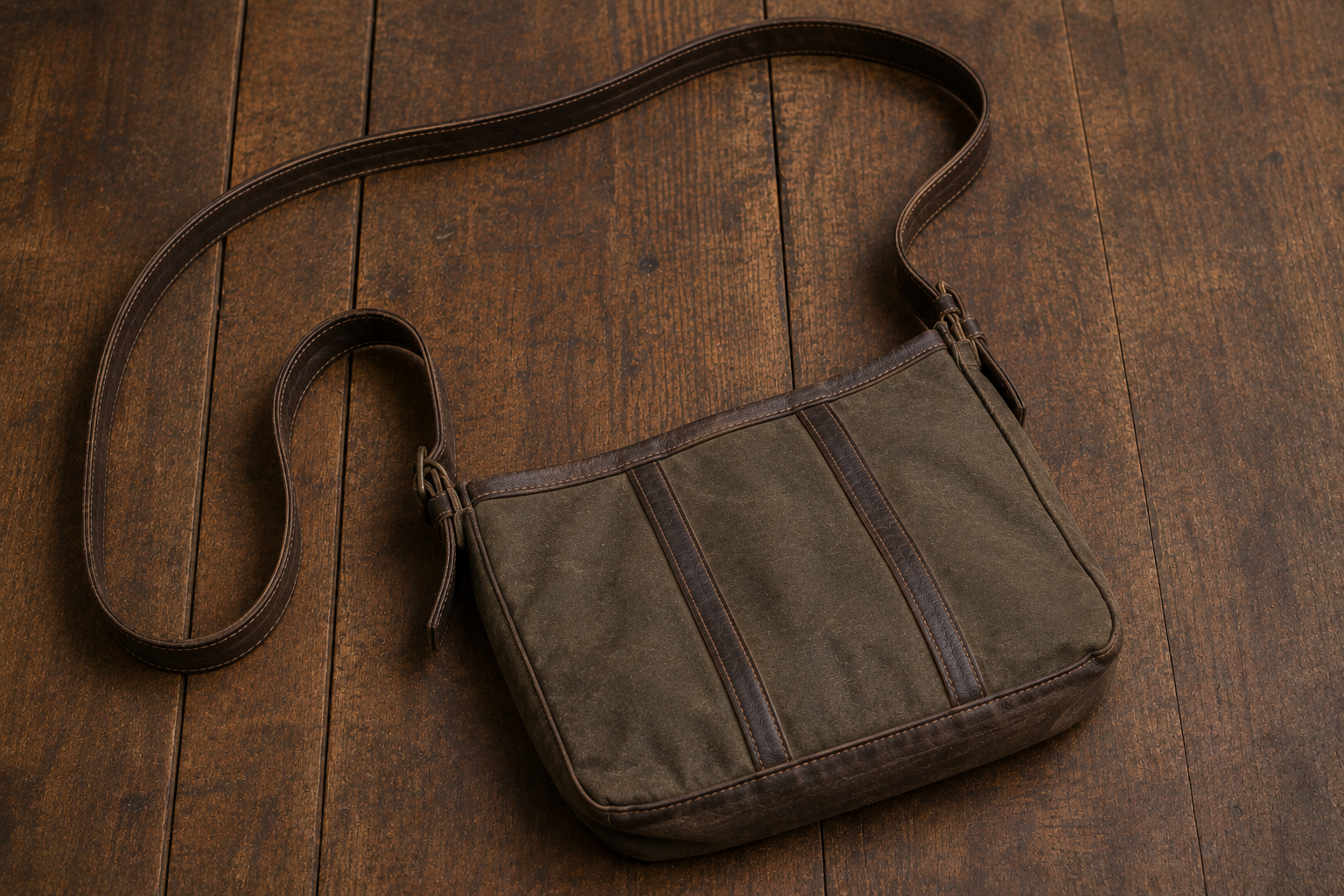
The Adaph is a traditional carrying bag designed to be worn over the shoulder. It provided a practical way of carrying essential personal belongings, tools and provisions while leaving the hands free for work or other activities.
Its use was particularly associated with travel, agricultural activities and hunting expeditions, where carrying necessary items conveniently was important. The Adaph therefore represents a simple but useful piece of traditional Kodava material culture, reflecting the practical needs of people living and working in the terrain of Kodagu.
Traditional use: Carrying personal belongings
Carrying tools
Carrying provisions
Used during travel
Used during agricultural work
Used during hunting expeditions
Cultural significance: The Adaph reflects the practical and mobile nature of traditional Kodava life. It was a useful everyday accessory that allowed personal belongings, provisions and tools to be carried while travelling, farming or undertaking hunting activities.
Its association with agriculture and hunting also connects the object to the traditional occupations and outdoor life of earlier generations in Kodagu.
Historical context: The Adaph belongs to the traditional material culture of Kodagu, where people frequently travelled through hilly and forested terrain and engaged in agriculture and hunting. A shoulder bag provided a convenient means of carrying essential items during such activities.
The Adaph was traditionally made as a shoulder-carried bag, with a body designed to hold personal items, tools or provisions and a strap or carrying arrangement that allowed it to be worn across the shoulder.
Reason for decline: Its traditional use has declined with the introduction of modern bags, backpacks and other commercially manufactured carrying accessories, which have replaced many traditional forms of carrying equipment
Revival efforts: Surviving Adaphs should be documented, preserved and displayed as examples of traditional Kodava material culture.
Revival can also include encouraging traditional artisans to recreate the Adaph using appropriate traditional materials and techniques, allowing it to be used again during cultural events, heritage demonstrations and traditional activities.