Your support helps us preserve our heritage
for today and future generations.
Support as a Custodian
₹1,500
per artifact
About the Object
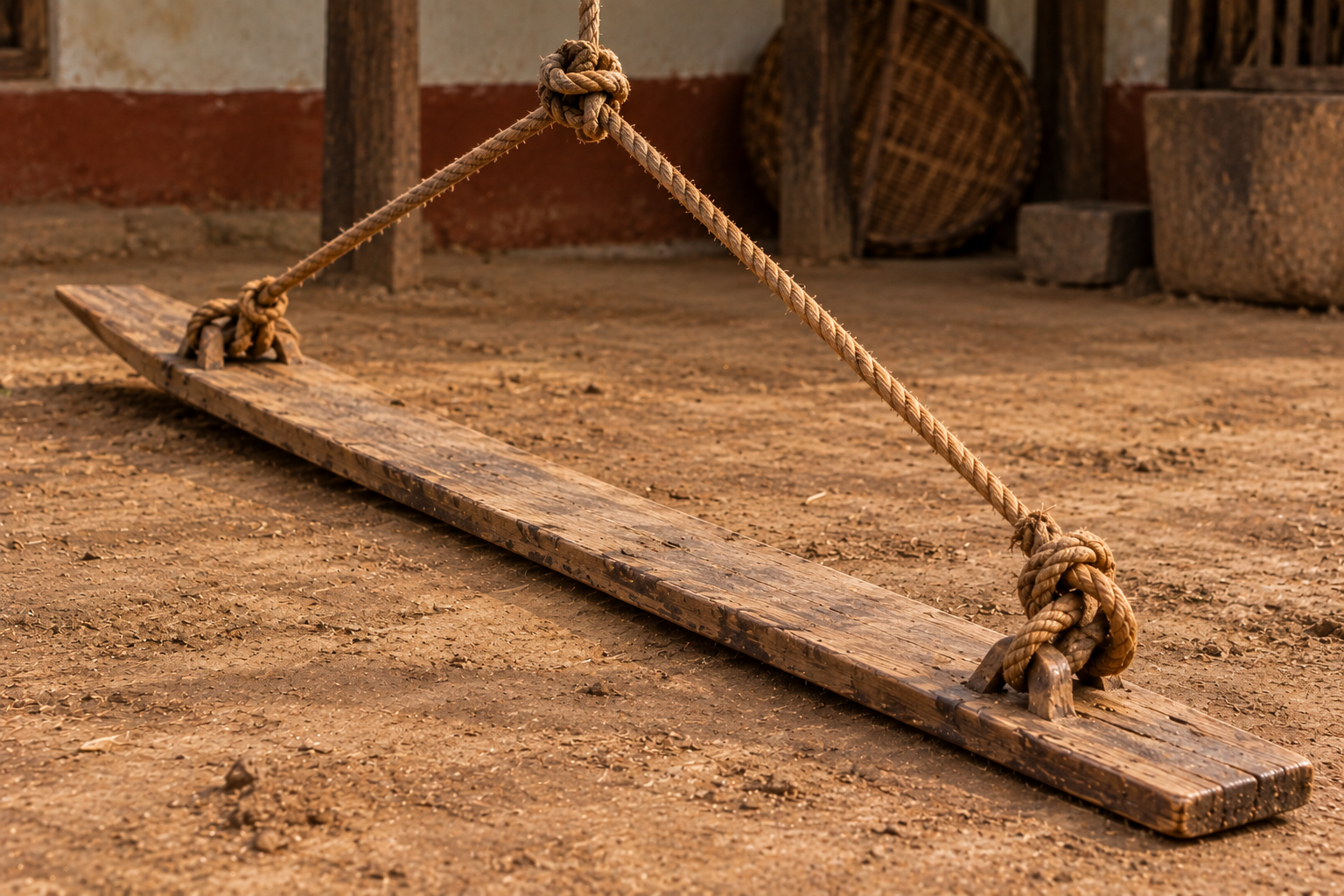
A heavy wooden implement used especially in paddy fields to level and firm the soil.
Thaya is a traditional wooden agricultural implement used primarily for levelling paddy fields after the soil has been ploughed and worked. Its broad and heavy wooden body helped break down uneven portions of soil and create a relatively smooth and level surface suitable for paddy cultivation.
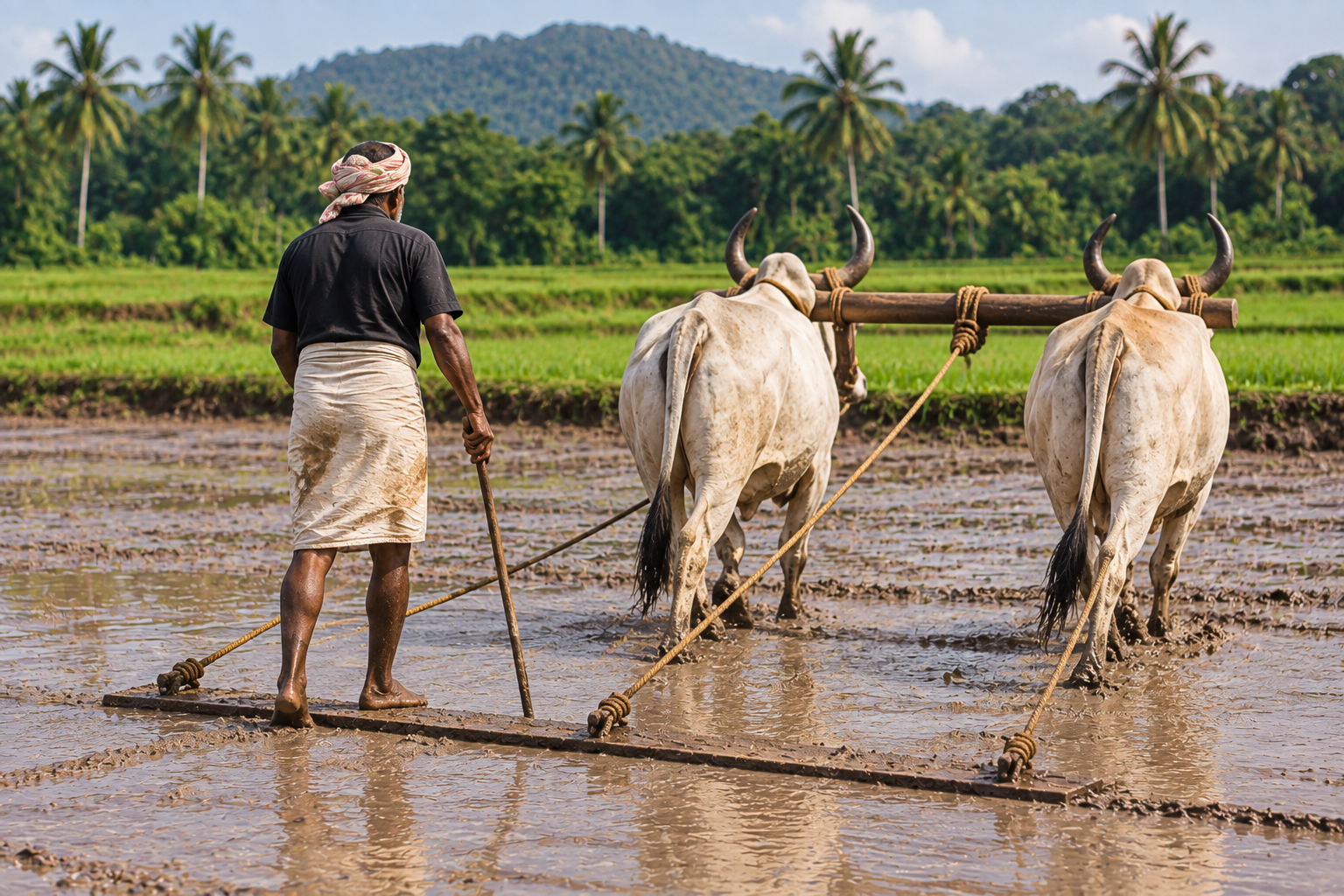
The Thaya was traditionally tied or connected to the Noga (wooden yoke) of a pair of oxen. As the oxen moved across the wet or prepared paddy field, the Thaya was pulled behind them, pressing and levelling the soil.
This simple but effective implement reflects the traditional knowledge of paddy cultivation in Kodagu, where farmers used locally available timber and bullock power for field preparation.
How It Was Used
Traditional use: Used especially for levelling paddy fields
Used after ploughing and preparation of the field
Attached to the Noga (yoke) of a pair of oxen
Dragged across the field by the oxen
Helped flatten uneven soil and firm the field surface
Cultural significance: The Thaya is an important example of traditional Kodagu paddy-field technology. Its connection to the Noga and oxen demonstrates how different agricultural implements worked together as part of a traditional farming system.
It represents the practical knowledge, craftsmanship and bullock-powered agricultural practices once central to paddy cultivation in Kodagu.
Historical context: The Thaya represents the traditional system of paddy cultivation in which farmers depended on oxen, wooden implements and skilled manual knowledge rather than tractors and mechanical levellers.
Material & Making
Wood
A suitable piece of timber was selected and shaped into a strong, broad implement. The edges and surfaces were finished sufficiently smooth for use in the field, while the attachment point was made suitable for connecting it to the Noga.
Who Used It? / Where? / When?
OwnershipNot yet recorded
PeriodAncient
Status of traditionNearly extinct
The Tradition Today
Reason for decline: Its use declined with the introduction of tractors, power tillers and modern mechanical land-levelling equipment.
Revival efforts: Its use declined with the introduction of tractors, power tillers and modern mechanical land-levelling equipment.
The Thaya should be documented along with the Noga and other associated agricultural implements, including its dimensions, type of wood, method of attachment and traditional method of use.
Watch
Thaya | Traditional Field Levelling Plank | ತಯ | Modha Goode