About the Object
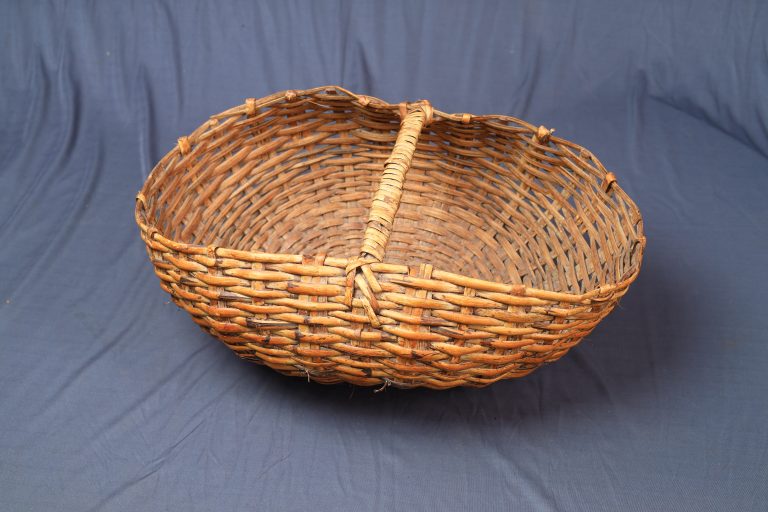
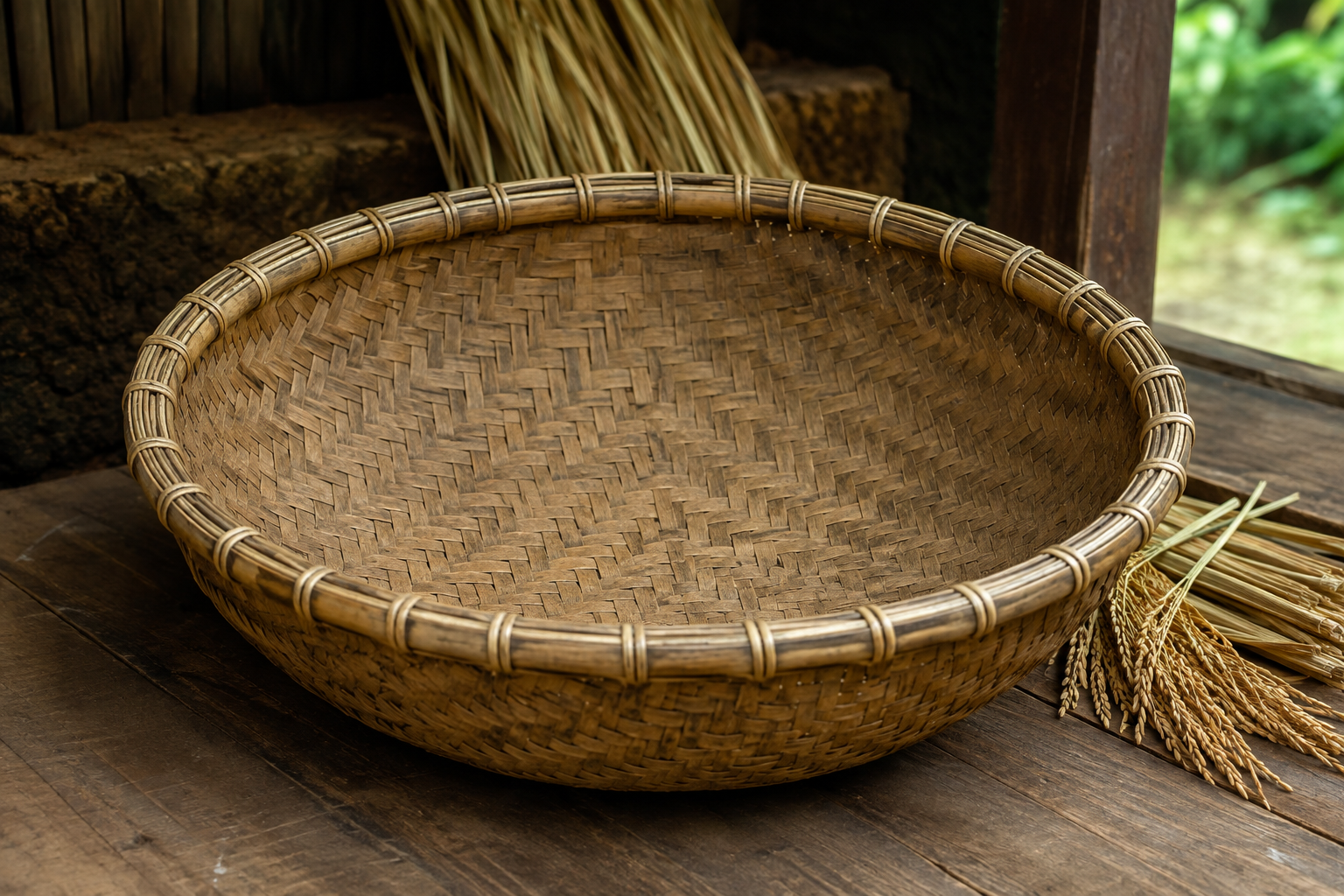
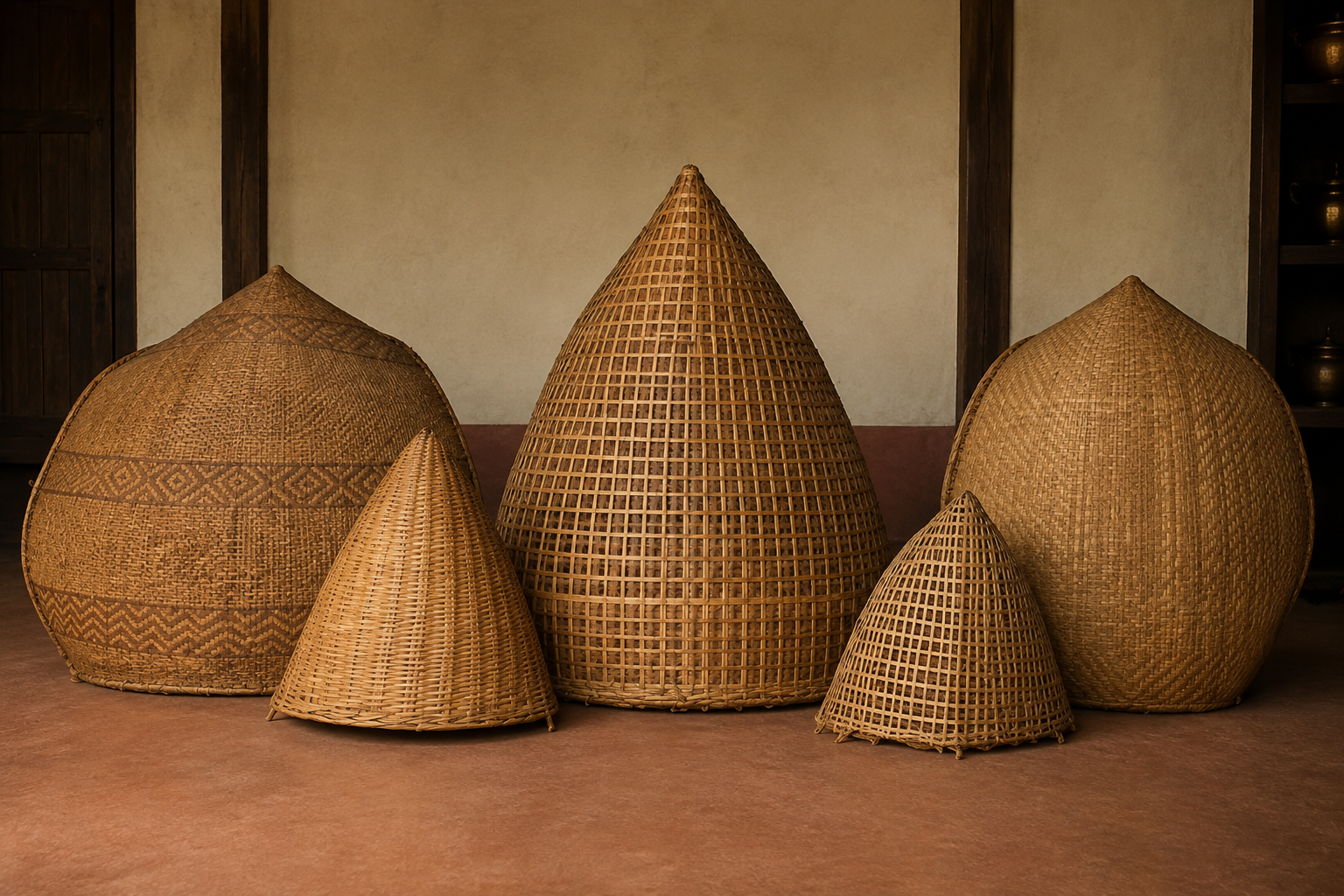
Akki Batti is a traditional basket made from bamboo, cane or reed, traditionally used to carry rice and paddy. It was available in small, medium and large sizes. The basket was usually smeared with cow dung to improve its durability.
Akki Batti was a practical basket used in traditional Kodava households for handling and carrying rice and paddy. It was made by weaving naturally available materials such as bamboo, cane or reed into a sturdy basket.
The basket was traditionally smeared with cow dung, a practice that helped improve its durability and provided protection against insects. Akki Batti was made in different sizes—small, medium and big—according to the quantity of rice or paddy that needed to be carried.
The object reflects the resourcefulness of traditional Kodava agricultural households, where locally available materials were transformed into useful implements for everyday grain handling
How It Was Used
Traditional use: Carrying paddy
Handling harvested agricultural produce
Used in different sizes depending on the quantity being carried
Carrying cow dung
Supporting everyday agricultural and household grain-handling activities
Cultural significance: The Akki Batti is closely connected to traditional Kodava agricultural, religious and ceremonial practices. In addition to its everyday use for carrying rice and paddy, it has a role during important cultural occasions.
During Puthari, the Akki Batti is used to carry pooja items to the fields as part of the traditional agricultural and harvest rituals.
During Kodava wedding ceremonies, it is also used to carry items required for the ceremony.
Its use in both agricultural rituals and weddings demonstrates how an everyday household object becomes part of important religious, cultural and community traditions.
The Akki Batti therefore represents more than a grain-carrying basket; it is part of the material culture associated with agriculture, ritual and celebration in Kodava society
Historical context: Akki Batti belongs to the traditional agricultural material culture of Kodagu, where paddy cultivation and rice formed an important part of household life. Before modern plastic and manufactured containers became common, agricultural produce was handled using baskets made from locally available bamboo, cane and reed.
The existence of small, medium and large variants reflects the different requirements of traditional grain handling.
Material & Making
BambooCane
Akki Batti was traditionally made by weaving or interlacing bamboo, cane or reed into the required basket shape. After construction, the basket was generally smeared with cow dung, which helped improve its durability and resistance to insects.
Who Used It? / Where? / When?
OwnershipNot yet recorded
Period
Ancient
Status of traditionCommonly used
The Tradition Today
Reason for decline: The traditional use of Akki Batti has declined with the introduction of plastic bags, plastic containers, metal vessels and other modern agricultural storage and carrying solutions.
Changes in agricultural practices and the reduced use of traditional household grain-handling methods have also contributed to its disappearance from everyday life.
Revival efforts: Surviving Akki Battis can be preserved and documented as examples of traditional Kodava agricultural technology.
Revival can include encouraging traditional basket makers to recreate the basket using bamboo, cane and reed, including the traditional cow-dung treatment. Demonstrating its traditional use in Ainmanes, heritage centres, agricultural exhibitions and cultural programmes can help younger generations understand this sustainable method of handling rice and paddy.
Sources
KodavaClan archive
Entered from the KodavaClan Modha Goodē reference glossary, as supplied by the curator.
Reference link