Agriculture · Everyday Life & Agricultural Objects
Pandhi Dhoni
Pig-Feeding Trough
Also written: Pandhi Dhoni - ಪಂಧಿ ಧೋನಿ
Virtual Museum of Kodava Heritage
Help Preserve
This Piece of Kodava Heritage
Your support helps us preserve our heritage
for today and future generations.
Support as a Custodian
₹1,500
per artifact
About the Object
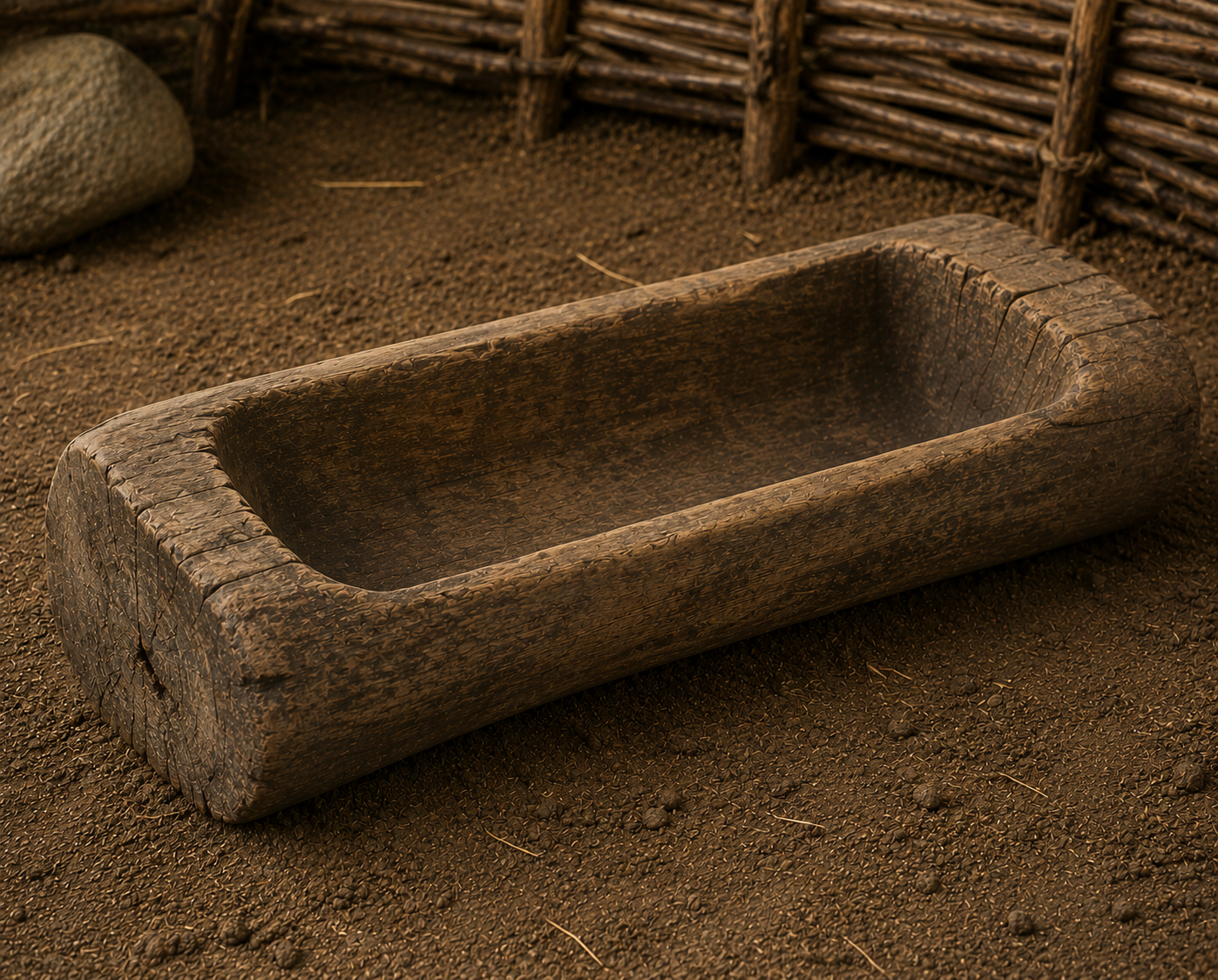
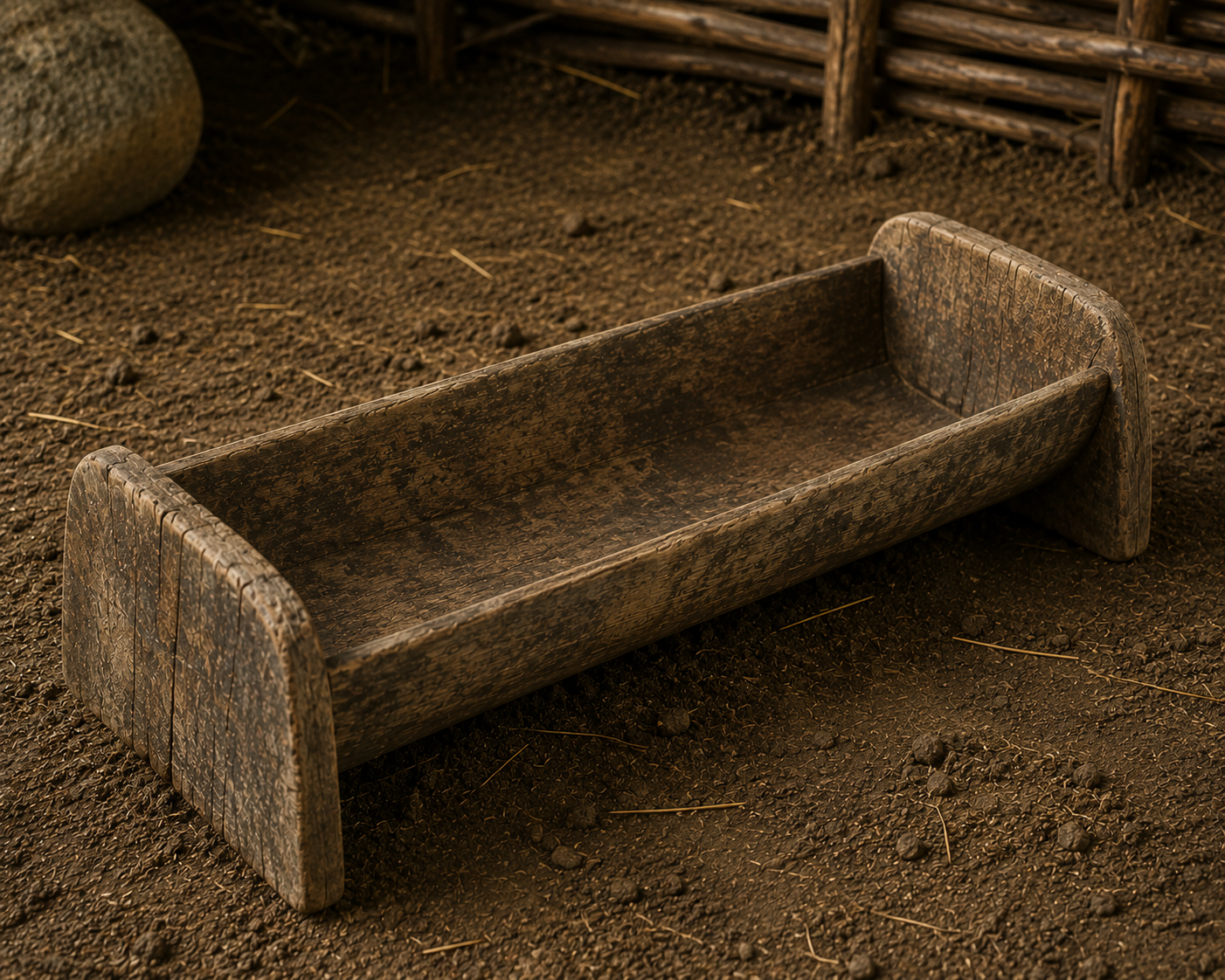
Pandhi Dhoni is a traditional trough used for feeding pigs.
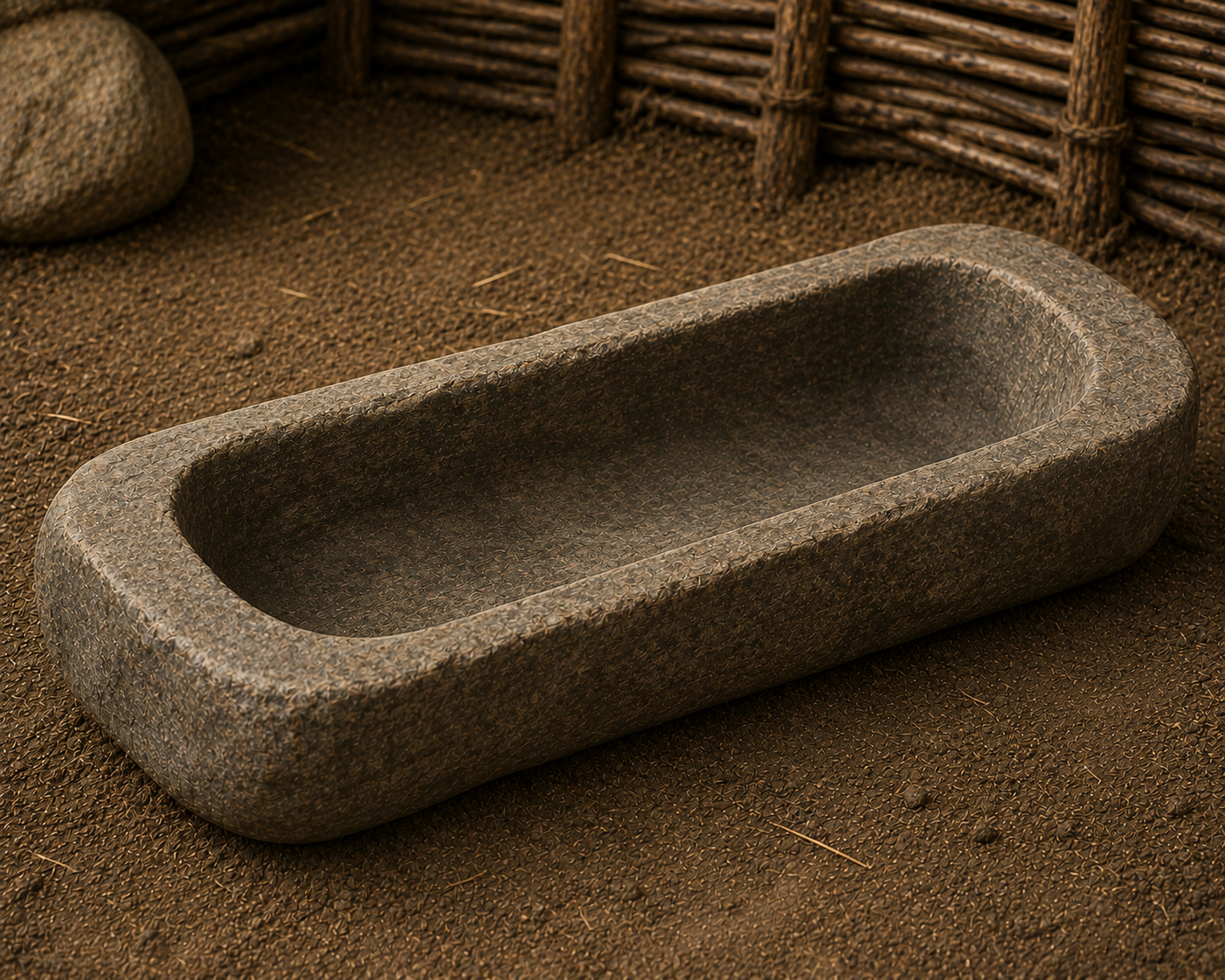
Pandhi Dhoni is a traditional trough used for feeding pigs. It was traditionally made from a single piece of wood or carved from stone, with the centre hollowed out to form a long feeding basin
It was a simple but functional object found in traditional Kodava households where pigs were reared. Rather than being assembled from several pieces, the wooden version was made from a single log, with the central portion carefully carved or hollowed out to create the feeding space.
Stone versions were similarly fashioned by hollowing out the centre of a solid piece of stone. The resulting trough was strong, durable and capable of withstanding regular use in the farmyard.
How It Was Used
Traditional use: The primary purpose of the Pandhi Dhoni was to feed domesticated pigs. Feed was placed directly into the hollowed central portion, allowing several animals to feed from the trough.
Cultural significance: Pandhi Dhoni reflects the practical nature of traditional Kodava farm life. Pig rearing was part of the household economy, and objects such as this trough were made using locally available materials and straightforward craftsmanship.
Historical context: The Pandhi Dhoni belongs to the material culture of the traditional Kodava household and agricultural homestead, where livestock formed an important part of everyday rural life.It was generally associated with the farmyard or livestock area of a traditional Kodava house, where pigs could be kept and fed
Material & Making
WoodStone
The wooden trough was made from a single log, rather than joining separate wooden boards. The centre of the log was carved out to create the feeding cavity.
Stone examples were produced by hollowing and shaping a solid block of stone. Its most distinctive feature is its single-piece construction.
Who Used It? / Where? / When?
OwnershipNot yet recorded
PeriodPre-colonial
Status of traditionDeclining
The Tradition Today
Reason for decline: The traditional use of such troughs declined as household livestock practices, farm structures and modern animal-feeding equipment changed. Concrete, metal and commercially manufactured troughs gradually replaced many traditional wooden and stone examples
Revival efforts: Although no longer commonly seen in modern households, surviving Pandhi Dhoni are valuable examples of traditional farm equipment. Preserving these objects helps document older methods of pig rearing and household livestock management in Kodagu.