About the Object
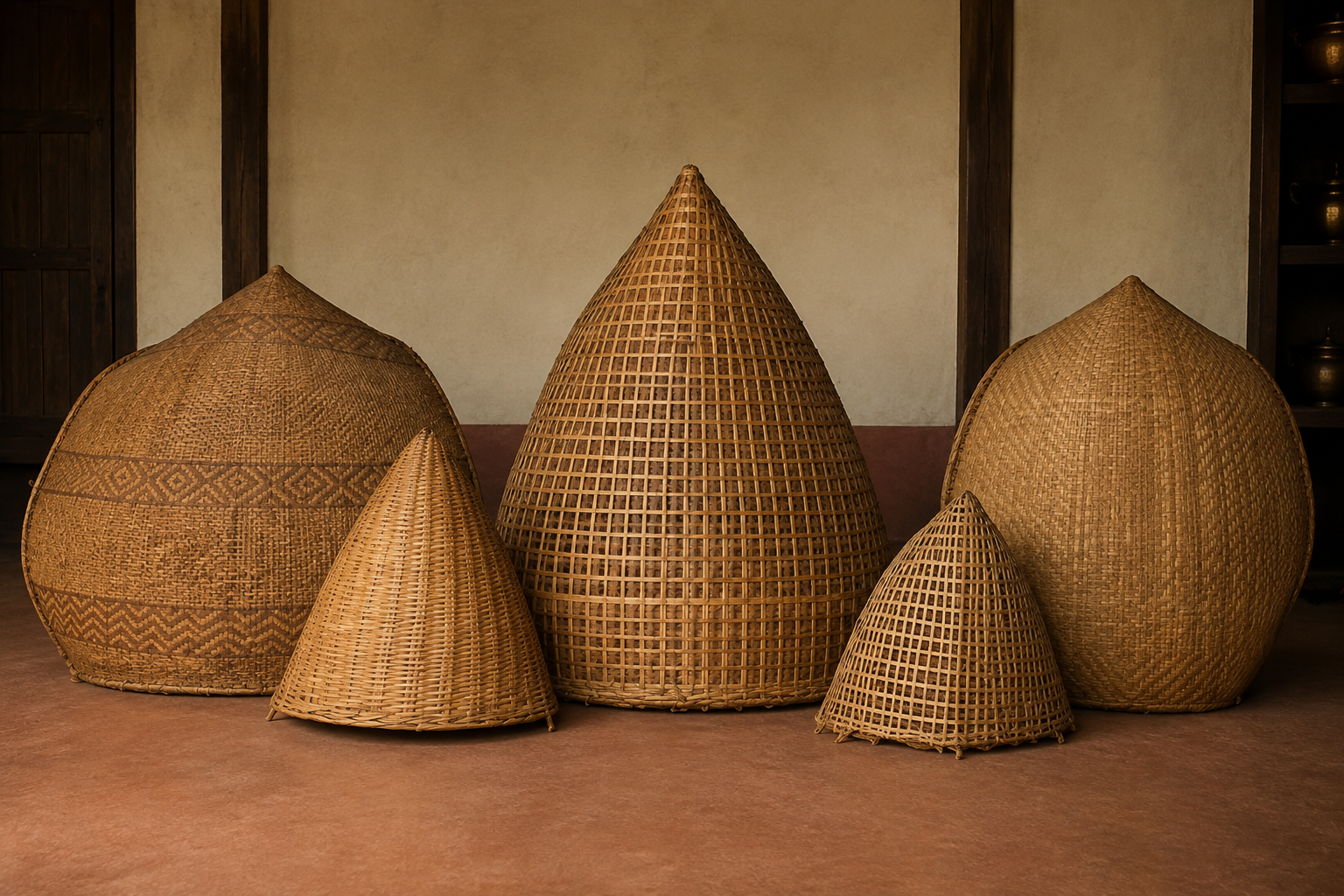
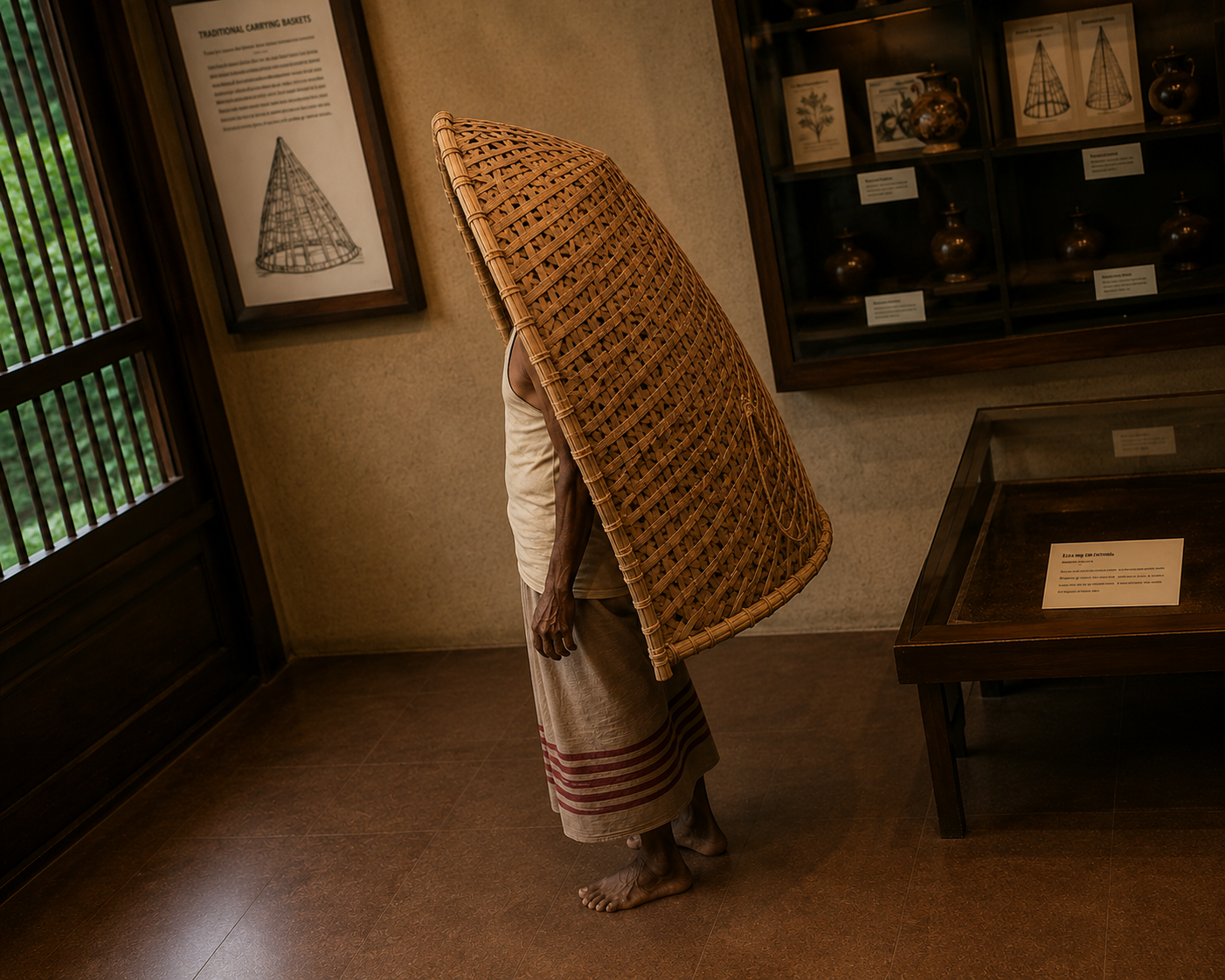
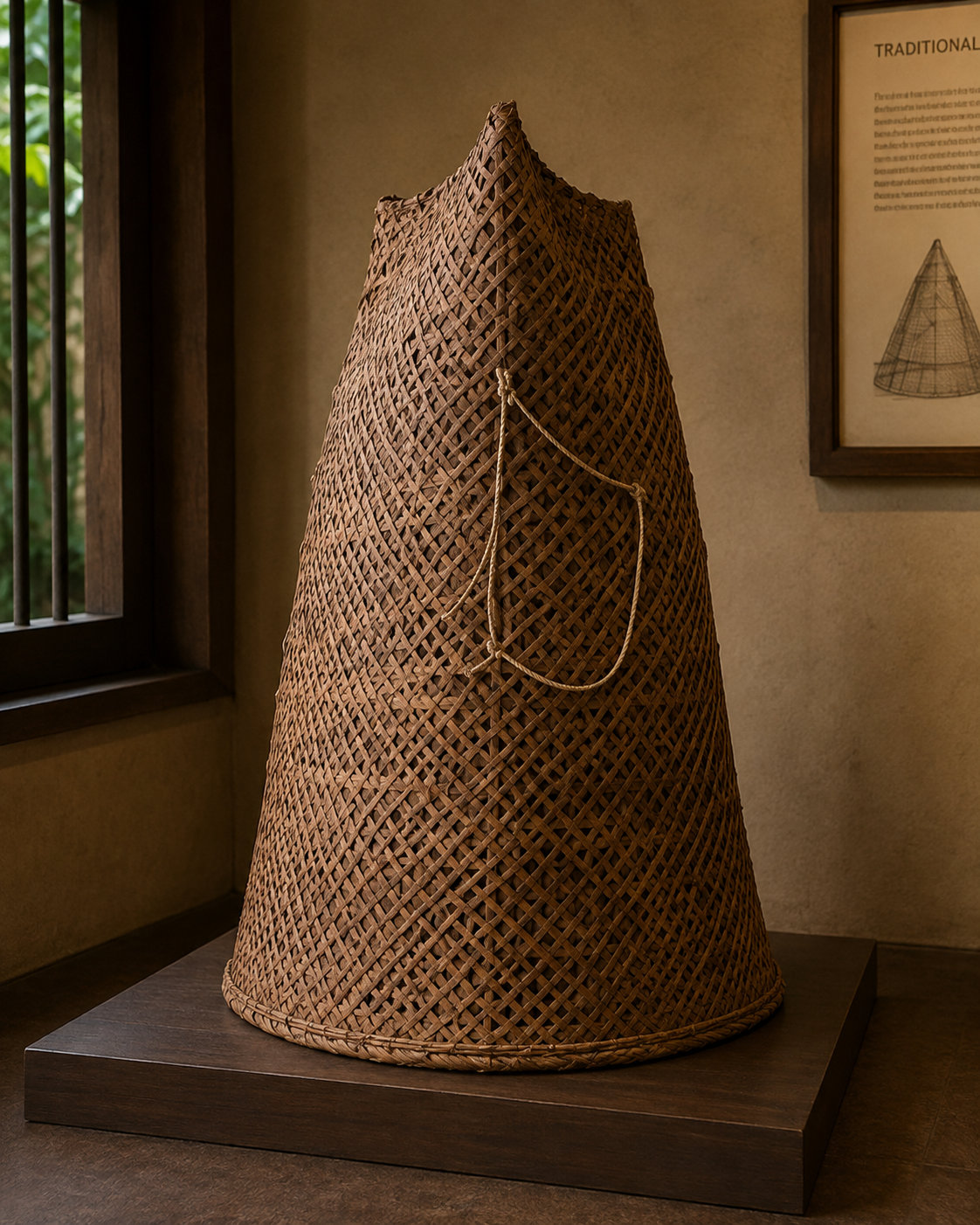
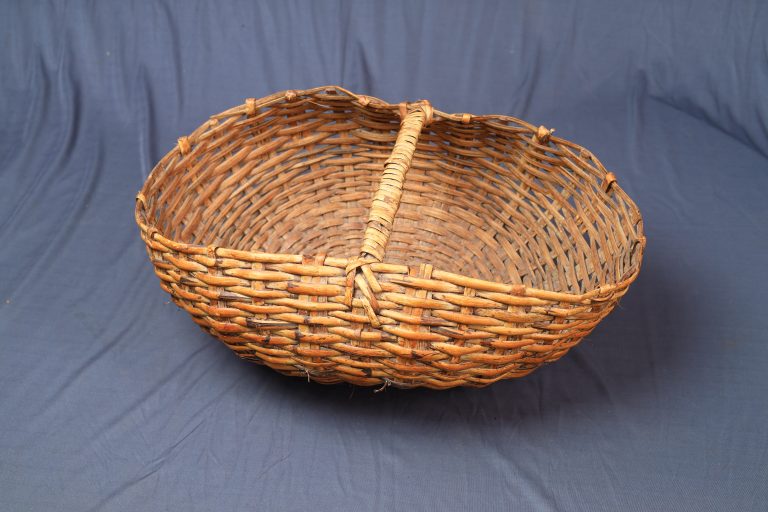
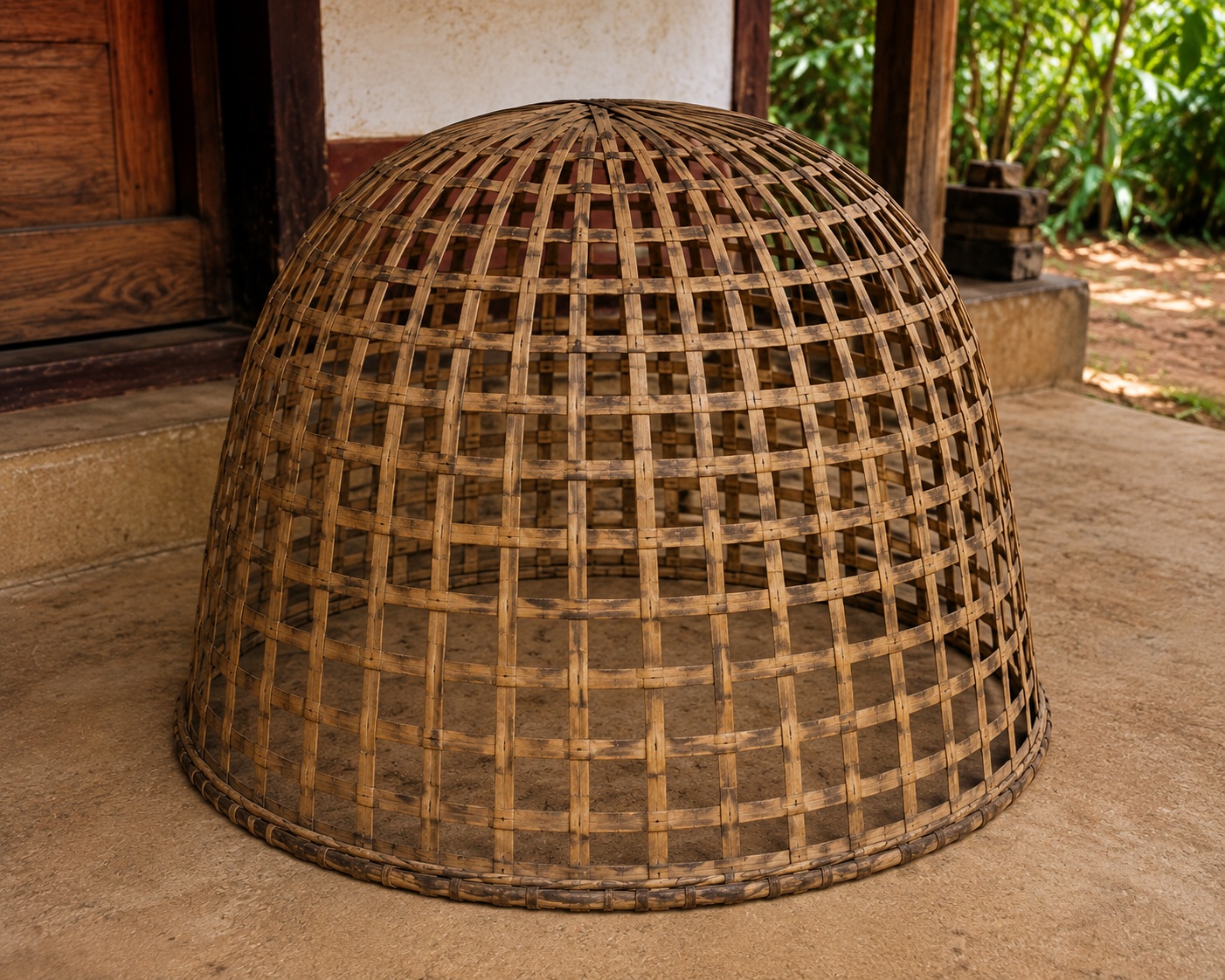
Koramba Kode / Kori Kode is a traditional umbrella-like rain protection device worn over the head. It was commonly used in earlier times to protect the head and back from rain.
Koramba Kode / Kori Kode is a traditional rain-protection device that resembles an umbrella but is designed to be worn over the head and upper back. It was commonly used in earlier times in Kodagu, particularly by people who had to work outdoors in the region’s heavy rainfall. Unlike a conventional handheld umbrella, the Koramba Kode allowed the wearer to keep both hands free while working
How It Was Used
Traditional use: The woven construction and distinctive hexagonal outer pattern demonstrate knowledge of working with natural fibres and plant materials.
Cultural significance: Its design reflects an adaptation to heavy rainfall and outdoor working conditions, providing protection without restricting the user's hands Koramba Kode is an important example of traditional rain protection technology, combining locally available materials with a practical design that enabled people to work outdoors while keeping their hands free. It also represents the ingenuity of traditional material culture in a region characterised by heavy rainfal
Historical context: The Kodagu Heritage record places its tentative period of use before and during the reign of the Kodagu Rajas and the British rulers. Similar traditional forms are still found in a few regions with heavy rainfall, including Mangalore, although the traditional Koramba Kode has largely disappeared from everyday use. the term koaramb could be also derived from tulunad while the original term was kori kode
Material & Making
BambooCane
Koramba Kode demonstrates the traditional use of bamboo, cane, reed and leaves to create practical objects suited to the local environment. The woven construction and distinctive hexagonal outer pattern demonstrate knowledge of working with natural fibres and plant materials.
Who Used It? / Where? / When?
OwnershipNot yet recorded
Period
Pre-colonial
Status of traditionStill used ceremonially
The Tradition Today
Reason for decline: The traditional form has been largely replaced by modern materials, particularly plastic, although some variants continue to survive.
Revival efforts: some variants are still in use in certain areas, providing an opportunity to preserve the knowledge and craftsmanship associated with the object.Examples are recorded in old independent houses, private houses and Ainmanes, while some variants are also held by collectors.
Sources
Source not recorded