About the Object
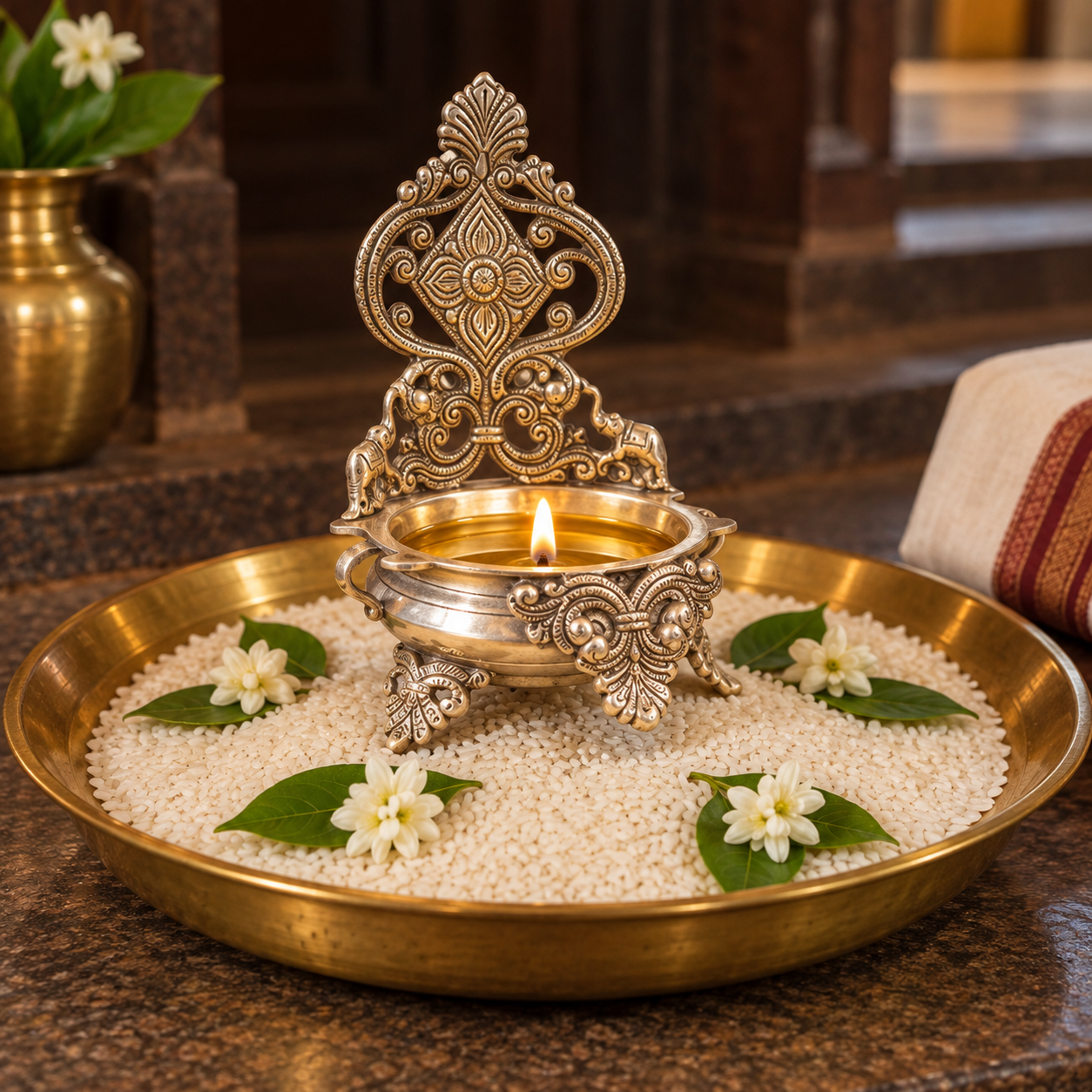
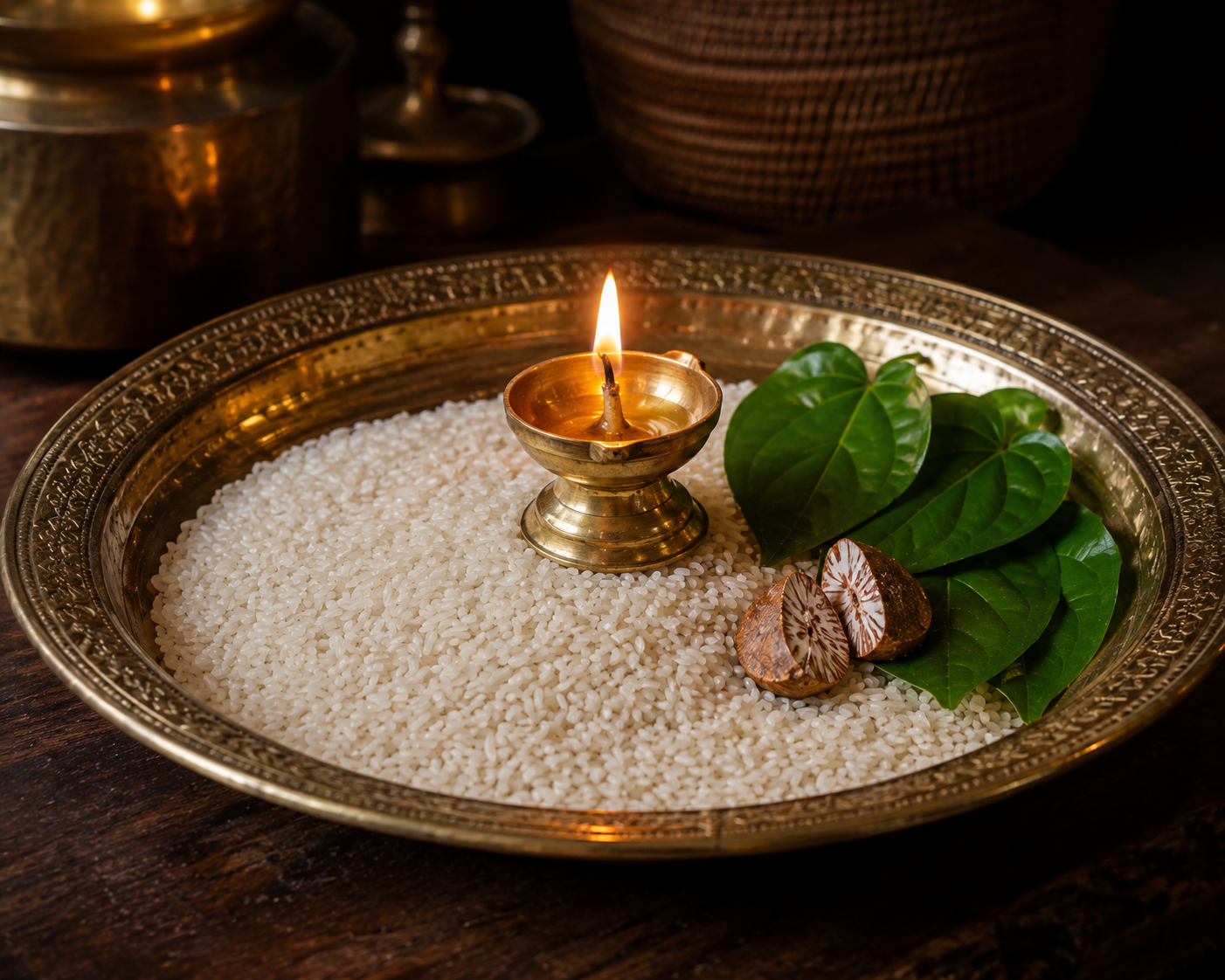
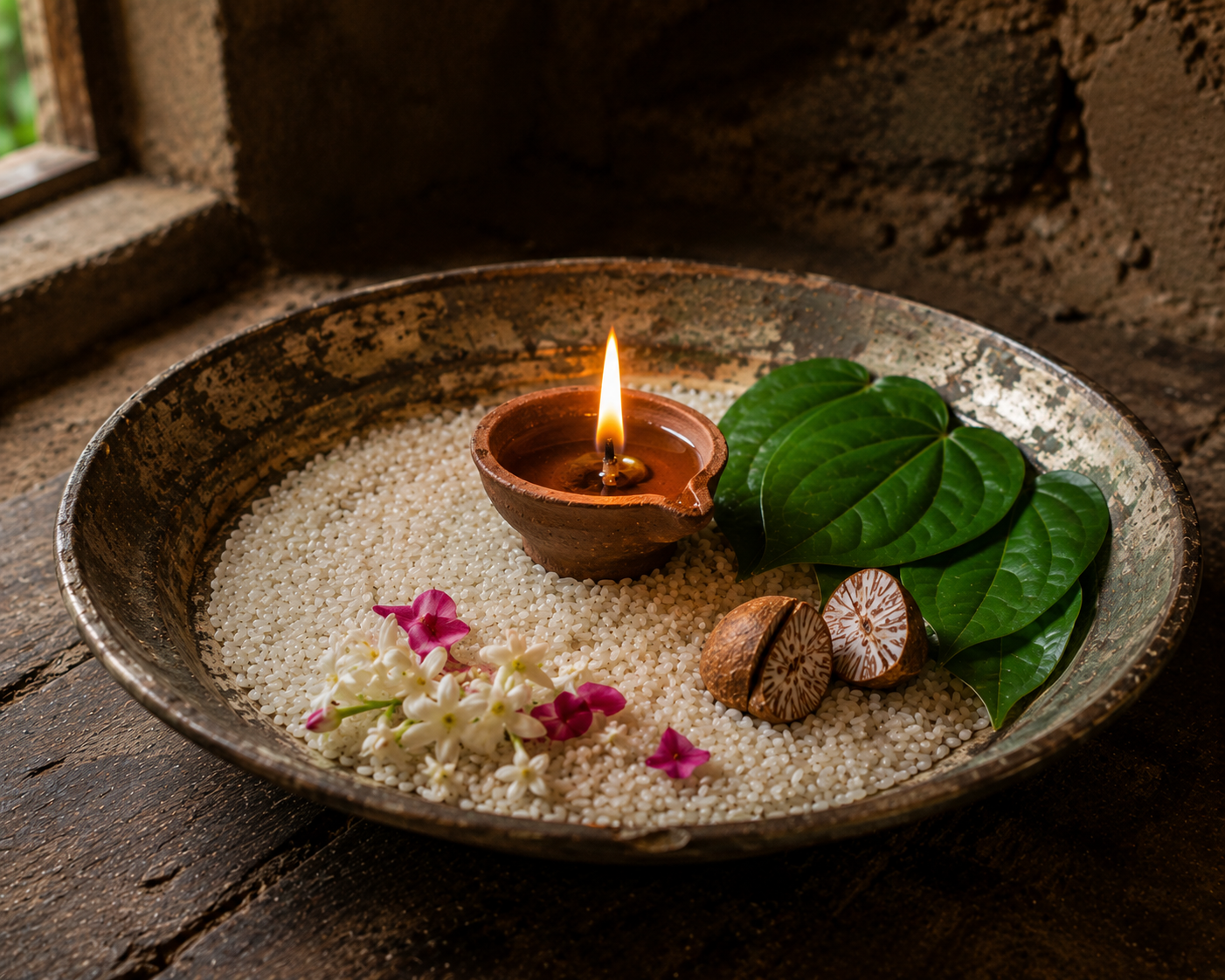
Thaliyathakki Bolcha is a traditional Kodava ritual arrangement consisting of a silver or bell-metal plate covered with a layer of rice, on which a small mud or brass oil lamp
Thaliyathakki Bolcha is more than a lamp; it is a ritual object combining light, rice and traditional offerings. A plate of silver or bell metal is prepared with a layer of rice, and a small mud or brass lamp is placed upon it and lit with oil and wicks. Betel leaves and betel nut form part of the traditional arrangement. The combination brings together some of the most important elements of Kodava ritual life—light, grain, prosperity and ceremonial offering.
How It Was Used
Traditional use: It is used during important Kodava rituals and ceremonies, particularly processions, festivals and wedding ceremonies. During Puthari-related rituals, women carry the Thaliyathakki Bolcha as part of the ceremonial proceedings.
It also has an important place in wedding rituals, where it is kept beside the bride and groom along with other ceremonial object
Cultural significance: Thaliyathakki Bolcha represents the union of light, rice and ritual offering. Rice signifies the agricultural foundation of Kodava life, while the lamp represents sacred light. Its use in ceremonies gives the object a role beyond illumination, making it an important symbol of ritual purity, prosperity and continuity. It is traditionally encountered in Kodava homes, ceremonial spaces, wedding settings, temple-related processions and festival rituals. During certain processions, it is carried at the front of the group, giving it an important ceremonial position.
Historical context: Thaliyathakki Bolcha belongs to the traditional material culture of Kodagu and forms part of the wider family of Bolcha, or traditional lamps. The KodavaClan heritage record places Bolcha traditions within the history of Kodava domestic and ceremonial life.
Material & Making
BrassSilverClay
The plate is traditionally produced by shaping and finishing silver or bell metal into a shallow, stable ceremonial dish. The small lamp placed upon it may be made from mud or brass. For ritual use, cleaned rice is spread evenly across the plate, after which the lamp is filled with oil, fitted with a wick and lit. Betel leaves and betel nut are then arranged as part of the ceremonial offering.
The Tradition Today
Reason for decline: The traditional form has declined with changes in household materials and ceremonial practices. Modern manufactured lamps, metalware and other convenient objects have reduced the everyday presence of many traditional Bolcha forms. However, Thaliyathakki Bolcha remains relevant where traditional ceremonies continue.
Revival efforts: Thaliyathakki Bolcha can be preserved by continuing its use in weddings, Puthari and other traditional ceremonies, documenting regional variations and teaching younger generations the correct ceremonial arrangement.