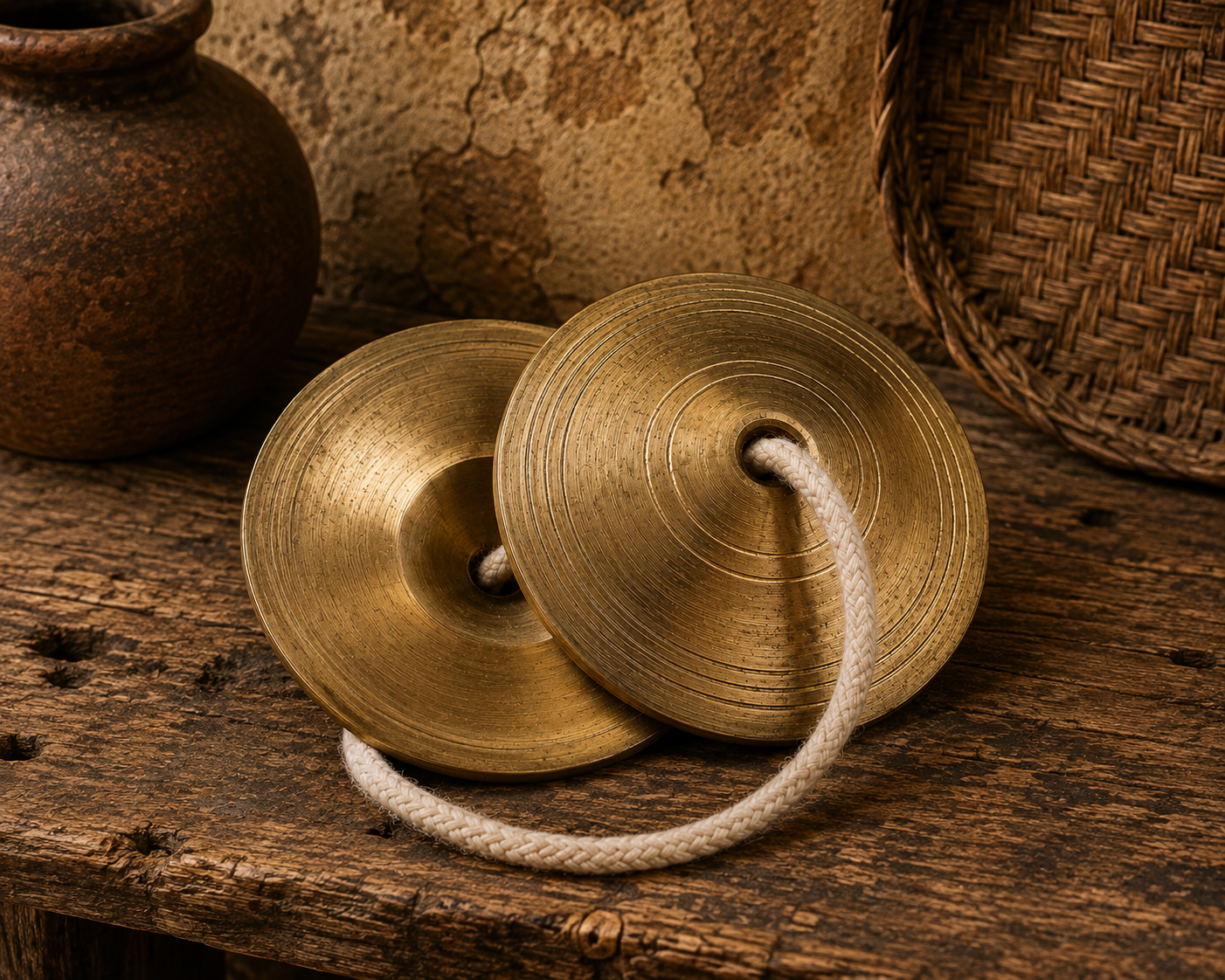
The cymbals consist of two matching, shallow, circular metal discs, each with a raised central portion and a small opening through which a cord or cloth handle is attached. The performer holds one cymbal in each hand and brings them together rhythmically to produce a bright, metallic sound.
Within the Valaga, the cymbals provide a clear rhythmic accent that complements the deeper sounds of instruments such as the Dholl and the melodic tones of instruments such as the Mori
Traditional use: Cymbals are played as part of the Valaga, helping maintain and emphasise the rhythm of the traditional musical ensemble.
Each cymbal is a round, slightly concave metal disc with a raised central boss. A small hole in the centre allows a cord or strap to be attached so that the instrument can be securely held while playing.
Cultural significance: The cymbals provide a sharp, bright rhythmic sound within Valaga. Their role is complementary to the drums and wind instruments, helping create a coordinated rhythmic structure for the ensemble. Cymbals are an integral rhythmic component of the traditional Valaga ensemble. Although simple in construction, they perform an important musical function by providing sharp, clearly audible rhythmic accents that interact with the deeper percussion of the Dholl and the tones of the Mori and other instruments.
Historical context: Cymbals belong to the long-standing tradition of using hand-played percussion instruments in ceremonial music. Their presence within Valaga reflects the ensemble-based nature of traditional Kodava music.
Cymbals were traditionally used during:
Valaga
Ceremonial occasions
Traditional processions
Community gatherings
Other important cultural events accompanied by Valaga music
The sound of a cymbal depends greatly on its metal composition, thickness, curvature and weight. Traditional examples often show evidence of hand craftsmanship and use over many years.
The simple cord or cloth loop is an important functional feature, allowing the performer to hold and control each disc while striking them together.
Reason for decline: The traditional use of cymbals, like several other Valaga instruments, has been affected by changing ceremonial practices and the increasing use of modern instruments and amplified music
Revival efforts: Cymbals continue to have relevance wherever traditional Valaga is performed and preserved. Teaching younger musicians to play the complete ensemble can help ensure that the instrument's traditional role is not lost
You are preserving Thaala — Traditional Hand Cymbals.