A living archive of Kodagu — objects, memories, skills and the voices of the people who kept them. See what's on display →
Dholl
Music & Performance · Traditional music Instrument

Dholl

Traditional Drum
Also written: Dholl ಧೋಲ್

Virtual Museum of
Kodava Heritage

Help Preserve

This Piece of Kodava Heritage

Your support helps us preserve our heritage
for today and future generations.

Support as
a Custodian
₹1,500
per artifact
About the Object

Dholl is a traditional drum used as part of the Valaga, the ceremonial musical ensemble of the Kodava community

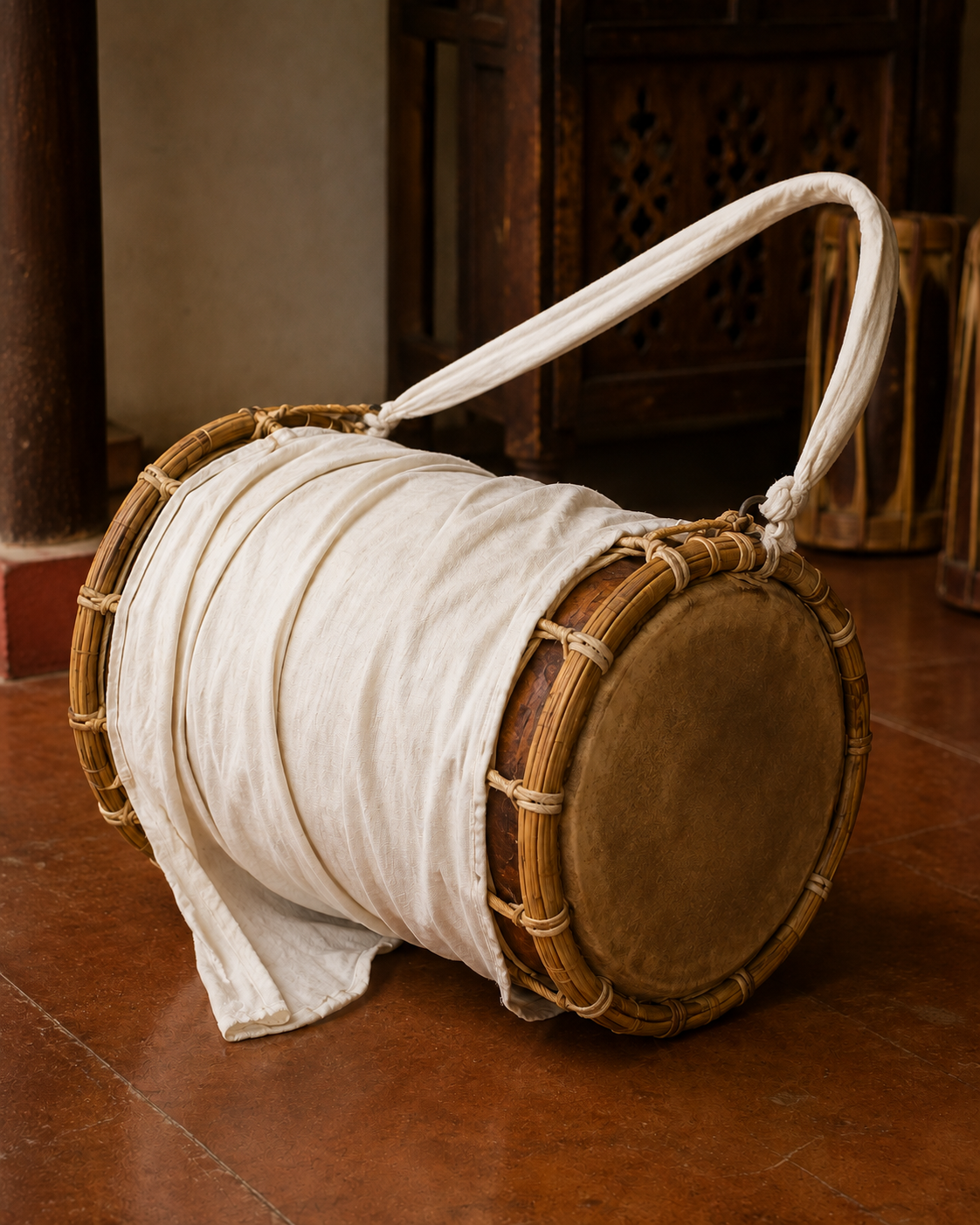
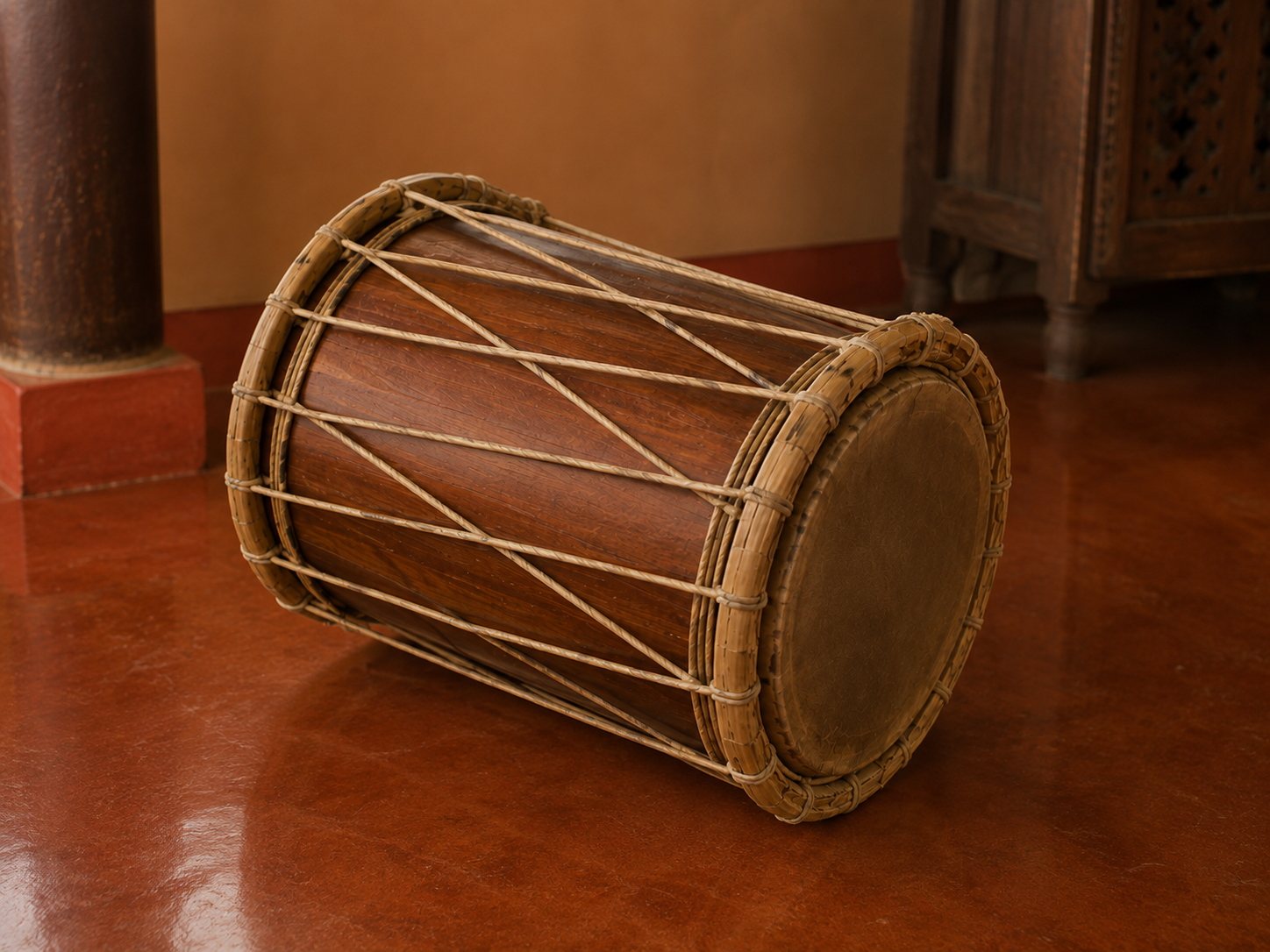
Dholl is a traditional percussion instrument played during Valaga, where its deep and resonant beats form an important part of the musical accompaniment. The drum has a cylindrical wooden body with stretched drumheads at its ends and is traditionally carried using a strap placed over the shoulder.
Its strong rhythmic sound complements the other instruments of the Valaga ensemble and contributes to the distinctive atmosphere of Kodava ceremonial occasions. The Dholl has a cylindrical or barrel-shaped body, with drumheads stretched across its ends. It is designed to be carried horizontally and played while suspended from the player's shoulder.

How It Was Used

Traditional use: The Dholl was primarily used during Valaga, providing the rhythmic foundation for the ensemble during traditional ceremonies and processions. The Dholl represents the strong rhythmic tradition at the heart of Valaga, one of the important forms of traditional Kodava ceremonial music. Its deep percussion provides energy and structure to the ensemble while accompanying community gatherings and traditional occasions.
As a physical object, the Dholl also preserves knowledge of traditional woodworking, hide preparation and musical craftsmanship.

Cultural significance: Dholl is an important component of Valaga music. Its powerful rhythm helps establish the tempo and provides the percussion foundation for the ceremonial ensemble. Variations can occur in:
Size of the drum
Thickness and type of wood the wood can be of Umbli , Sampige or even Jack
Type of hide used
Method of securing and tensioning the drumheads
Decorative treatment of the body

Historical context: The Dholl belongs to the traditional musical culture of Kodagu, where percussion instruments played an important role in ceremonial gatherings, processions and community traditions.

Material & Making
WoodCaneCottonLeather

The instrument combines woodworking, hide preparation and traditional drum-making skills. Achieving the correct tension of the drumheads was important for producing a strong and resonant sound.
Its shoulder strap allowed the drummer to carry and play the instrument while moving with the Valaga ensemble,

Who Used It? / Where? / When?
OwnershipNot yet recorded
Period Ancient
Status of traditionStill used ceremonially
The Tradition Today

Reason for decline: The traditional use of Dholl has declined as ceremonial practices have changed and modern musical instruments and amplified sound systems have become more common

Revival efforts: Traditional Valaga music continues to be valued as part of Kodava cultural heritage. Dholl remains relevant wherever traditional Valaga performances are preserved and presented during cultural and community event

Sources
KodavaClan archive
Reference link