About the Object
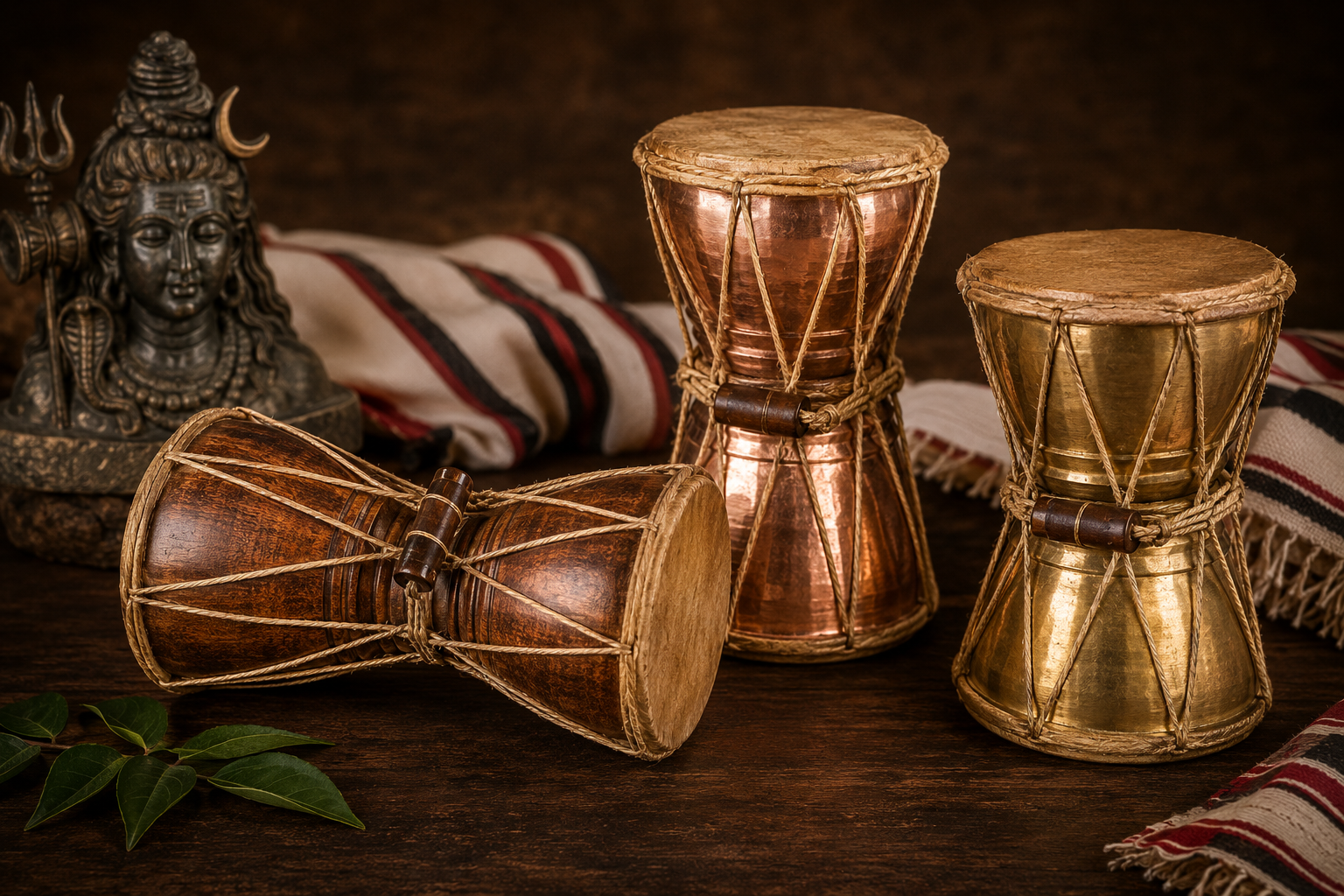
The Dhudi, also known as Dudi or Thudi, is a small, hourglass-shaped hand drum that holds an important place in the musical and oral traditions of the Kodavas. Its rhythm accompanies traditional Kodava songs, ritual performances and oral traditions, including Baalopaat and Battépaat.
The Dhudi is a compact, waisted hand drum played by hand. Despite its small size, it produces a distinctive rhythmic sound and has traditionally accompanied Kodava songs, performances and oral traditions.
Dhudis are traditionally found in three forms based on their material — wood, copper and brass. The wooden form is traditionally carved from Kummi Mara, a locally known timber associated with the making of the instrument.
Both ends of the drum are covered with animal hide, which is carefully stretched and secured to the body. The tension of the drumheads determines the character of its sound.
A distinctive feature of the Dhudi is the Murk, a central grip or mechanism associated with the drum. The performer can manipulate it while playing, influencing the tension, pitch and intensity of the sound.
The Dhudi provides the rhythmic foundation for songs and narratives, allowing the performer to maintain a continuous rhythmic pulse while singing or participating in the performance
How It Was Used
Traditional use: Accompanying traditional Kodava songs
Providing rhythm for Baalopaat
Accompanying Battépaat
Used during ritual performances
Supporting oral storytelling and narrative traditions
Providing a continuous rhythmic pulse during performances
Cultural significance: The Dhudi is more than a percussion instrument. It is closely connected with the oral heritage of Kodagu, where songs and performances traditionally served as important ways of preserving stories, traditions and collective memory.
Its rhythm gives structure to songs and stories passed from one generation to another. Its traditional association with Lord Shiva, together with its role in music, ritual and oral traditions, gives the Dhudi a deeper cultural significance within Kodava heritage.
Historical context: According to Kodava oral tradition, Lord Shiva presented the Dhudi to the Kodavas as a token of his appreciation during the time of the Mahabharata.
Whether understood as sacred tradition or cultural memory, this belief places the Dhudi within the legendary and spiritual traditions of the Kodavas and connects the instrument with an ancient relationship between the community and the divine
Material & Making
WoodBrassLeather
The Dhudi is traditionally made in a compact hourglass or waisted form, with a drumhead stretched across each end.
Wooden Dhudis are traditionally carved from Kummi Mara. The two ends are then fitted with animal hide, which is carefully stretched and secured to create the drumheads.
The central Murk forms a distinctive part of the instrument and can be manipulated by the performer while playing to influence the sound.
Who Used It? / Where? / When?
OwnershipNot yet recorded
Period
Ancient
Status of traditionStill used ceremonially
The Tradition Today
Reason for decline: The traditional use of the Dhudi has declined as oral traditions, traditional performances and older forms of community music have become less common in everyday life.
Changes in entertainment, musical practices and the way younger generations engage with traditional culture have also reduced opportunities for the instrument to be used regularly.
Revival efforts: The Dhudi remains a living traditional instrument and can be preserved by continuing to use it in Kodava cultural performances, traditional songs, rituals and oral-history programmes.
Teaching younger generations to play the Dhudi, encouraging traditional musicians and craftsmen to continue making it, and documenting the wooden, copper and brass forms can help preserve both the instrument and the knowledge surrounding it.
Recording performances of Baalopaat and Battépaat with the Dhudi will also help preserve the relationship between the instrument and Kodava oral traditions.
Sources
Source not recorded
Kodava Clan — Kodagu Heritage / Virtual Modagoodē Virtual Museum. The source documents the Dhudi's traditional forms, construction, materials, association with Lord Shiva, and its role in Baalopaat, Battépaat, ritual performances and Kodava oral
Reference link