

Thaala
Contents
Thaala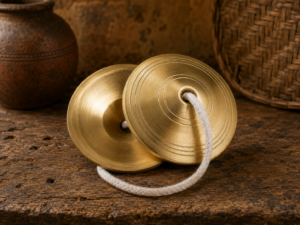
1. Object Name
Cymbals
2. Kodava Name
Cymbals — traditionally used as a percussion component of the Valaga ensemble.
3. English Name
Traditional Hand Cymbals
4. Alternate Names
They may also be described as paired cymbals or hand cymbals.
5. Short Description
Cymbals are a pair of small, circular metal percussion discs played by striking them together. They form part of the traditional Valaga musical ensemble.
6. Full Description
The cymbals consist of two matching, shallow, circular metal discs, each with a raised central portion and a small opening through which a cord or cloth handle is attached. The performer holds one cymbal in each hand and brings them together rhythmically to produce a bright, metallic sound.
Within the Valaga, the cymbals provide a clear rhythmic accent that complements the deeper sounds of instruments such as the Dholl and the melodic tones of instruments such as the Mori.
7. Traditional Use
Cymbals are played as part of the Valaga, helping maintain and emphasise the rhythm of the traditional musical ensemble.
8. Design & Form
Each cymbal is a round, slightly concave metal disc with a raised central boss. A small hole in the centre allows a cord or strap to be attached so that the instrument can be securely held while playing.
9. Materials
Traditional cymbals are generally made from:
- Brass or bronze
- Other traditional metal alloys
- Cotton or natural-fibre cord for the hand grip
10. Method of Making
The metal discs are traditionally formed and shaped to create their characteristic shallow, curved profile. The surface may be finished by hammering, turning or polishing, depending on the craftsmanship and period of the instrument.
The central opening is fitted with a cord or strap that allows the player to hold the cymbal securely.
11. Variants / Types
Variations may occur in:
- Diameter
- Thickness
- Weight
- Degree of curvature
- Metal alloy
- Surface finish
- Type of hand cord
These differences affect the tone and volume produced.
12. Cultural / Functional Significance
The cymbals provide a sharp, bright rhythmic sound within Valaga. Their role is complementary to the drums and wind instruments, helping create a coordinated rhythmic structure for the ensemble.
13. Historical Context
Cymbals belong to the long-standing tradition of using hand-played percussion instruments in ceremonial music. Their presence within Valaga reflects the ensemble-based nature of traditional Kodava music.
14. Traditional Location / Setting
Cymbals were traditionally used during:
- Valaga
- Ceremonial occasions
- Traditional processions
- Community gatherings
- Other important cultural events accompanied by Valaga music
15. Craftsmanship / Special Features
The sound of a cymbal depends greatly on its metal composition, thickness, curvature and weight. Traditional examples often show evidence of hand craftsmanship and use over many years.
The simple cord or cloth loop is an important functional feature, allowing the performer to hold and control each disc while striking them together.
16. Reason for Decline
The traditional use of cymbals, like several other Valaga instruments, has been affected by changing ceremonial practices and the increasing use of modern instruments and amplified music.
17. Revival & Continued Use
Cymbals continue to have relevance wherever traditional Valaga is performed and preserved. Teaching younger musicians to play the complete ensemble can help ensure that the instrument’s traditional role is not lost.
18. Preservation
Preservation should include:
- Photographing surviving cymbals
- Recording their diameter, thickness and weight
- Documenting the metal used
- Recording traditional methods of manufacture
- Documenting the hand-grip arrangement
- Recording their sound
- Documenting their rhythmic patterns within Valaga
- Recording performances with the complete Valaga ensemble
19. Historical & Cultural Importance
Cymbals are an integral rhythmic component of the traditional Valaga ensemble. Although simple in construction, they perform an important musical function by providing sharp, clearly audible rhythmic accents that interact with the deeper percussion of the Dholl and the tones of the Mori and other instruments.
Their preservation in the Modha Goode Virtual Museum helps document the complete structure of Valaga music—not only the prominent drums and wind instruments, but also the smaller instruments that collectively create its distinctive ceremonial sound.
Comments
Leave a comment!Login for Post Comment
Last posts