

Otti Mariya
Contents
Otti Mariya
English Name
Wooden Platter for Kneading Rice Dough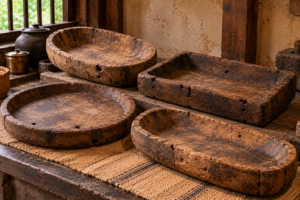
Short Description
Otti Mariyais a traditional wooden platter used for kneading dough to prepare Akki Ottis, the unleavened rice flatbreads of Kodava cuisine. It provides a broad, sturdy surface on which rice flour and cooked rice are worked together into a soft, pliable dough before being shaped into flatbreads.
Full Description
Otti Mariyais a traditional kitchen implement associated with the preparation of Akki Ottis, a familiar food in Kodava households. Made of wood, it provides a convenient working surface for kneading rice dough by hand.
The dough for Akki Ottis is prepared using rice flour and cooked rice. These ingredients are combined and kneaded until they form a smooth, cohesive mixture suitable for shaping into flatbreads. The wooden platter provides a stable surface for this process, allowing the cook to press, fold and work the mixture by hand.
The broad surface of the Otti Mariya makes it practical for handling the dough without requiring a modern countertop or specialised equipment. Its simple construction reflects the usefulness of traditional wooden kitchenware, designed around everyday cooking practices and made from materials available locally.
The Otti Mariya represents the close relationship between traditional kitchen utensils and the preparation of distinctive Kodava foods. Although simple in appearance, it played a practical role in the preparation of a staple that continues to be enjoyed in Kodava homes.
Traditional Use
The Otti Mariya was traditionally used as a working surface for kneading rice flour and cooked rice together into dough for preparing Akki Ottis, the unleavened rice flatbreads of Kodava cuisine.
Design & Form
The Otti Mariya is a broad, flat wooden platter with a relatively smooth working surface. Its shape provides sufficient space for combining and kneading ingredients by hand. The edges may be slightly raised or shaped to help keep the dough within the working area, depending on the individual design.
Materials
The primary material is wood. A sturdy piece of timber with a suitable working surface would be selected to withstand repeated kneading and handling. The natural grain and texture of the wood form part of the object’s traditional appearance.
Method of Making
The platter is made by selecting a suitable piece of timber and shaping it into a broad, flat form. The surface is smoothed to make it suitable for food preparation, while the edges and underside are shaped to provide stability. Traditional woodworking tools would be used to cut, shape and finish the platter.
Variants / Types
Otti Mariya platters may vary in diameter, thickness, outline and the type of wood used. Some may be simple, flat wooden boards, while others may have a shallow rim or a more rounded platter-like form. These differences reflect household preferences and individual woodworking practices.
Cultural / Functional Significance
The Otti Mariya is associated with the preparation of Akki Ottis, a traditional Kodava rice flatbread. It represents the practical kitchen knowledge passed down through generations, in which specialised utensils were used for different stages of preparing everyday foods.
Historical Context
Before modern kitchen countertops and manufactured food-preparation boards became common, wooden platters and boards provided practical surfaces for mixing, kneading and shaping food. The Otti Mariya belongs to this tradition of household woodworking and food preparation in Kodagu.
Traditional Location / Setting
The Otti Mariya was used in the traditional household kitchen of the Kodava Ainmane and other family homes. It would be placed on a stable surface while rice dough was kneaded and prepared for making Akki Ottis.
Craftsmanship / Special Features
The Otti Mariya demonstrates the utility of traditional woodworking. Its broad surface, sturdy construction and smooth finish make it suitable for repeated hand-kneading. The design is simple and functional, with its form determined by the task it was intended to perform.
Reason for Decline
The use of traditional wooden platters may have declined in some households with the introduction of modern kitchen counters, plastic boards, steel utensils and commercially manufactured food-preparation equipment. Changes in cooking habits have also influenced the use of traditional kitchen implements.
Revival & Continued Use
The Otti Mariya can be preserved through continued preparation of Akki Ottis using traditional methods. Documenting its use through photographs, demonstrations and oral histories can help younger generations understand the role of traditional utensils in Kodava cuisine.
Preservation
The wooden platter should be kept clean and thoroughly dried after use to prevent moisture damage, warping and fungal growth. It should be stored in a dry, well-ventilated place. Where an old example survives, its dimensions, wood type, shape and method of use should be recorded for museum documentation.
Virtual Modha goode
- Virtiual Modhagood – The virtual Museum of Kodava Heritage.
- https://kodavaclan.com/modha-goode/#galleries
Comments
Leave a comment!Login for Post Comment
Last posts