

Oad
Contents
Oad
English Name
Traditional Clay or Iron Pan for Making Akki Otti
Alternate Names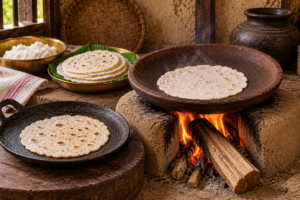
Oad, Otti Pan, Traditional Rice Flatbread Pan
Short Description
Oad is a traditional cooking pan used to prepare Akki Otti, the unleavened rice flatbread of Kodava cuisine. Traditionally made from clay or iron, it provides the heated cooking surface on which the prepared rice dough is cooked into flatbreads.
Full Description
The Oad is a traditional kitchen utensil associated with the preparation of Akki Otti, an important food in Kodava households. Made from clay or iron, the pan is placed over a traditional cooking fire and heated before the prepared rice dough is cooked on its surface.
Akki Otti is made using rice flour and cooked rice, which are kneaded together to form a soft, pliable dough. Small portions are shaped into flatbreads and placed on the heated Oad. The bread is cooked until the surface sets and develops the characteristic appearance and texture associated with traditionally prepared rice flatbreads.
The clay and iron versions reflect different approaches to traditional cookware. A clay pan has an earthy, handmade character, while an iron pan offers a sturdy cooking surface capable of withstanding repeated heating. Both are associated with the everyday kitchen practices through which traditional Kodava foods were prepared.
The Oad represents the close connection between traditional cookware, wood-fired cooking and the culinary heritage of Kodagu.
Traditional Use
The Oad was traditionally used to cook Akki Ottis by placing the prepared rice dough flatbread on its heated clay or iron surface over a cooking fire.
Design & Form
The Oad is a relatively flat cooking pan with a broad surface suitable for cooking rice flatbreads. Its shape allows the dough to spread into a flat round form and cook evenly. Depending on the version, it may have a shallow rim and a simple, sturdy profile.
Materials
The Oad is traditionally made from clay or iron. Clay versions have an earthy, handcrafted appearance, while iron versions are generally dark, heavy and durable. The material influences the pan’s weight, heat retention and cooking characteristics.
Method of Making
A clay Oad is shaped from prepared clay, formed into a broad, shallow pan and dried before firing. An iron Oad is made by shaping iron into a flat cooking vessel using traditional metalworking methods. The finished pan is designed to withstand repeated heating during food preparation.
Variants / Types
The principal variants are clay Oads and iron Oads. They may differ in diameter, thickness, rim height and overall shape according to household requirements and traditional manufacturing practices.
Cultural / Functional Significance
The Oad is associated with Akki Otti, a familiar food in Kodava cuisine. It represents the traditional cooking knowledge and utensils used to prepare everyday meals in Kodava households.
Historical Context
Before modern gas stoves, non-stick pans and other contemporary cookware became widespread, traditional clay and iron vessels were important components of household kitchens. The Oad belongs to this tradition of cooking with durable materials over wood-fired hearths.
Traditional Location / Setting
The Oad was used in the traditional kitchens of Kodava homes and Ainmanes, where cooking was often carried out over a wood-fired hearth. It was heated directly over the fire for preparing Akki Ottis.
Craftsmanship / Special Features
The Oad demonstrates the practical design of traditional cookware. Its broad cooking surface is suited to flatbreads, while the clay or iron construction allows it to be used repeatedly over heat. Its simple form reflects a design developed around a specific culinary purpose.
Reason for Decline
The use of traditional Oads may have declined in some households with the adoption of modern cookware, gas stoves and electric cooking appliances. Changes in kitchen design and food-preparation habits have also influenced the use of older cooking utensils.
Revival & Continued Use
Traditional Oads can be preserved through continued preparation of Akki Ottis using customary cooking methods. Demonstrations, cooking workshops and heritage documentation can help younger generations understand the role of this pan in Kodava cuisine.
Preservation
Clay Oads should be handled carefully to prevent cracking and breakage, while iron versions should be kept dry to reduce rusting. Surviving examples can be documented through photographs, measurements, material identification and oral histories describing their use.
Historical & Cultural Importance
The Oad represents the material culture of traditional Kodava kitchens and the culinary practices associated with Akki Otti. Its clay and iron forms reflect the use of locally familiar materials and practical cooking methods passed down through generations. Preserving the Oad helps document the utensils, skills and food traditions that form an enduring part of Kodava heritage.
Comments
Leave a comment!Login for Post Comment
Last posts