

seekala / cheekala
Contents
Sekala / Chekala 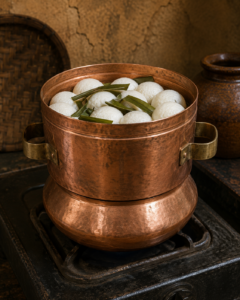
1. Object Name
Sekala / Chekala
2. Kodava Name
Sekala / Chekala
3. English Name
Traditional Steam-Baking Vessel
4. Alternate Names
Sekala and Chekala are variant names used for this traditional cooking vessel.
5. Short Description
Sekala / Chekala is a traditional vessel used for cooking or baking food with steam. It was traditionally made from copper, brass or thin iron sheet.
6. Full Description
Sekala / Chekala is a traditional steam-cooking vessel designed to cook food using the heat and moisture generated by boiling water. The vessel consists of a lower section that holds water and an upper section in which the food is placed, allowing steam to rise and cook the contents.
It was particularly useful for preparing steamed foods in the traditional kitchen. Depending on availability and period, such vessels were made from copper, brass or thin iron sheet. The metal construction allowed the vessel to withstand repeated heating while providing an efficient method of steam cooking.
7. Traditional Use
Sekala / Chekala was used for steam-baking and steaming food, particularly in the traditional household kitchen.
8. Design & Form
The vessel generally consists of stacked cylindrical sections, with the lower portion serving as the water chamber and the upper portion holding the food to be steamed.
The sections fit together so that steam generated in the lower chamber can rise into the upper chamber.
9. Materials
Traditional Sekala / Chekala vessels were made from:
- Copper
- Brass
- Thin iron sheet
10. Method of Making
Metal sheets were shaped into cylindrical vessels and joined or formed to create the individual sections. Handles and rims were added where required.
Copper and brass examples were traditionally crafted by skilled metalworkers, while thin iron-sheet versions could be fabricated into lightweight cooking vessels.
11. Variants / Types
Variants existed according to:
- Material
- Size
- Number of stacked sections
- Shape of the cooking chamber
- Handle design
- Capacity
12. Cultural / Functional Significance
Sekala / Chekala represents the practical ingenuity of the traditional Kodava kitchen, where steam was used as an efficient and gentle method of cooking food.
13. Historical Context
The vessel belongs to the traditional household cooking equipment used in Kodagu. Before modern pressure cookers, electric steamers and other kitchen appliances became widespread, such vessels provided an effective way to prepare steamed foods.
14. Traditional Location / Setting
Sekala / Chekala was traditionally found in the kitchen of a Kodava household, where it was used over a traditional cooking fire or stove.
15. Craftsmanship / Special Features
Its stacked construction is one of its most important functional features. The separation between the water chamber and food chamber allows steam to circulate without placing the food directly in boiling water.
The use of copper, brass and thin iron also reflects the traditional metalworking skills employed in household utensils.
16. Reason for Decline
The use of Sekala / Chekala declined with the introduction of modern steamers, pressure cookers, aluminium and stainless-steel cookware, which made cooking faster and more convenient.
17. Revival & Continued Use
Traditional cooking methods are increasingly being revisited as part of culinary and heritage preservation. Sekala / Chekala can be demonstrated in traditional kitchens, cultural programmes and heritage documentation to preserve knowledge of older cooking practices.
18. Preservation
Preservation should include:
- Photographing examples made from different materials
- Recording dimensions and capacity
- Documenting construction techniques
- Recording traditional recipes prepared using the vessel
- Documenting how the vessel was positioned over the cooking fire
- Recording oral histories from people who remember its use
- Preserving surviving examples in museums and heritage collections
19. Historical & Cultural Importance
Sekala / Chekala represents an important part of the material culture of the traditional Kodava kitchen. Its simple but effective construction demonstrates how earlier households used locally available materials and basic principles of steam to prepare food.
The existence of examples made from copper, brass and thin iron sheet also reflects the evolution of household metalware and the craftsmanship of traditional utensil makers. Preserving Sekala / Chekala in the Modha Goode Virtual Museum helps document not just a cooking vessel, but the technology, craftsmanship and everyday culinary practices of earlier generations in Kodagu.
Comments
Leave a comment!Login for Post Comment
Last posts