About the Object
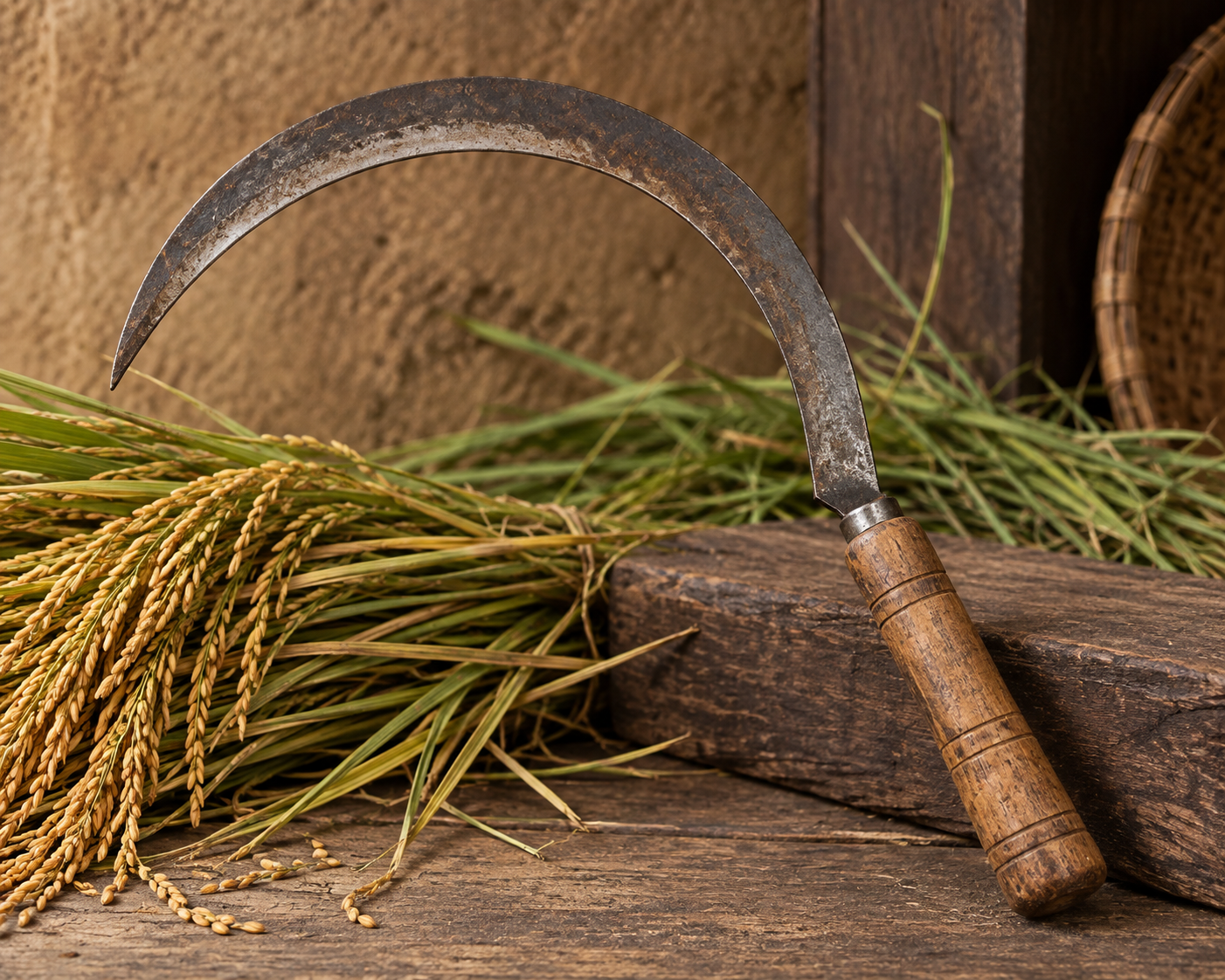
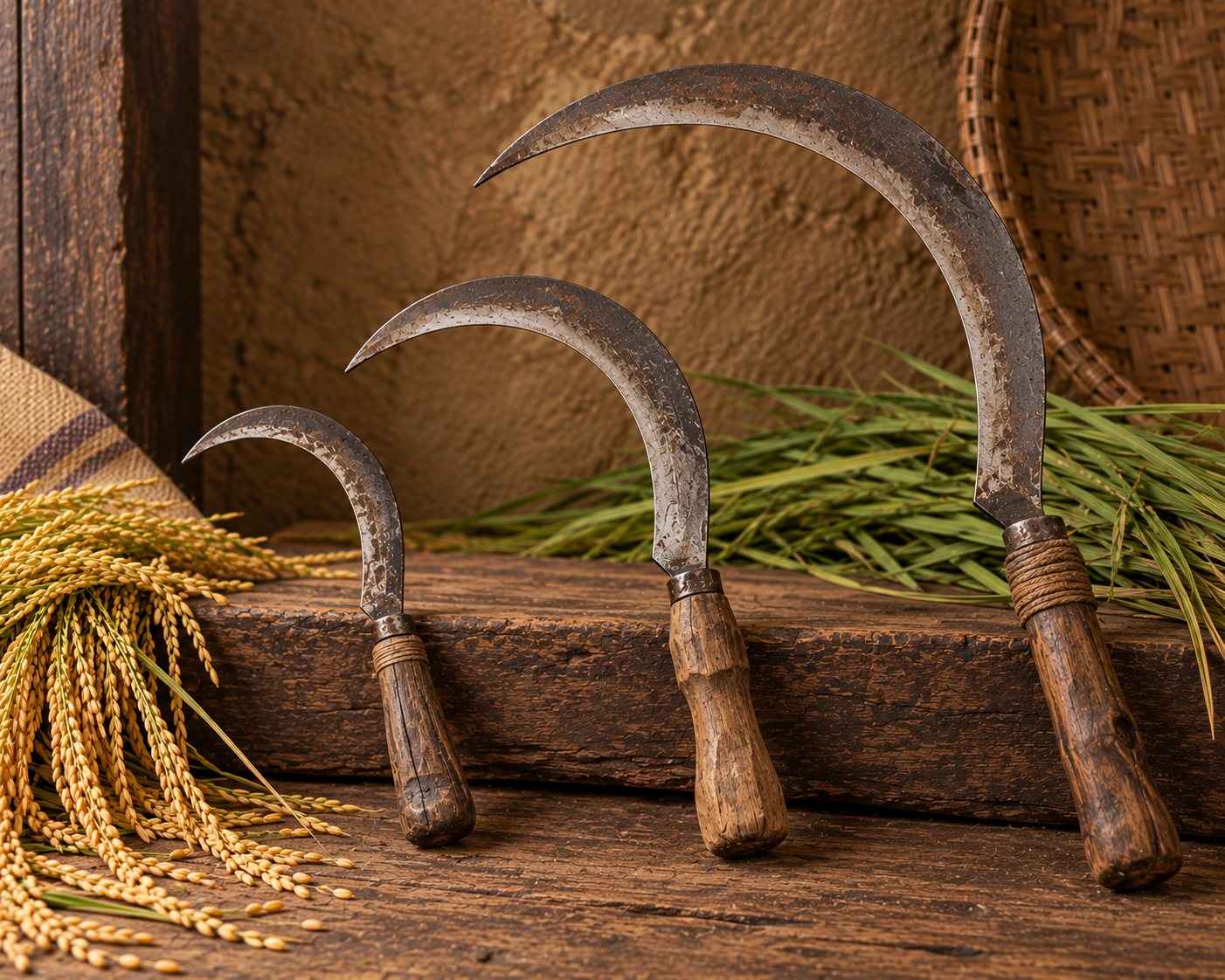
Pill Kathi is a traditional Kodava agricultural knife used for cutting paddy and grass.
Pill Kathi is a traditional Kodava agricultural knife used for cutting paddy and grass. It was a practical implement associated with farming and the management of grass and vegetation.
Pill Kathi was a practical hand tool used in the agricultural life of Kodagu. Its primary purpose was to cut paddy during harvesting and to cut grass for household and agricultural requirements.
As a hand-held cutting implement, it allowed agricultural work to be carried out directly in the fields and surrounding areas without the need for mechanised equipment. The knife represents the close relationship between traditional Kodava households, paddy cultivation, livestock and the landscape around them.
How It Was Used
Traditional use: Pill Kathi was principally used for:
Cutting mature paddy during harvest starting from Puthari
Cutting grass
Gathering vegetation required for household or agricultural purposes
Cultural significance: Pill Kathi represents the agricultural heritage of Kodagu, particularly the importance of paddy cultivation. It is a simple tool, but it reflects the practical knowledge required to harvest and manage crops using hand tools.
Its association with both paddy and grass also connects crop cultivation with the wider needs of traditional rural households
Historical context: Pill Kathi is a small but significant representation of Kodagu's traditional agricultural life. Its use for cutting paddy connects it directly to the region's rice-growing heritage, while its use for grass reflects the broader resource needs of rural households.
As a simple hand tool, it preserves the memory of a time when harvesting, grass cutting and many other agricultural activities depended on human skill, seasonal knowledge and locally made implements
Material & Making
WoodIron
The blade was traditionally made by forging and shaping iron or steel, followed by hammering, grinding and sharpening to create a suitable cutting edge. A wooden handle was shaped separately and fitted securely to the tang or base of the blade.
Variations may have occurred in the size, blade profile, thickness and handle design, depending on the maker and intended use.
Who Used It? / Where? / When?
OwnershipNot yet recorded
Period
Ancient
Status of traditionCommonly used
The Tradition Today
Reason for decline: The regular use of Pill Kathi declined as modern agricultural machinery, mechanical harvesters, manufactured cutting tools and other specialised equipment became more widely available.
Changes in farming practices and the reduction of manual agricultural labour also reduced dependence on traditional hand tools.
Revival efforts: Pill Kathi can be preserved as a living agricultural heritage object by documenting surviving examples and demonstrating its traditional use during heritage and farming programmes.
Traditional paddy-harvesting demonstrations can help younger generations understand how harvesting was carried out before mechanisation.
Sources
Source not recorded