A living archive of Kodagu — objects, memories, skills and the voices of the people who kept them. See what's on display →
Explore / Food & Kitchen / Nooputt Ural
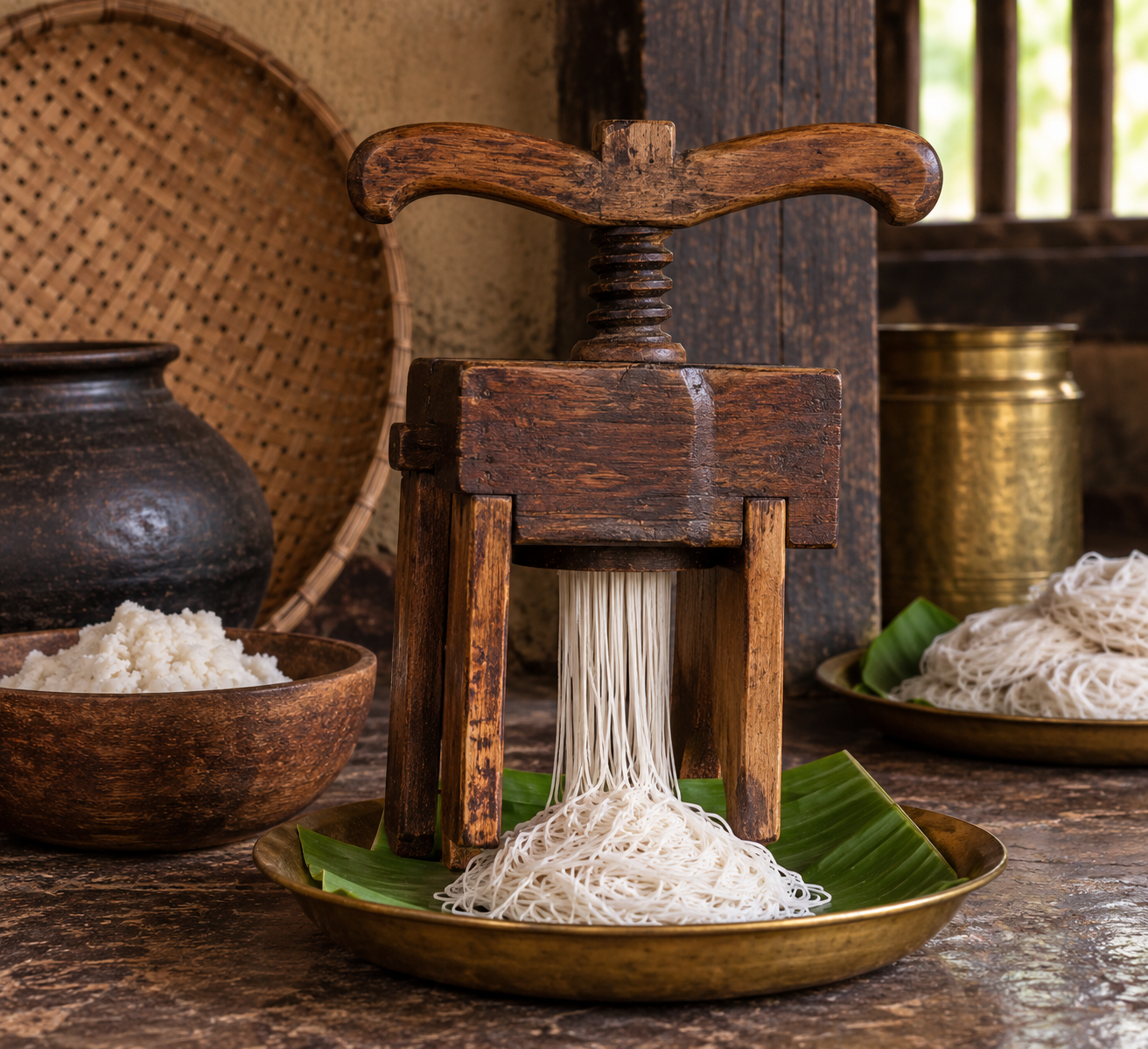
Nooputt Ural
Food & Kitchen · Everyday Life & Household Objects

Nooputt Ural Nooputt Ora

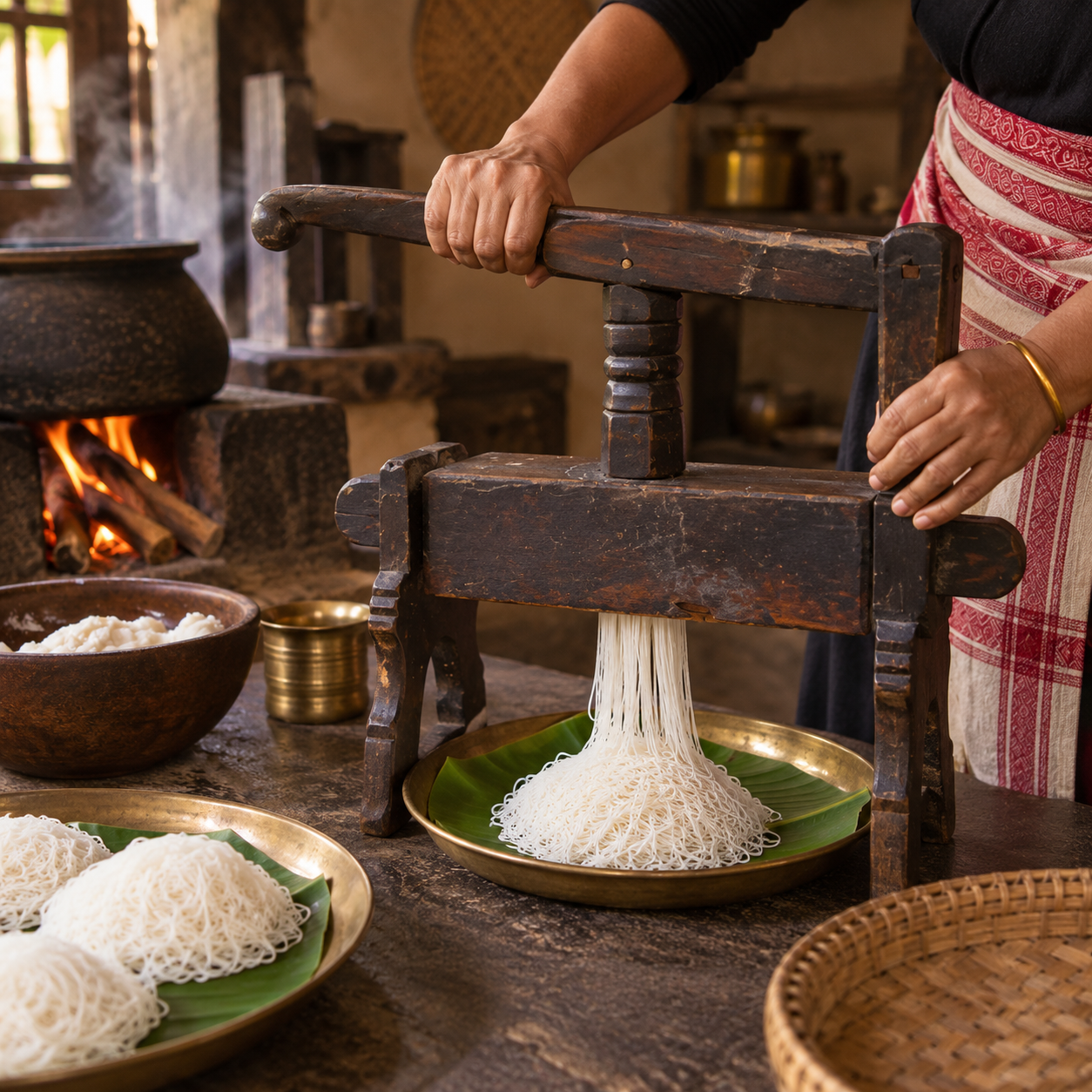
Traditional Wooden string hopper press
Also written: Nooputt Ora - ನೂಪುಟ್ಟ್ ವರ / ನೂಪುಟ್ಟ್ ಉರಲ್

Virtual Museum of
Kodava Heritage

Help Preserve

This Piece of Kodava Heritage

Your support helps us preserve our heritage
for today and future generations.

Support as
a Custodian
₹1,500
per artifact
About the Object

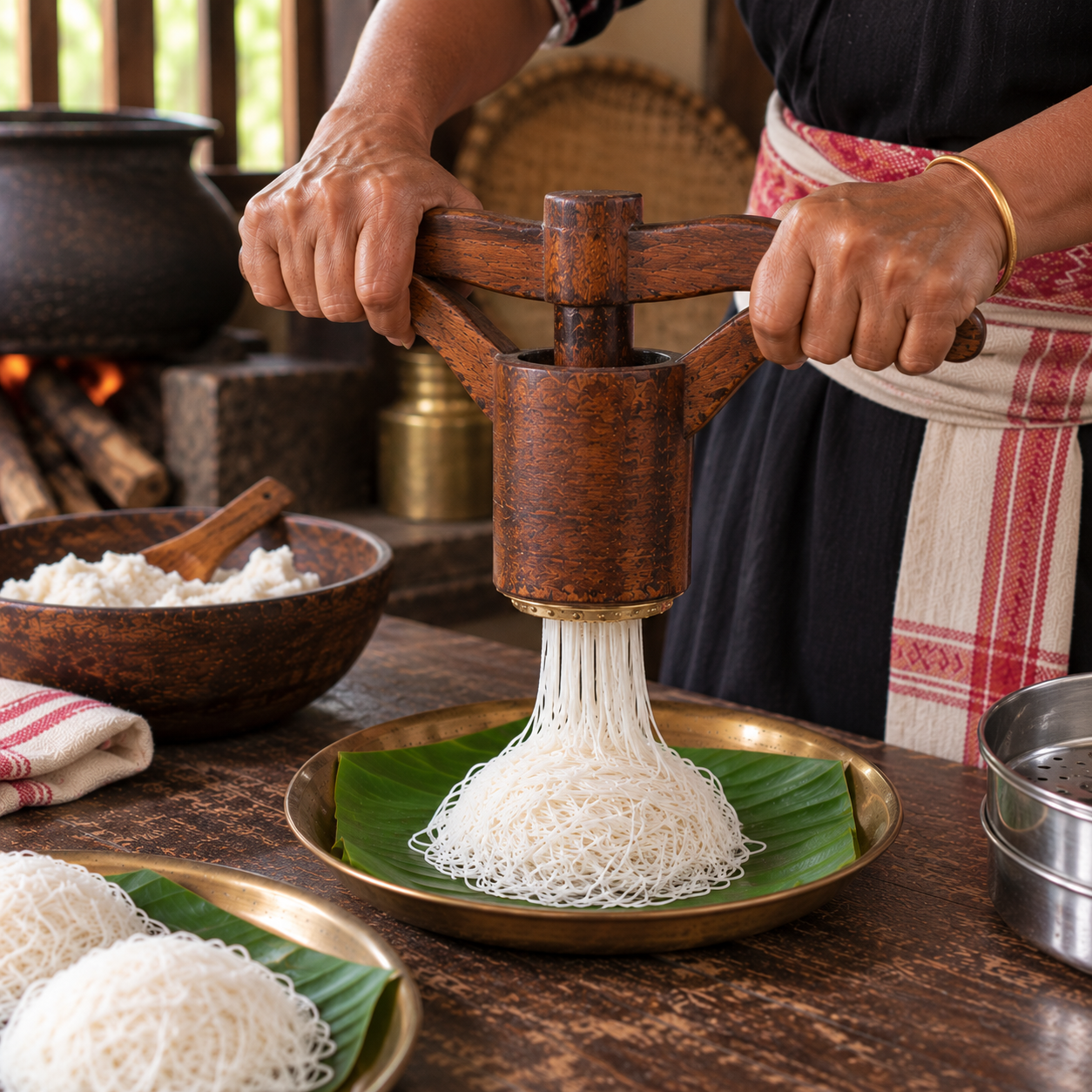
A traditional wooden kitchen implement used to make Noolputt (string hoppers) by pressing cooked rice dough into fine strands.

Nooputt Ora is a hand-operated wooden press traditionally used in the preparation of Noolputt. The implement consists of a sturdy wooden frame and a manually operated screw-and-handle mechanism. Prepared rice dough is placed into the lower pressing section, and the wooden handle is turned to apply pressure. The dough is forced through the small openings at the bottom, producing long, fine rice strands that are collected and arranged into Noolputt portions.

How It Was Used

Traditional use: Used for pressing cooked rice dough into fine strands while preparing Noolputt.

Cultural significance: Nooputt Ora is an important piece of Kodava domestic material culture. It documents not only the preparation of Noolputt but also the woodworking, mechanical knowledge and traditional kitchen practices of earlier generations. The surviving implement provides a tangible connection between the traditional food and the process by which it was made

Historical context: Nooputt Ora is part of the traditional equipment used for preparing Noolputt in Kodava households. It was originally referred to as “Nuputtt Ural,” which over time became corrupted in usage to “Vara.” The traditional press was used to process cooked rice dough into fine strands for making Noolputt. Noolputt was prepared both as an everyday food and for important occasions such as weddings, naming ceremonies and engagements.

Material & Making
WoodBrass

The wooden body and supports are shaped from solid timber and joined to form a stable frame. A threaded central spindle is fitted with a broad wooden handle and connected to the pressing section. The lower portion contains the perforated outlet through which the rice dough is extruded.
Traditional household models could differ in overall size, frame construction, handle shape and the fineness or arrangement of the extrusion holes.

Who Used It? / Where? / When?
OwnershipNot yet recorded
Period Ancient
Status of traditionNearly extinct
The Tradition Today

Reason for decline: Traditional wooden presses have declined with the availability of modern metal and plastic Noolputt presses and commercially manufactured kitchen equipment.

Revival efforts: The implement can be preserved through traditional-food demonstrations, heritage kitchens, cultural events and continued preparation of Noolputt using traditional methods.

Sources
KodavaClan archive