A living archive of Kodagu — objects, memories, skills and the voices of the people who kept them. See what's on display →
Explore / Food & Kitchen / Adike Kattari
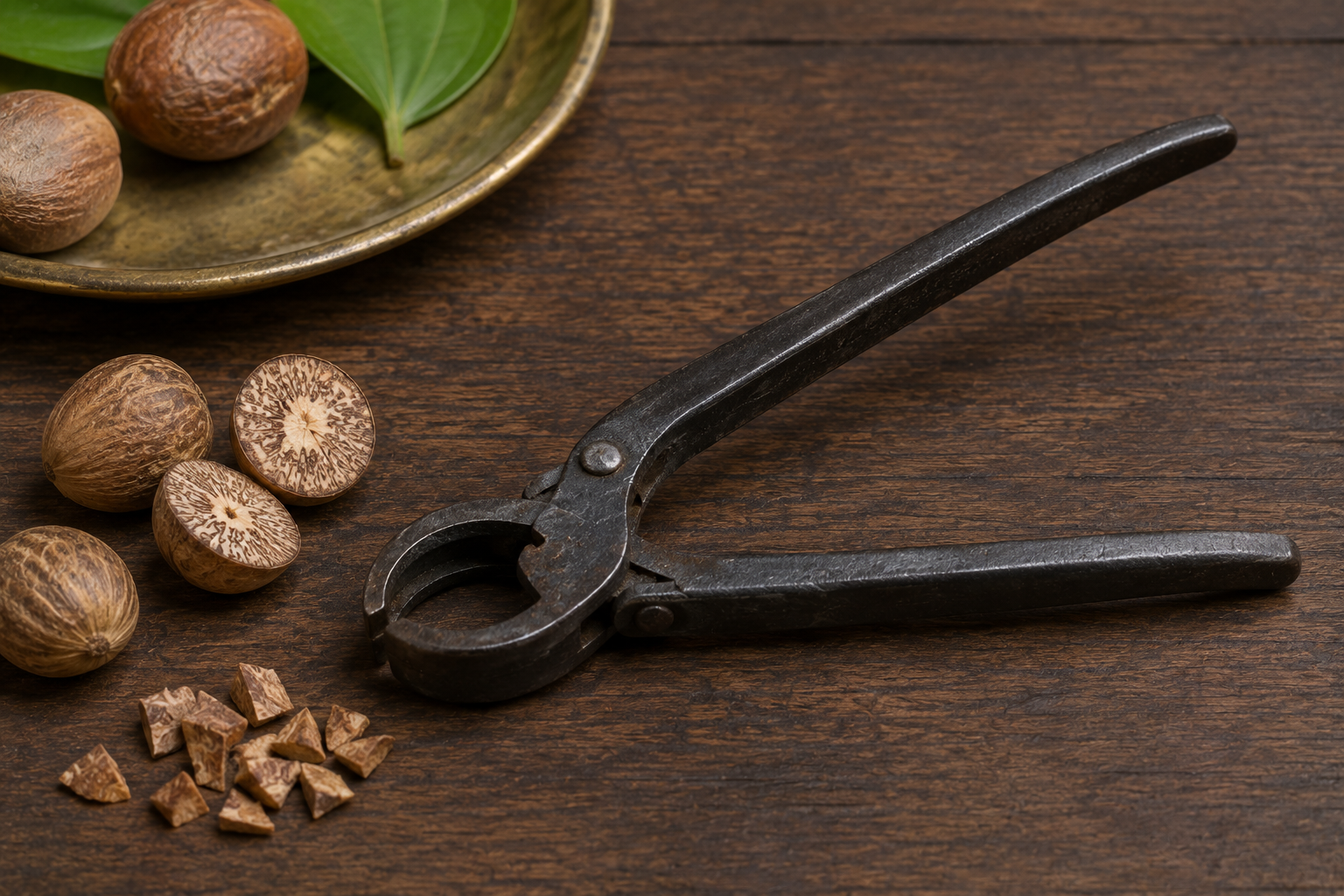
Adike Kattari
Food & Kitchen · Cuisine & Household Objects

Adike Kattari

Areca Nut Cutter
Also written: ಅಡಿಕೆ ಕಟ್ಟಾರಿ

Virtual Museum of
Kodava Heritage

Help Preserve

This Piece of Kodava Heritage

Your support helps us preserve our heritage
for today and future generations.

Support as
a Custodian
₹1,500
per artifact
About the Object

Adike Kattari is a traditional hand tool used to cut whole or dried areca nuts (adike) into smaller pieces. It was an everyday household implement in traditional Kodava homes.

The Adike Kattari is a specialised hand-operated cutting tool designed to handle the hard areca nut. Its compact form made it convenient to keep in the household and use whenever areca nut was prepared for consumption.
In traditional Kodava homes, areca nut was commonly offered along with betel leaf as a gesture of hospitality. Preparing and serving adike could form part of welcoming guests, sharing conversation and social interaction. The Adike Kattari therefore represents not only a practical household tool but also the customs surrounding hospitality and community life in Kodagu

How It Was Used

Cultural significance: The Adike Kattari reflects the connection between traditional food practices, hospitality and social interaction in Kodava life.
Offering areca nut and betel leaf was part of customary hospitality, particularly after a meal or during social gatherings. The simple act of cutting and preparing adike was therefore connected with welcome, friendship, conversation and community life.

Historical context: Areca nut has long been associated with social customs in Kodagu and the wider region. In traditional Kodava households, adike could be offered to guests as part of a customary welcome after a meal or during a social gathering.

The Adike Kattari belonged to this everyday household culture and would be kept alongside other kitchen and serving utensils, ready to be used whenever areca nut was prepared.

Material & Making
Iron

The Adike Kattari was crafted as a compact, sturdy cutting implement with a mechanism capable of cutting the hard areca nut. Traditional examples demonstrate simple but effective craftsmanship, designed for durability and repeated household use. Some older examples may also have decorative details reflecting the craftsmanship of their period

Who Used It? / Where? / When?
OwnershipNot yet recorded
Period Ancient
Status of traditionCommonly used
Sources
KodavaClan archive
Entered from the KodavaClan Modha Goodē reference glossary, as supplied by the curator.
Reference link