A living archive of Kodagu — objects, memories, skills and the voices of the people who kept them. See what's on display →
Explore / Food & Kitchen / Ambali Chatuwa / Ambali Kaikane
Ambali Chatuwa / Ambali Kaikane
Food & Kitchen · Traditional Kitchenware

Ambali Chatuwa

Porridge Ladle
Also written: ಅಂಬಳಿ ಚಟ್ವ / ಅಂಬಳಿ ಕೈಕಣೆ

Virtual Museum of
Kodava Heritage

Help Preserve

This Piece of Kodava Heritage

Your support helps us preserve our heritage
for today and future generations.

Support as
a Custodian
₹1,500
per artifact
About the Object

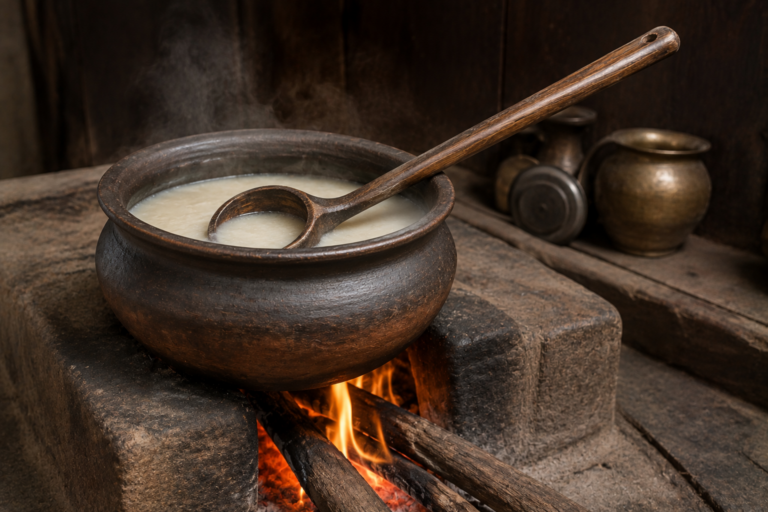
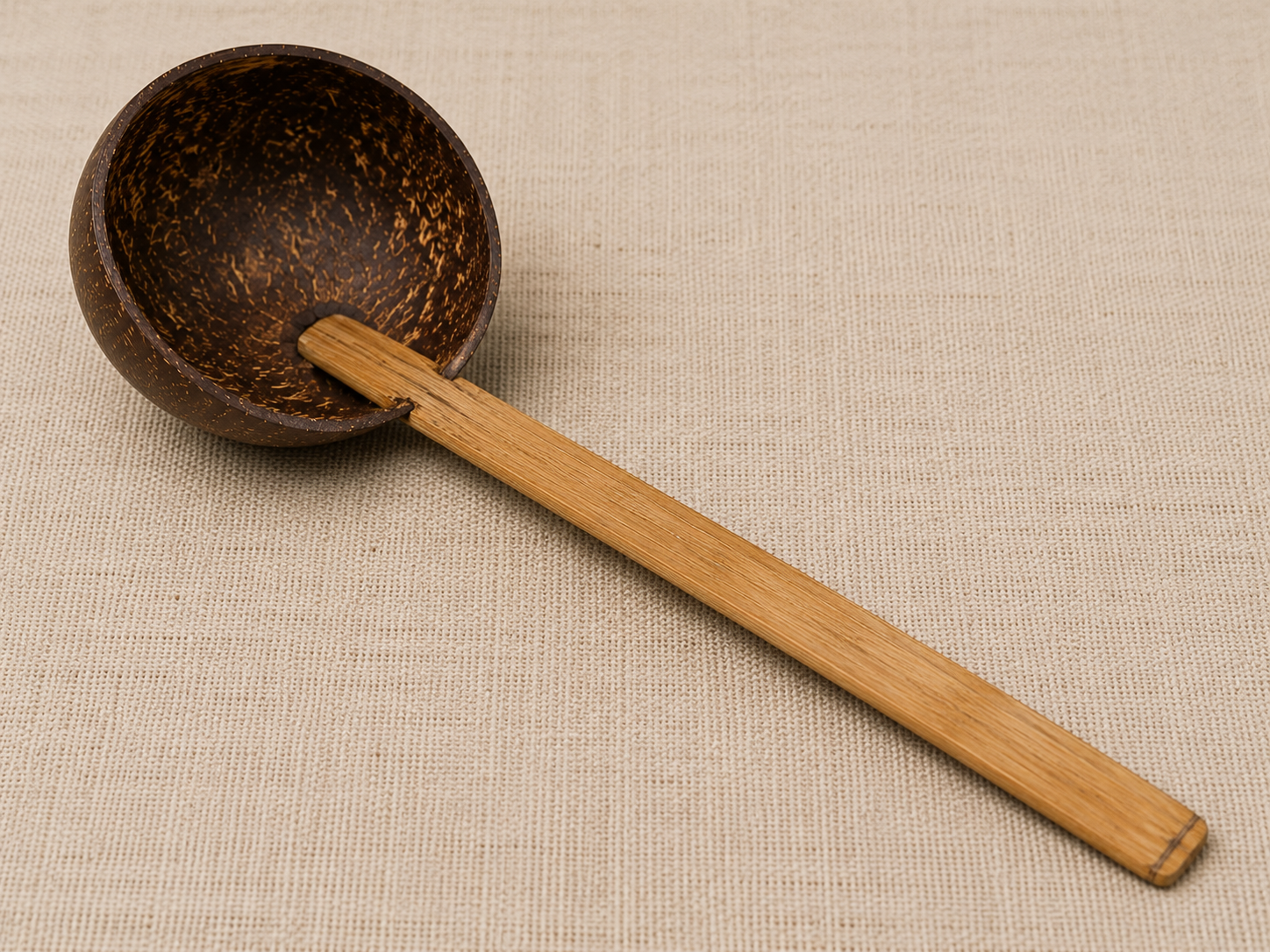
The Ambali Chatuwa/Kaikane is a traditional household ladle used in the preparation and serving of ambali, a traditional porridge. Its bowl is made from a coconut shell, while the handle is made from bamboo or cane.

Ambali Chatuwa/Kaikane is a simple, naturally made kitchen utensil traditionally associated with the preparation of ambali. The bowl is fashioned from a coconut shell, making use of a readily available natural material, while a bamboo or cane handle is attached to it. The combination creates a lightweight and practical ladle suited to everyday household use.

How It Was Used

Traditional use: The Ambali Chatuwa was used for stirring, handling and serving ambali. Its shape and lightweight construction made it suitable for working with semi-liquid foods in the traditional household kitchen.

Cultural significance: The Ambali Chatuwa reflects the resourcefulness of traditional Kodava households, where naturally available materials such as coconut shells, bamboo and cane were transformed into useful everyday objects. Its connection with ambali also links the object directly to traditional food practice

Historical context: The Ambali Chatuwa belongs to an earlier period of household life when kitchen utensils were often made by hand from materials available within the local environment. Reusing the coconut shell as the bowl demonstrates a practical approach to household resource use.

Material & Making
WoodBamboo

Although simple in appearance, the Ambali Chatuwa demonstrates traditional practical craftsmanship. The coconut shell had to be cleaned, shaped and finished, while the bamboo or cane handle had to be prepared and firmly attached to create a functional utensil.

Who Used It? / Where? / When?
OwnershipNot yet recorded
Period Ancient
Status of traditionRare
The Tradition Today

Reason for decline: Traditional coconut-shell and bamboo/cane utensils gradually became less common with the introduction of modern commercially manufactured kitchen utensils. The exact period and reasons for the decline of the Ambali Chatuwa can be documented through oral histories from elders and families who used it.

Revival efforts: The Ambali Chatuwa can be revived by documenting surviving examples, encouraging traditional artisans to recreate the utensil, and introducing it to younger generations through heritage exhibitions, demonstrations and the virtual museum. Recreating it using the traditional coconut-shell bowl and bamboo or cane handle can help preserve the knowledge of making and using this simple household objec

Sources
KodavaClan archive
Entered from the KodavaClan Modha Goodē reference glossary, as supplied by the curator.
Reference link