A living archive of Kodagu — objects, memories, skills and the voices of the people who kept them. See what's on display →
Explore / Food & Kitchen / Avlaki Oleke
Avlaki Oleke
Food & Kitchen

Avlaki Oleke

Wooden Pounding Baton
Also written: ಅವಲಕ್ಕಿ ಒಲೆಕೆ (Avlaki Oleke)

Virtual Museum of
Kodava Heritage

Help Preserve

This Piece of Kodava Heritage

Your support helps us preserve our heritage
for today and future generations.

Support as
a Custodian
₹1,500
per artifact
About the Object

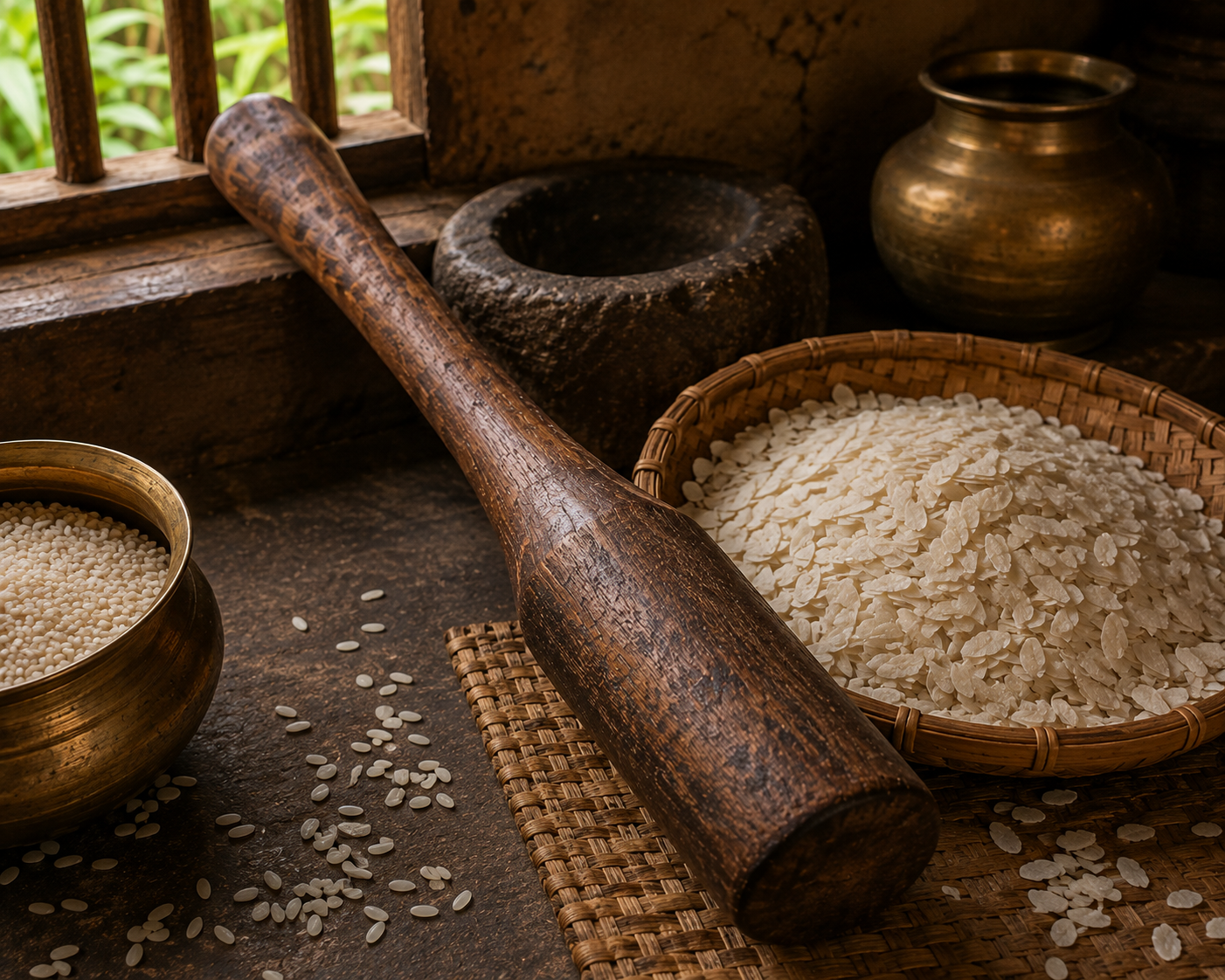
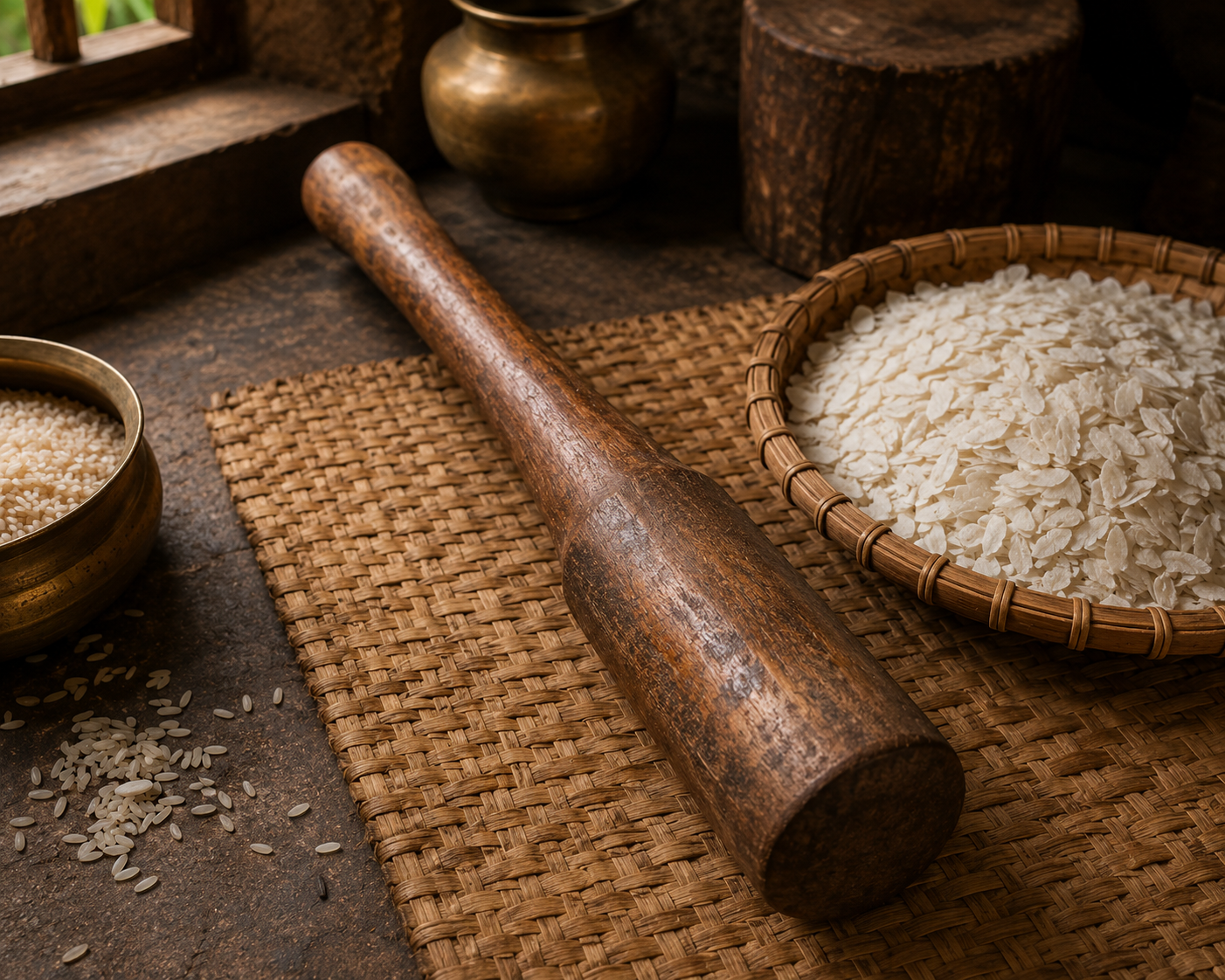
The Avlaki Oleke is a traditional wooden pounding implement used in the preparation of avlaki

The Avlaki Oleke was used to manually pound prepared rice grains until they were loosened and flattened into thin flakes. Before commercially produced avlaki became easily available, rice cultivated by the household could be processed at home through a series of labour-intensive stages.
The Oleke was an important tool in this process. Repeated, controlled pounding required not only physical strength but also rhythm and experience. The rice had to be flattened sufficiently without breaking it excessively. Thus, the implement represents a traditional form of household food processing in which agricultural produce was transformed into an everyday food within the home

How It Was Used

Traditional use: It was primarily used to pound and flatten prepared rice grains to make avlaki. The process involved repeated controlled blows until the grains gradually became thin flakes.

Cultural significance: The Avlaki Oleke represents the close relationship between rice cultivation, household labour and food preparation in traditional Kodagu society. It was part of a self-sufficient household system in which agricultural produce could be processed locally rather than purchased in finished form.
Its use also reflects the importance of collective manual work and the knowledge required to transform rice into a convenient and storable food.

Historical context: The implement belongs to an earlier period when households processed much of their agricultural produce manually. The preparation of avlaki involved cleaning, preparing, pounding and flattening rice before it became ready for consumption.
The source places the Avlaki Oleke within the traditional food-processing practices of Kodagu households.

Material & Making
Wood

A suitable piece of durable wood would be shaped into an elongated pounding implement. The handle and working end were formed to provide a comfortable grip and an effective pounding surface. The construction was deliberately simple, reflecting the practical nature of traditional household implements.

Who Used It? / Where? / When?
OwnershipNot yet recorded
Period Ancient
Status of traditionNearly extinct
The Tradition Today

Reason for decline: The traditional practice declined with the availability of commercially processed flattened rice and modern food-processing equipment. As households increasingly purchased ready-made avlaki, the need to process rice manually at home diminished

Revival efforts: The Avlaki Oleke survives primarily as a heritage object representing traditional food-processing knowledge. Its preservation can help younger generations understand how rice was traditionally transformed from an agricultural crop into an everyday food

Sources
KodavaClan archive
Entered from the KodavaClan Modha Goodē reference glossary, as supplied by the curator.
Reference link