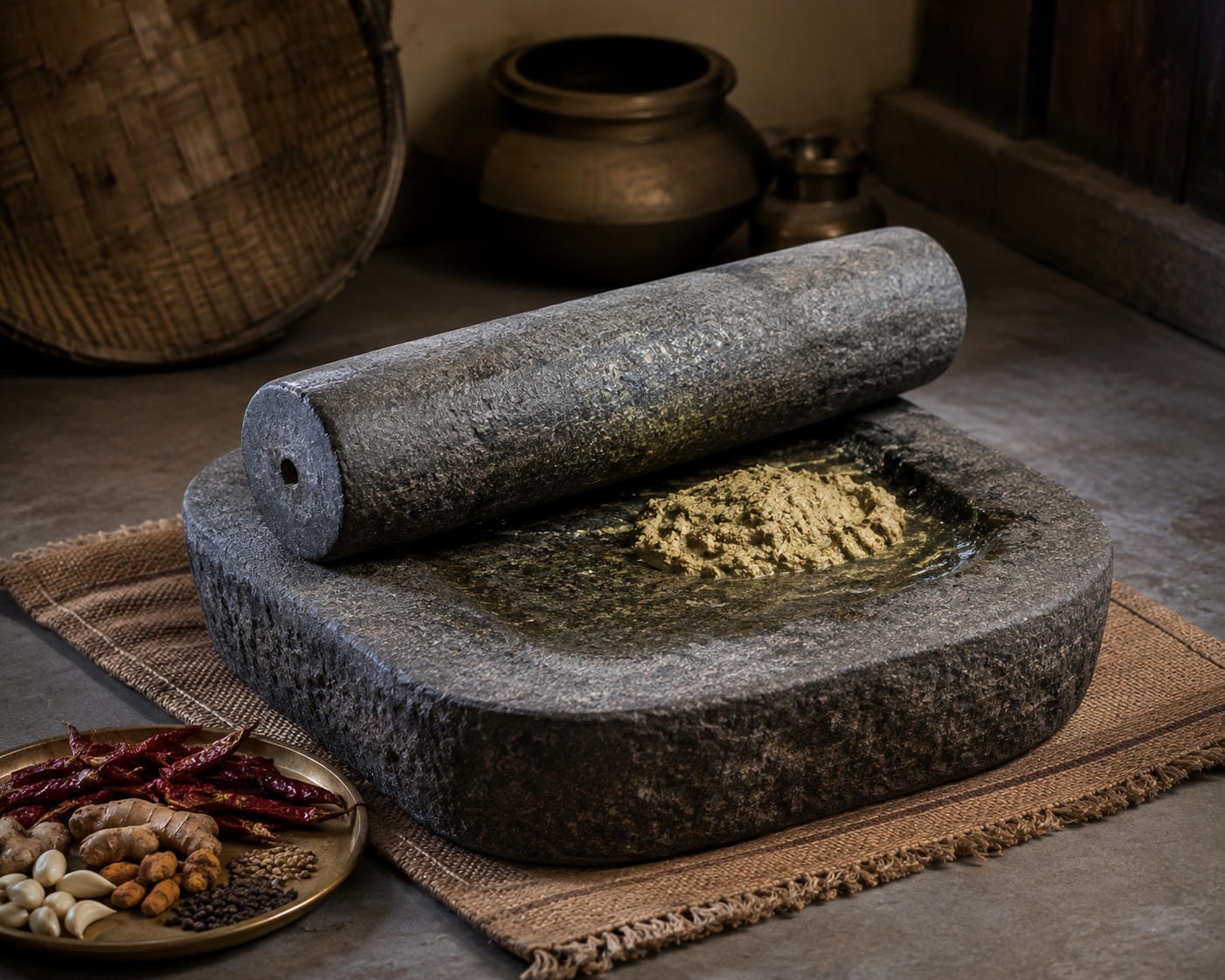
The Arpa Kall was an essential kitchen implement in traditional Kodava households. It was used for grinding fresh spices, masalas, herbs and other ingredients into pastes for everyday cooking. The slow grinding process helped produce a smooth paste while retaining the natural character and aroma of the ingredients. The same grinding stone could also be used to prepare sandalwood paste for temple festivals and religious ceremonies, giving it both domestic and ritual importance.
Cultural significance: The Arpa Kall represents the traditional food-preparation practices of Kodava households. Its use extended beyond cooking into religious practice, particularly in preparing sandalwood paste for temple ceremonies. It therefore reflects the connection between everyday household life, food traditions and ritual practices in Kodagu
Historical context: The Arpa Kall belongs to the traditional household practices of Kodagu and is associated with the period before and during the reign of the Kodagu Rajas and the subsequent British period. It continued to be used in traditional households even as newer kitchen technologies gradually became available.
A suitable hard stone was selected and shaped into a grinding surface appropriate for repeated household use. The rough surface of the stone provided the friction necessary to crush and grind spices and other ingredients effectively.
You are preserving Arpa Kall — Traditional Grinding Stone.