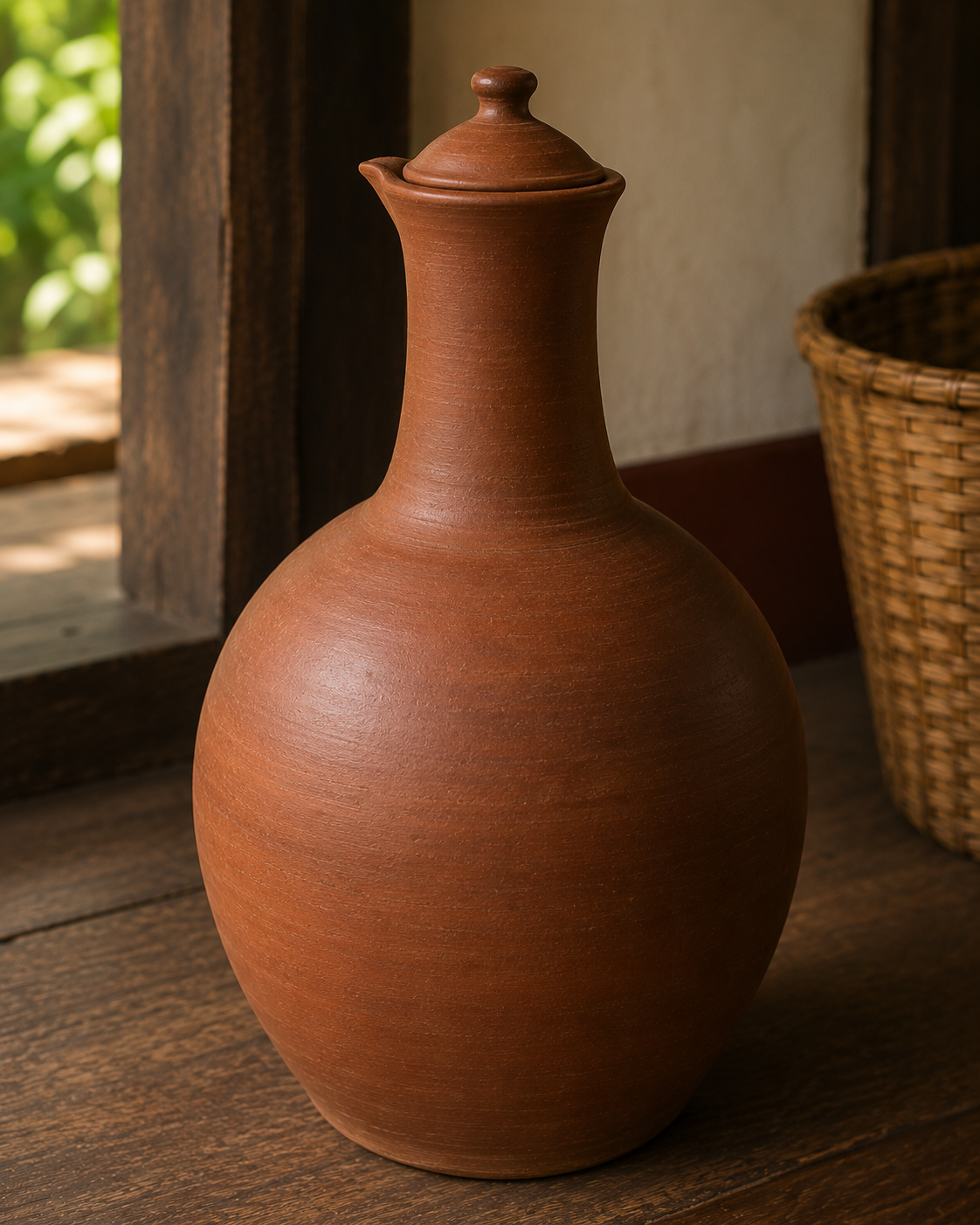
Gujaayee is a traditional household water vessel made from clay and fired to create a strong, porous container. It was used to store drinking water and was an important part of everyday household life.
The porous nature of the earthen vessel allows natural evaporation through the clay, helping the water remain cool without the need for electricity or mechanical refrigeration. The Gujaayee therefore provided a simple and effective way of keeping drinking water available and cool throughout the day.
Before modern refrigerators and manufactured water-storage containers became common, vessels such as the Gujaayee had an important place in the traditional Kodava household
Cultural significance: The Gujaayee represents the simplicity and practicality of traditional Kodava household life. It demonstrates how everyday needs were met using locally available natural materials and traditional craftsmanship.
The pot also reflects an earlier lifestyle in which household objects were valued for their functionality, durability and natural properties, rather than depending on modern technology.
Historical context: The Gujaayee belongs to an earlier period of household life when drinking water was stored in traditional earthen vessels. Before refrigerators and modern water-storage containers became commonplace, an earthen pot provided a practical means of keeping drinking water available and naturally cool throughout the day.
The Gujaayee was traditionally made by shaping clay into the form of a water vessel and firing it to produce a strong, porous earthen pot.
The craftsmanship involved shaping the clay carefully to create a vessel capable of holding water while retaining the natural porous qualities that help cool the water
You are preserving Gujaayee — Water Pot.