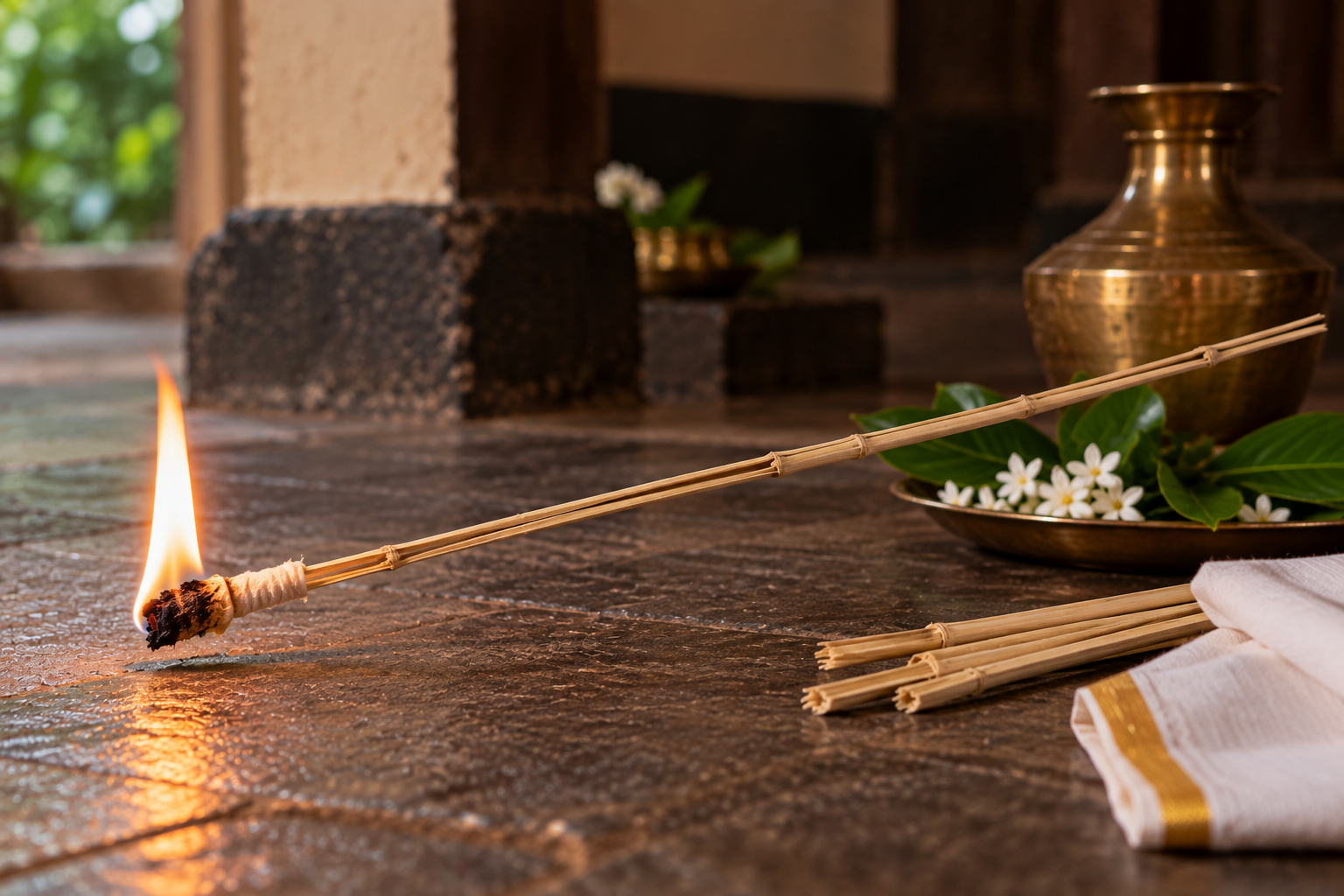
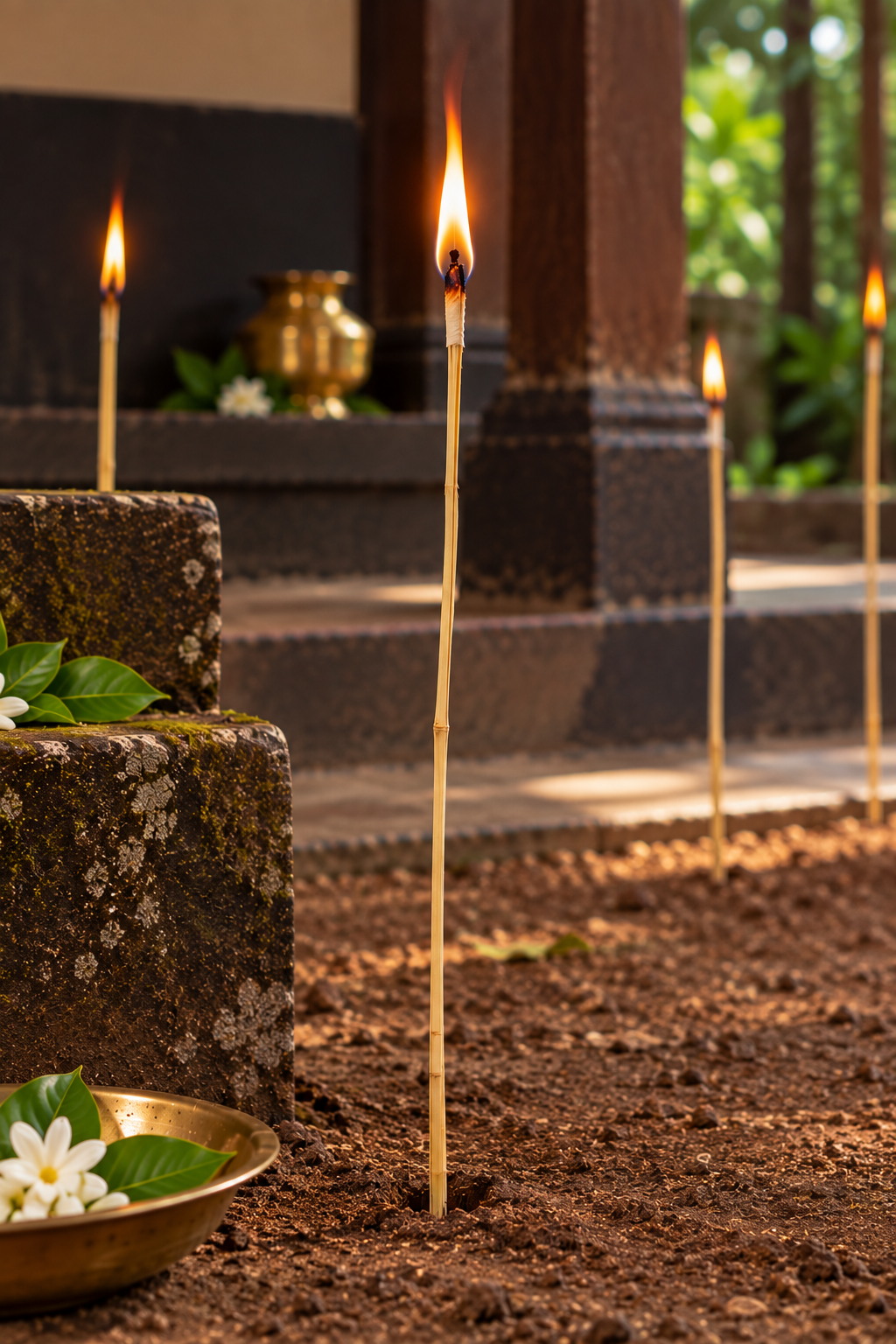
Kothiri is a simple, single-use lighting implement traditionally made from a thin strip of split bamboo or cane. One end of the strip is wrapped with a small piece of cloth, which is dipped in oil and then ignited.
Unlike a conventional oil lamp, Kothiri does not have a permanent container or lamp body. It functions as a temporary wick, providing light and smoke for the duration of its burning.
Kothiri continues to have a place in Kodava ritual practice, particularly during Meedi and Karona, the annual observances associated with ancestor worship. Its significance extends beyond illumination, as the smoke from the burning wick helped keep insects and small animals away from ritual offerings.
Traditional use: Used as a temporary substitute for a lamp during ritual occasions.
Prepared for single use and discarded after burning.
Used particularly during Meedi and Karona rituals.
Provided a flame and continuous smoke while burning.
Helped protect ritual offerings from insects and small animals.
Cultural significance: Kothiri continues to be used during Kodava ancestral rituals, particularly Meedi and Karona, which are performed annually in remembrance and worship of ancestors.
Its use reflects both a practical and spiritual understanding: the burning wick helped keep insects and small creatures away from the offerings, while symbolically allowing the offerings to remain undisturbed for the ancestors.
During Meedi and Karona rituals, Kothiri is prepared by wrapping a small amount of cloth around a thin split bamboo strip, soaking it in oil and lighting it. The burning wick produces flame and fumes for the duration of its use.
The practice is associated with the belief that offerings made to ancestors should remain free from disturbance. The longer the offering could remain without being consumed or disturbed by insects and small animals, the more respectfully it was considered to have been kept for the ancestors
Historical context: Kothiri is a small but meaningful example of the way practical knowledge and spiritual belief were combined in Kodava ritual practice. Its burning flame and fumes served the practical purpose of discouraging insects and small animals from disturbing offerings, while its use was also connected to the belief that offerings should remain undisturbed for the ancestors for as long as possible.
Its continued use during Meedi and Karona makes Kothiri a living element of Kodava ancestral worship and demonstrates how traditional knowledge has survived within ritual practice.
A thin strip is split from a piece of bamboo or cane and cut to the required length. Cloth is wrapped around one end of the strip. The cloth is then soaked in oil before the Kothiri is lit.
Reason for decline: Kothiri is not a declined or extinct object. It continues to be prepared and used during traditional Kodava rituals, especially Meedi and Karona.
Revival efforts: Although modern lamps and incense sticks are now widely available, Kothiri continues to be used in traditional rituals. Its use demonstrates an older understanding of using a burning material and its fumes to keep insects away from offerings.
You are preserving Kothiri — Temporary Ritual Wick.