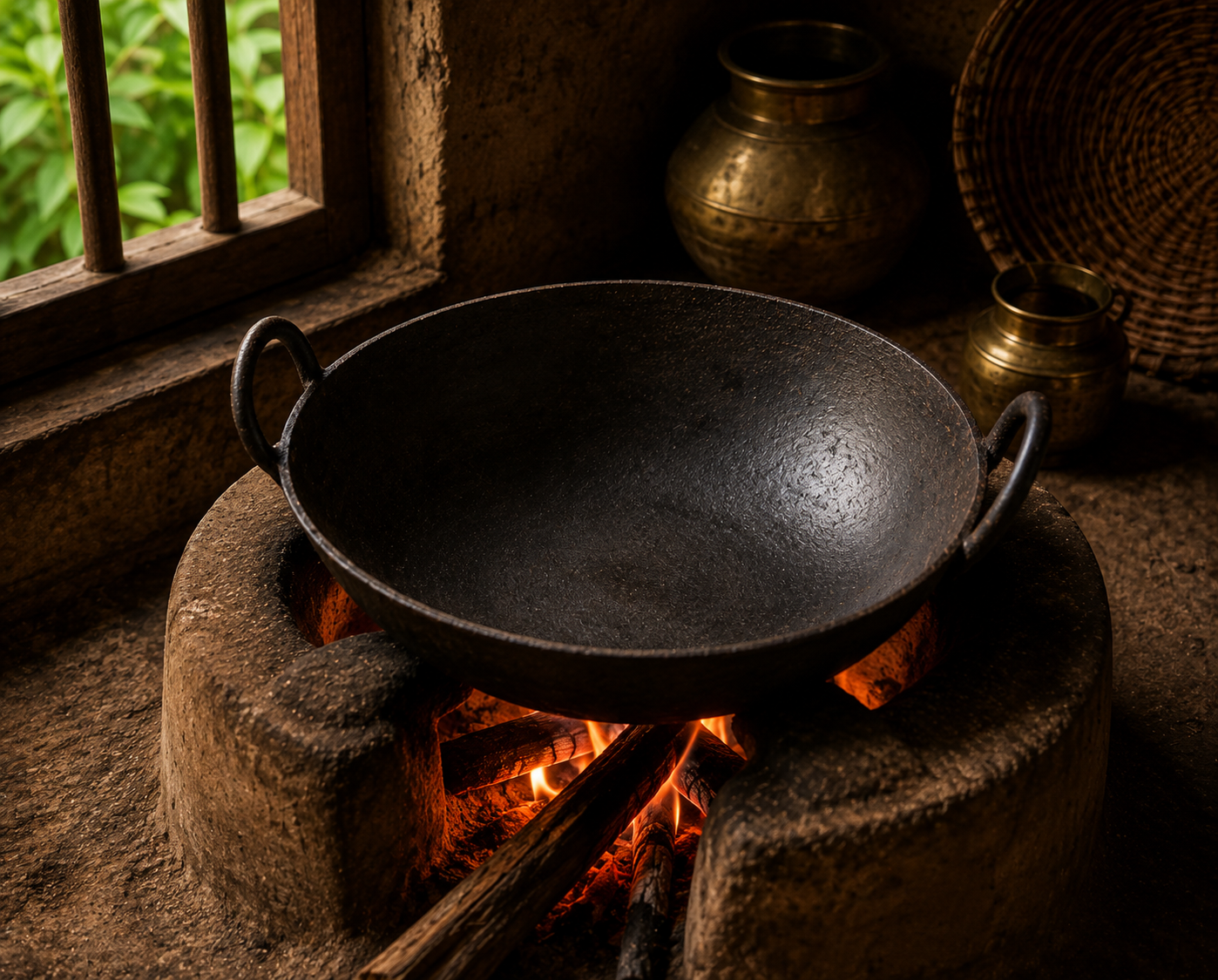
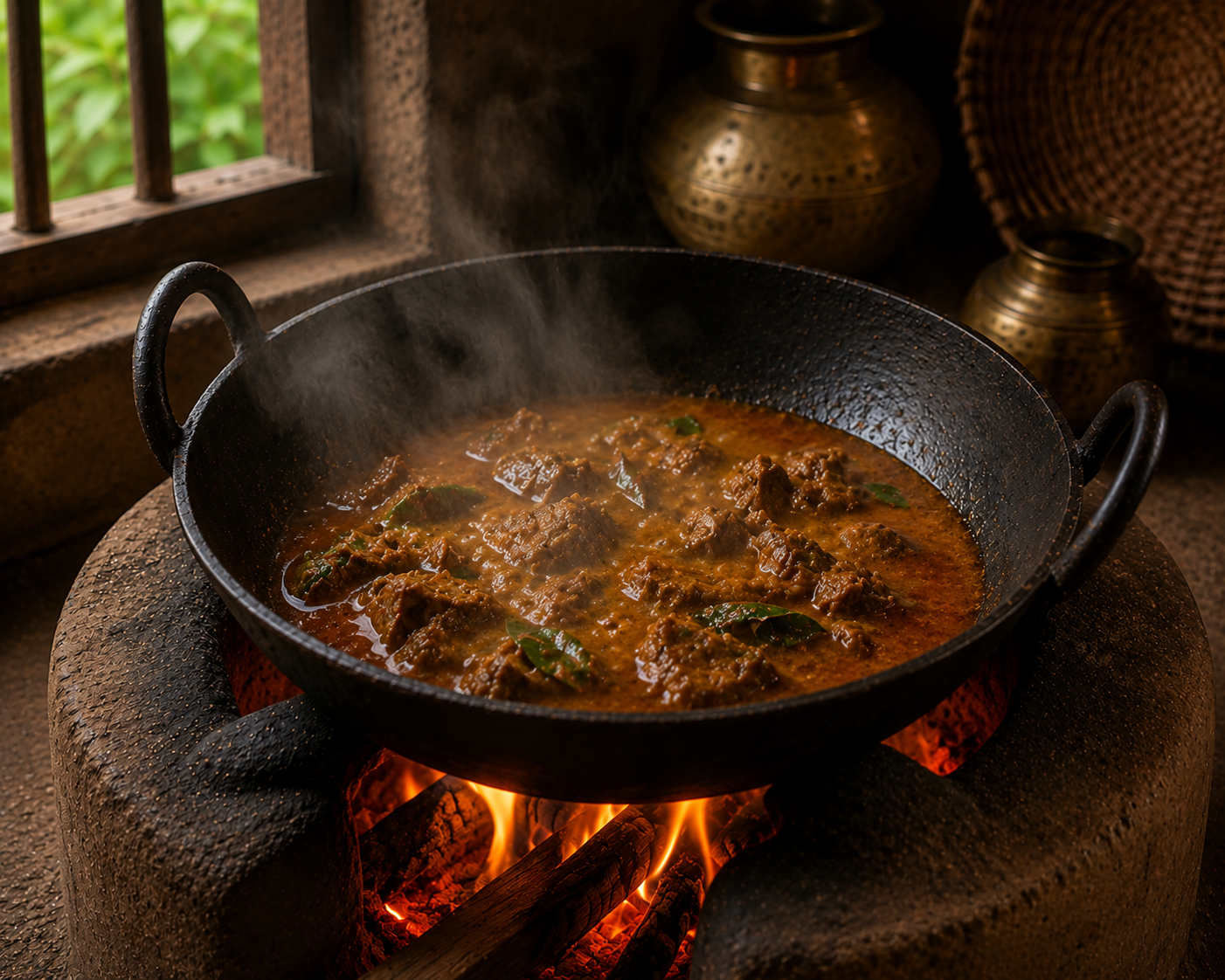
Cheen Chatti is remembered not merely as a household metal vessel but as an object carrying a story of trade, travel and cultural contact. According to traditional accounts preserved in Kodagu, vessels of this type were brought into the region by traders who came from China.
The traditional explanation suggests that the vessel was once referred to as China Chatti, which gradually became Cheen Chatti through local usage and pronunciation. The Kodagu Heritage record also acknowledges that every detail of this account may not be historically established, but the story itself has survived in local memor
Traditional use: The source identifies Cheen Chatti as a traditional metal vessel, but does not specify a particular household or culinary function. Its association with household utensils is noted in the heritage account.
Cultural significance: Cheen Chatti is significant because its name itself preserves a cultural memory. It connects an everyday household object with stories of traders, distant places and the movement of goods into Kodagu.
The object demonstrates how material culture can preserve memories even when written historical records of a particular exchange may be limited.
Historical context: Traditional accounts state that vessels of this type were brought to Kodagu by traders who came from China. The name is traditionally understood to have evolved from China Chatti to Cheen Chatti through local pronunciation and usage.
The heritage account presents this as a traditional explanation rather than a fully established historical fact
Traditionally, such iron cooking vessels were made by heating iron and shaping it through hammering and forging, with the vessel gradually formed into its required rounded or deep profile. The rim and handles were shaped and finished separately or as part of the forging process, followed by smoothing and seasoning the cooking surface before use.
Reason for decline: The use of Cheen Chatti declined with the introduction of modern kitchen vessels made from stainless steel, aluminium and other lightweight materials. These newer vessels were easier to manufacture, clean, handle and maintain, gradually replacing traditional heavy metal cooking vessels in everyday kitchens. Changes in cooking practices and the availability of commercially manufactured utensils further reduced its regular household use.
Revival efforts: Cheen Chatti can be revived as part of Kodagu's traditional kitchen heritage through documentation, museum displays and demonstrations of traditional cooking practices. Surviving examples can be collected and photographed, with their family histories, local names and stories recorded. Traditional kitchens and heritage homes can display the vessel alongside other period utensils, while cultural programmes can demonstrate its historical use. Artisans could also be encouraged to reproduce traditional forms, helping preserve the associated metalworking skills and keeping the object relevant to younger generations.
You are preserving Cheen Chatti — Traditional Metal Vessel.