
Noga
Contents
Noga
English Name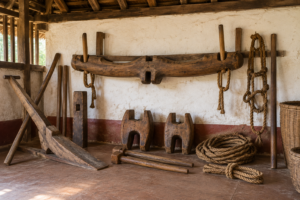
Traditional Ox Yoke / Agricultural Harness
Alternate Names
Noga, Noga Kayi, Noga Kolu, Noga Mara
Short Description
A traditional wooden agricultural implement used to harness a pair of oxen for ploughing and other farm work.
Full Description
Noga is a traditional agricultural implement used to connect and control a pair of oxen while carrying out farm work. It formed part of a set of wooden components designed to sit securely across the necks of the animals and connect them to agricultural implements.
The Noga set included the main yoke along with supporting wooden pieces and fastening components. These were carefully shaped to ensure that the yoke remained firmly positioned while the oxen worked in the fields.
Components
The traditional Noga set includes:
- Noga – the main yoke
- Noga Kayi – supporting component
- Noga Kolu – wooden peg or stick
- Noga Mara – associated wooden component
- Side sticks used to secure the yoke around the oxen’s necks
Traditional Use
Used with a pair of oxen for:
- Ploughing fields
- Preparing agricultural land
- Pulling traditional farm implements
- Other forms of animal-powered cultivation
Materials
Primarily made from locally available hardwood, with natural fibre rope or other traditional materials used for fastening.
Design & Construction
The Noga was designed to rest across the necks of two oxen. Supporting pieces and wooden pegs were fitted to keep the yoke firmly in position. The dimensions and shape were adapted to the size and strength of the animals.
Method of Making
The wooden components were selected, cut, shaped and smoothed by traditional craftsmen. Holes, grooves and joints were made where necessary to accommodate the supporting pieces and fastening ropes.
Craftsmanship
Making a Noga required knowledge of wood selection, traditional joinery and the proportions required for working bullocks. The implement had to be strong enough to withstand repeated pulling forces while remaining comfortable for the animals.
Traditional Knowledge
Farmers and craftsmen possessed detailed knowledge of how the yoke should be fitted, how the oxen should be positioned and how the various components of the Noga set should be secured.
Agricultural Context
The Noga was an important part of traditional bullock-powered agriculture in Kodagu, where oxen were historically used for cultivation before the widespread adoption of mechanised farm equipment.
Traditional Setting
Used primarily in agricultural fields during ploughing, field preparation and other farm activities involving bullocks.
Evolution & Changes
Traditional wooden Noga sets gradually became less common as tractors and mechanised agricultural equipment replaced animal-powered cultivation.
Present Status
The Noga survives mainly as an agricultural heritage object and as a reminder of traditional farming practices. Older examples may still be preserved by farming families.
Preservation
The Noga set should be preserved together, with each individual component identified and documented. Photographs, dimensions, wood type, construction techniques and oral histories from farmers and craftsmen should be recorded.
Virtual Modha goode
- To see many articles like these click on Virtiual Modhagood – The virtual Museum
Comments
Leave a comment!Login for Post Comment
Last posts