About the Object
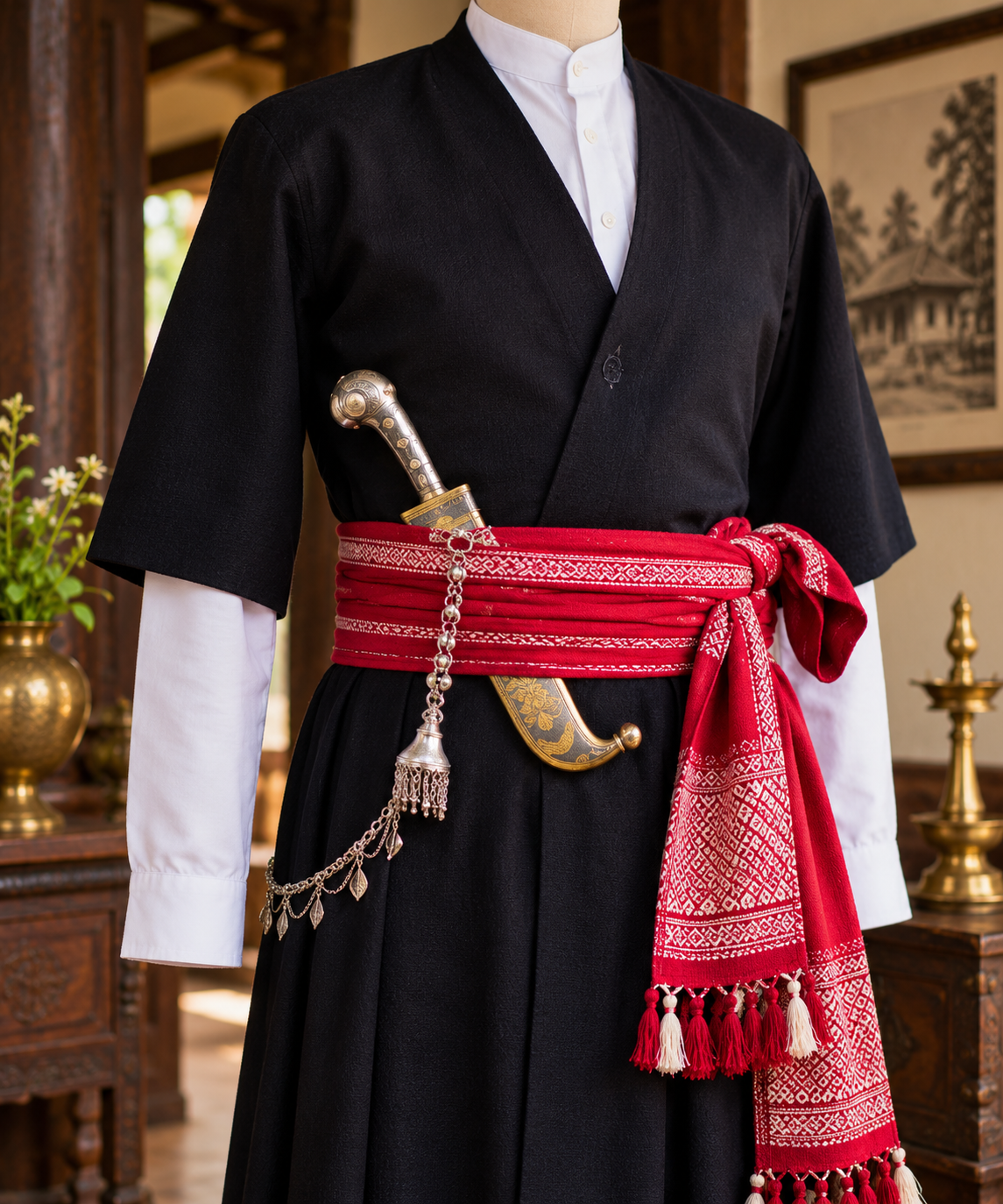
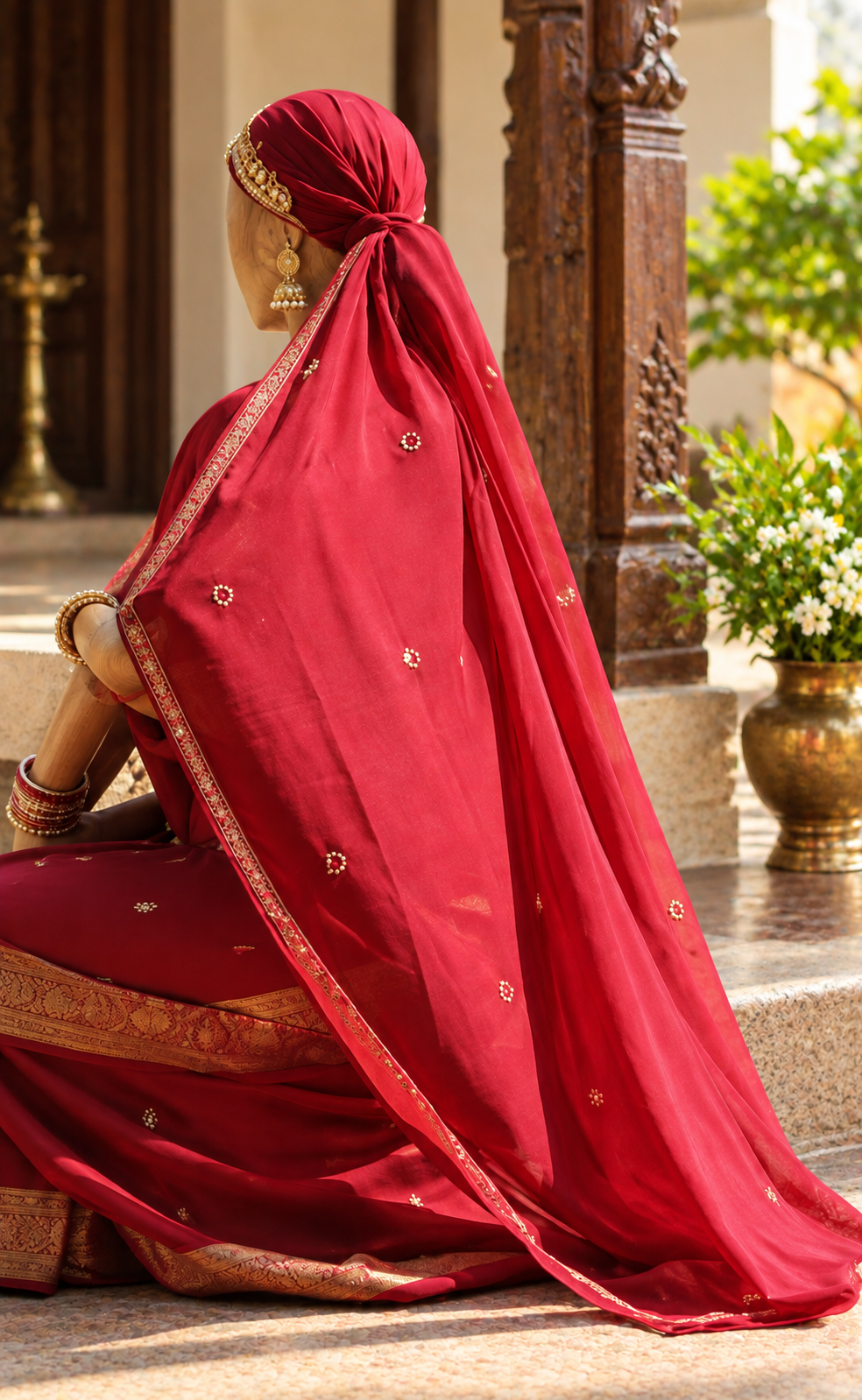
A traditional red-and-white checked Vastra, usually made of cotton or silk, worn by Kodava men either over the head as a head covering or across the body as a sash.
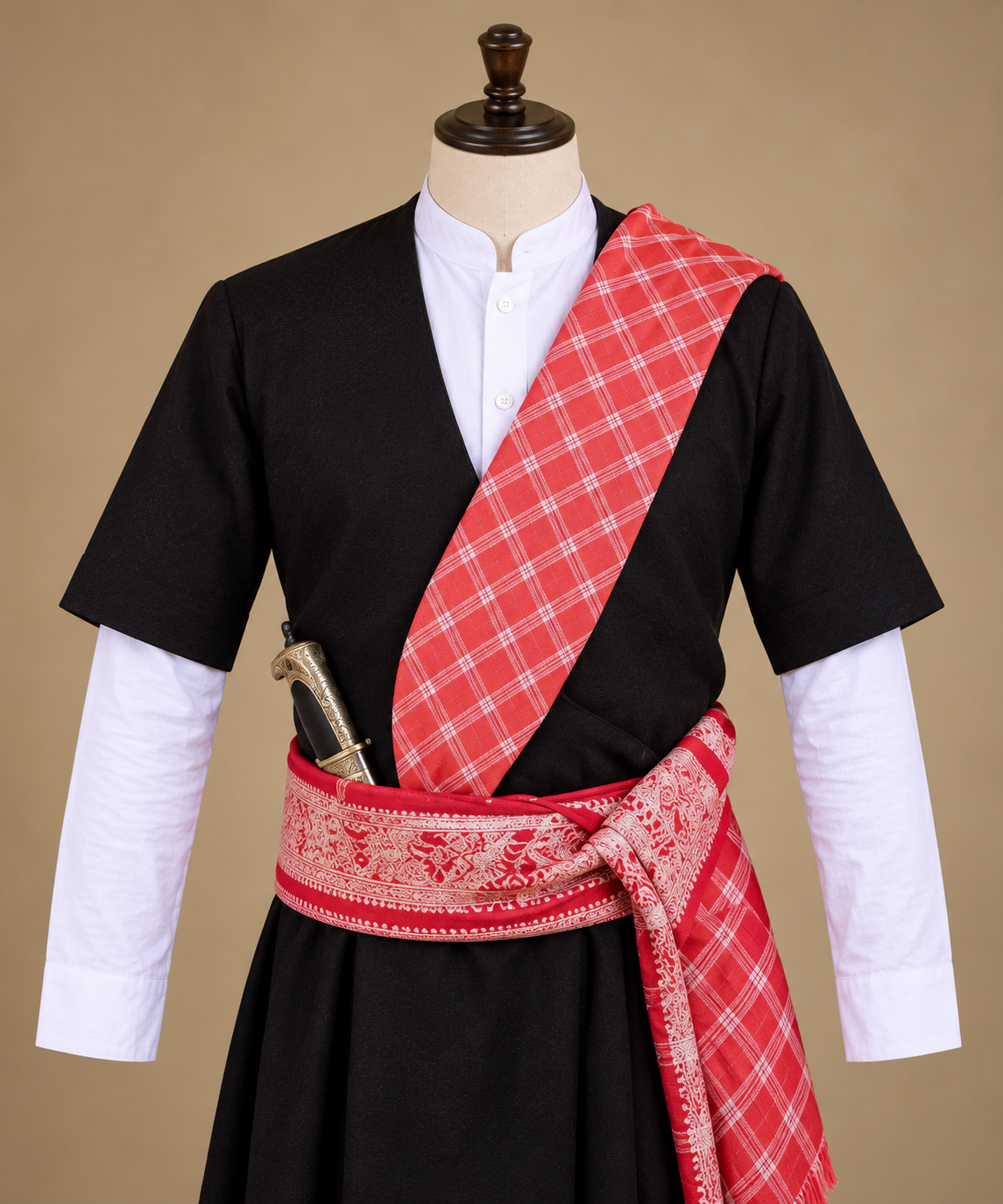
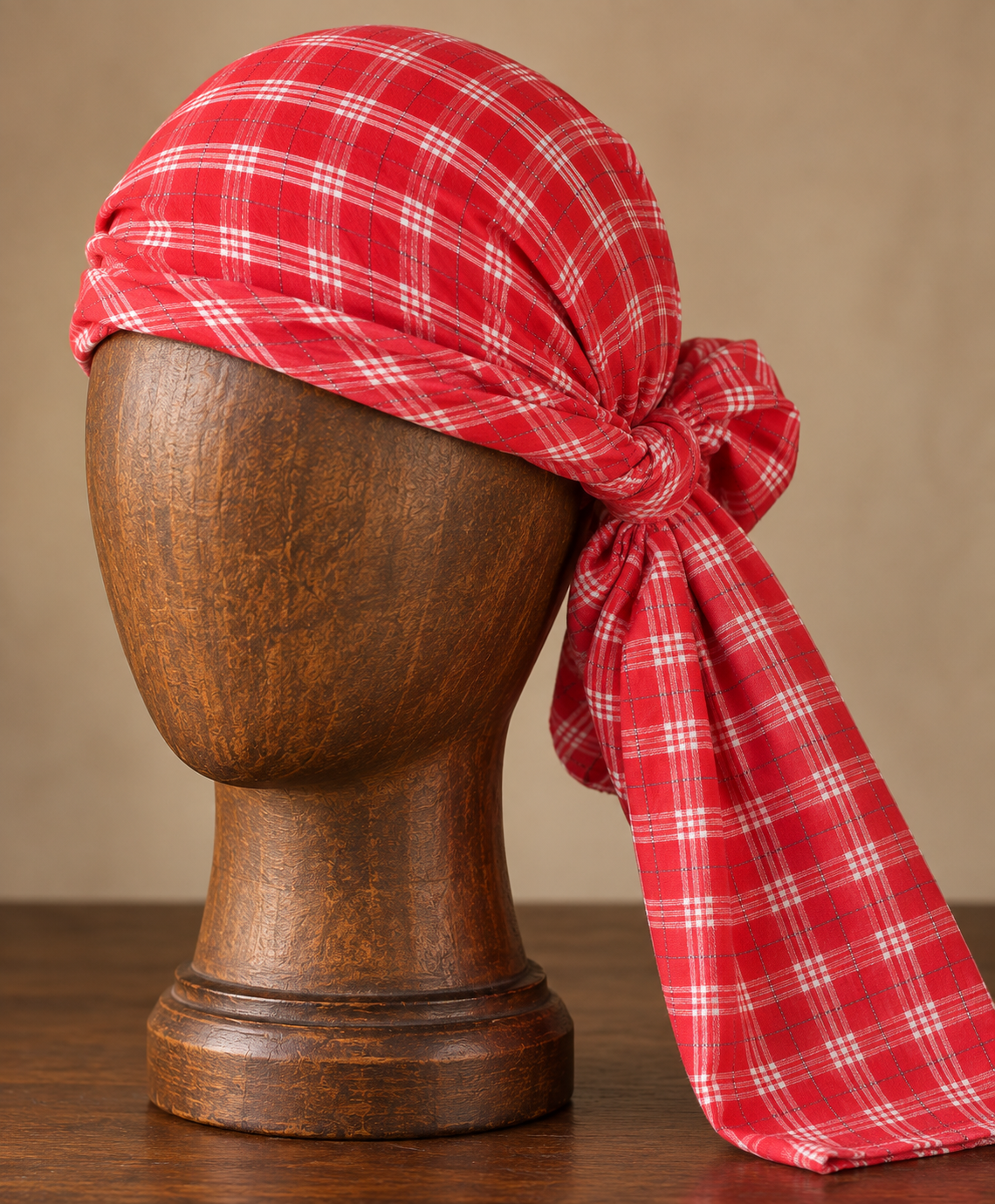
The men's Vastra is a long, rectangular checked cloth, characteristically woven in red and white. Traditionally made from cotton, with silk versions used for more formal occasions, it is folded and arranged according to the occasion. It may be tied around the head as a traditional head covering, with the ends gathered or allowed to fall at the back, or worn diagonally across the shoulder and body as a sash. The distinctive checked pattern makes it an instantly recognizable element of traditional Kodava men's attire.
How It Was Used
Traditional use: The Vastra was an important part of traditional Kodava men’s attire and was worn in different ways depending on the occasion. The red-and-white checked cloth was commonly folded and tied around the head as a traditional head covering, with the remaining portion arranged neatly at the back. It was also worn diagonally across the shoulder and chest as a sash, particularly during weddings, festivals, community gatherings and other ceremonial occasions.
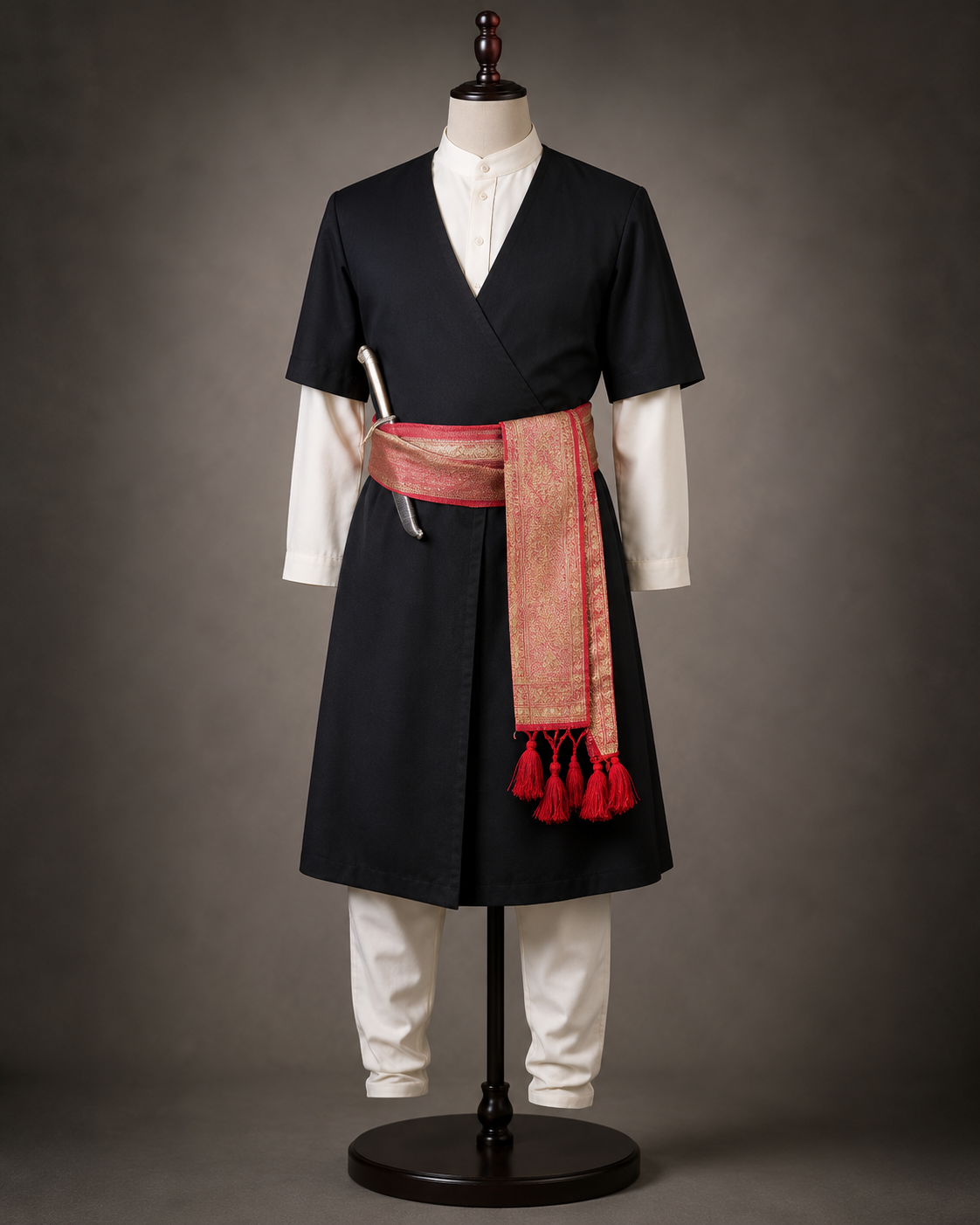
During weddings and formal functions, the Vastra helped complete the traditional appearance of a Kodava man when worn along with the Kupya, Chele and Peeche Kathi. The way the cloth was folded, tied or draped was part of the customary knowledge of dressing and was traditionally learned through observation and practice.
Cultural significance: The red checked Vastra is a distinctive visual element of Kodava identity and traditional dress. Its characteristic pattern makes it immediately recognizable and gives the garment a strong connection with Kodava cultural heritage.
Beyond being a piece of clothing, the Vastra represents the importance given to traditional appearance during significant social occasions. Wearing it during weddings, festivals and community ceremonies expresses respect for tradition and provides a visible connection with earlier generations. The cloth also demonstrates the versatility of traditional Kodava textiles, serving both as a head covering and as a sash without requiring a separate garment.
The Vastra therefore carries both material and intangible heritage—the textile itself is one aspect, while the knowledge of how, when and where it should be worn forms an equally important part of the tradition.
Historical context: The Vastra belongs to the older tradition of Kodava clothing in which a simple length of woven cloth served multiple practical and ceremonial purposes. Traditionally made from cotton, and later also produced in silk, the red checked textile became closely associated with the distinctive appearance of Kodava men.
In earlier generations, traditional clothing was not simply a matter of fashion; the way garments and textiles were worn was closely connected with social occasions, community identity and ceremonial practice. The Vastra formed part of this clothing tradition and was worn along with other characteristic elements of Kodava male attire.
Over time, changing lifestyles and the availability of ready-made clothing have reduced the everyday use of the traditional Vastra. Nevertheless, the red checked cloth continues to survive in Kodava weddings, cultural celebrations and heritage events, keeping an important element of the older dress tradition visible to younger generations.
The Tradition Today
Reason for decline: Changing clothing habits and the convenience of ready-made garments have reduced its everyday use.
Revival efforts: Its continued use in traditional Kodava ceremonies and cultural programmes helps preserve both the textile and the traditional ways of wearing it.