| ||||||||||||||||||||||||
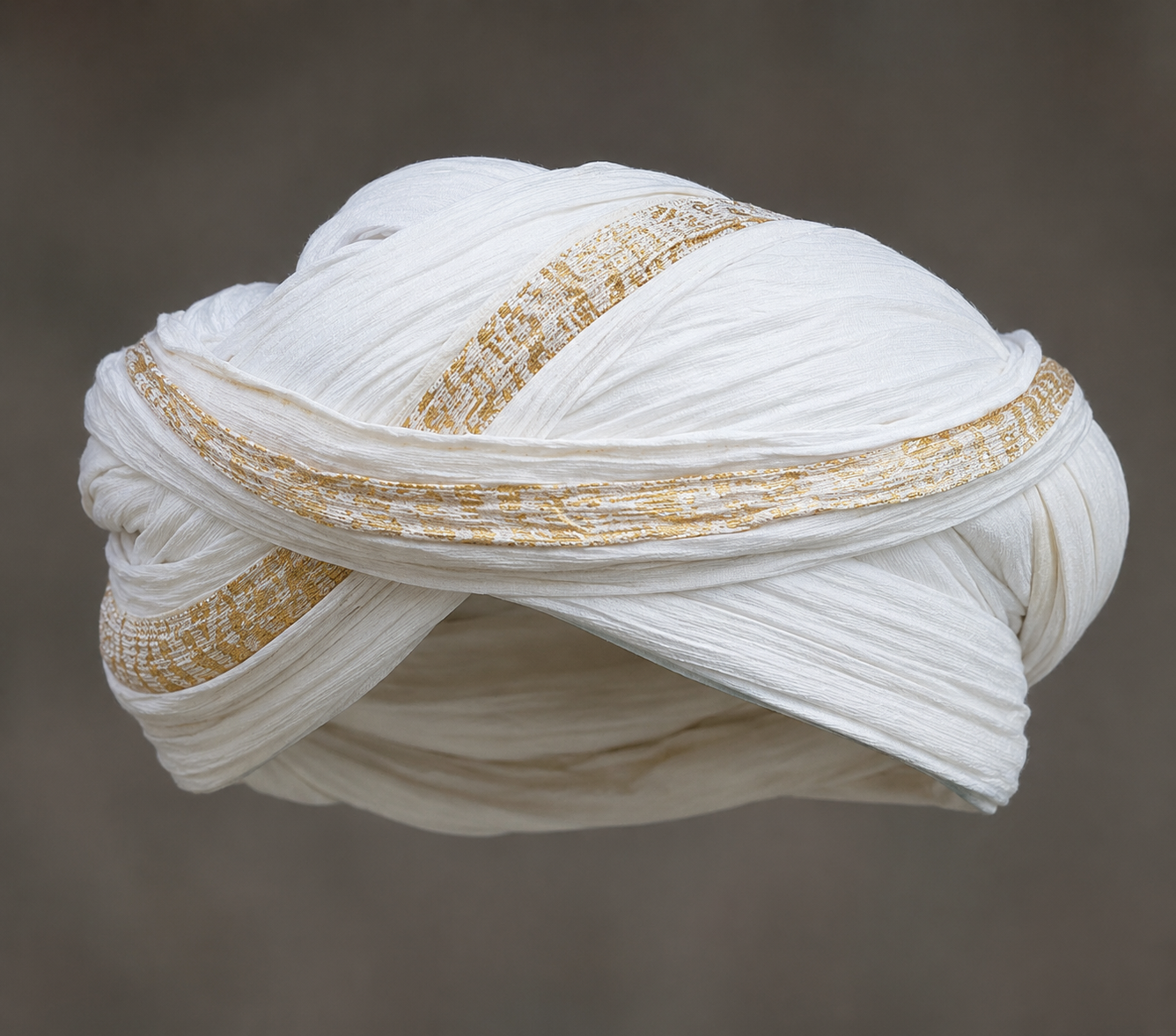
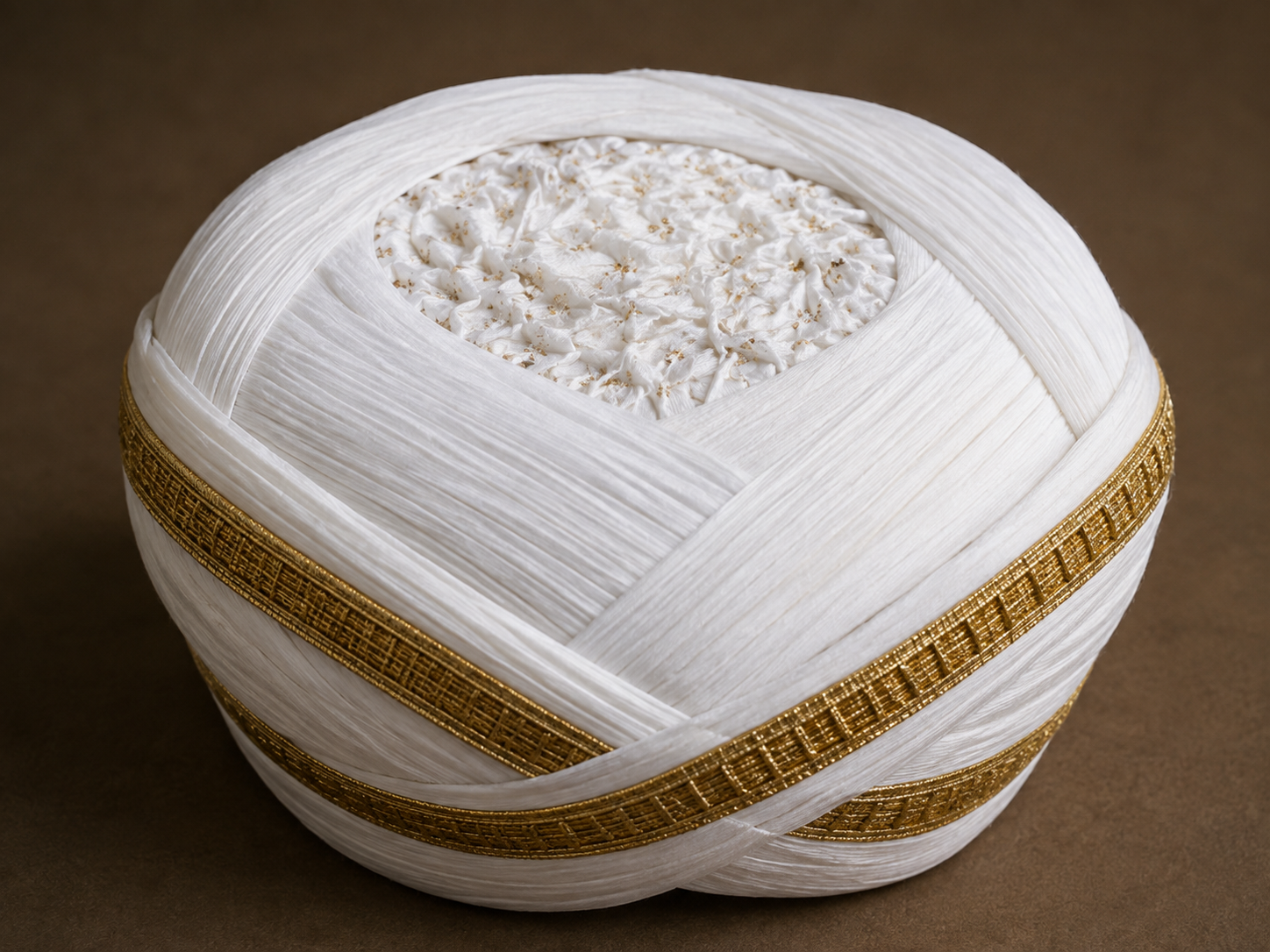
Mande Thuni is a structured, ornamented turban traditionally worn by Kodava men. The traditional form has a white appearance with gold ornamentation, creating a distinctive ceremonial headdress.The traditional Mande Thuni has a rounded, layered form, with the cloth wrapped and arranged around the head. The example shown has a predominantly white/cream body with gold decorative bands.
Traditional use: The Mande Thuni is an important symbol of Kodava male identity and traditional dress. It forms part of the distinctive appearance of a Kodava man during ceremonies.
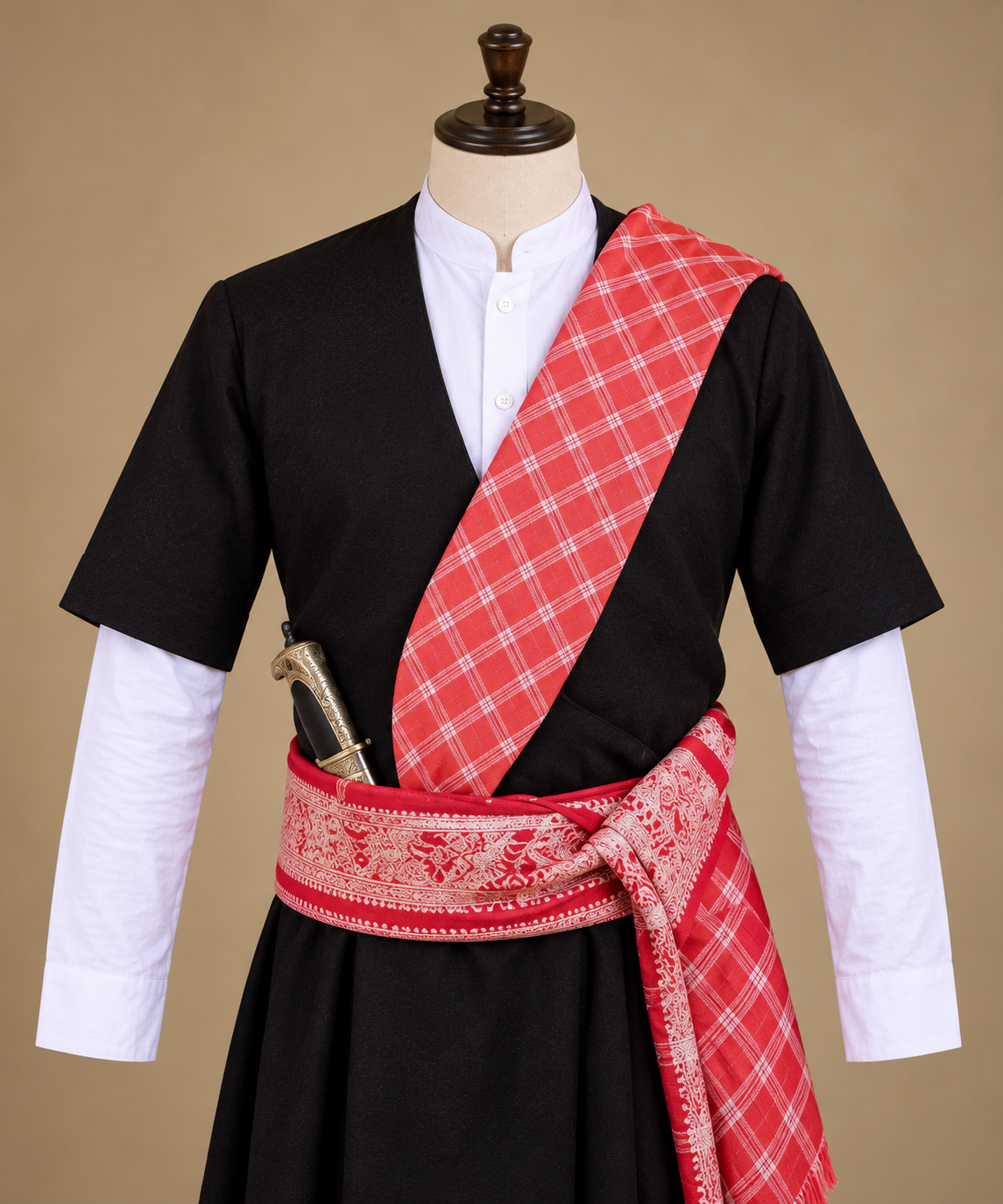
Cultural significance: Mande Thuni and Vastra should be treated as separate objects in the museum. Vastra is the red-and-white checkered scarf, traditionally hand-tied around the head. Mande Thuni is the gilted turban.
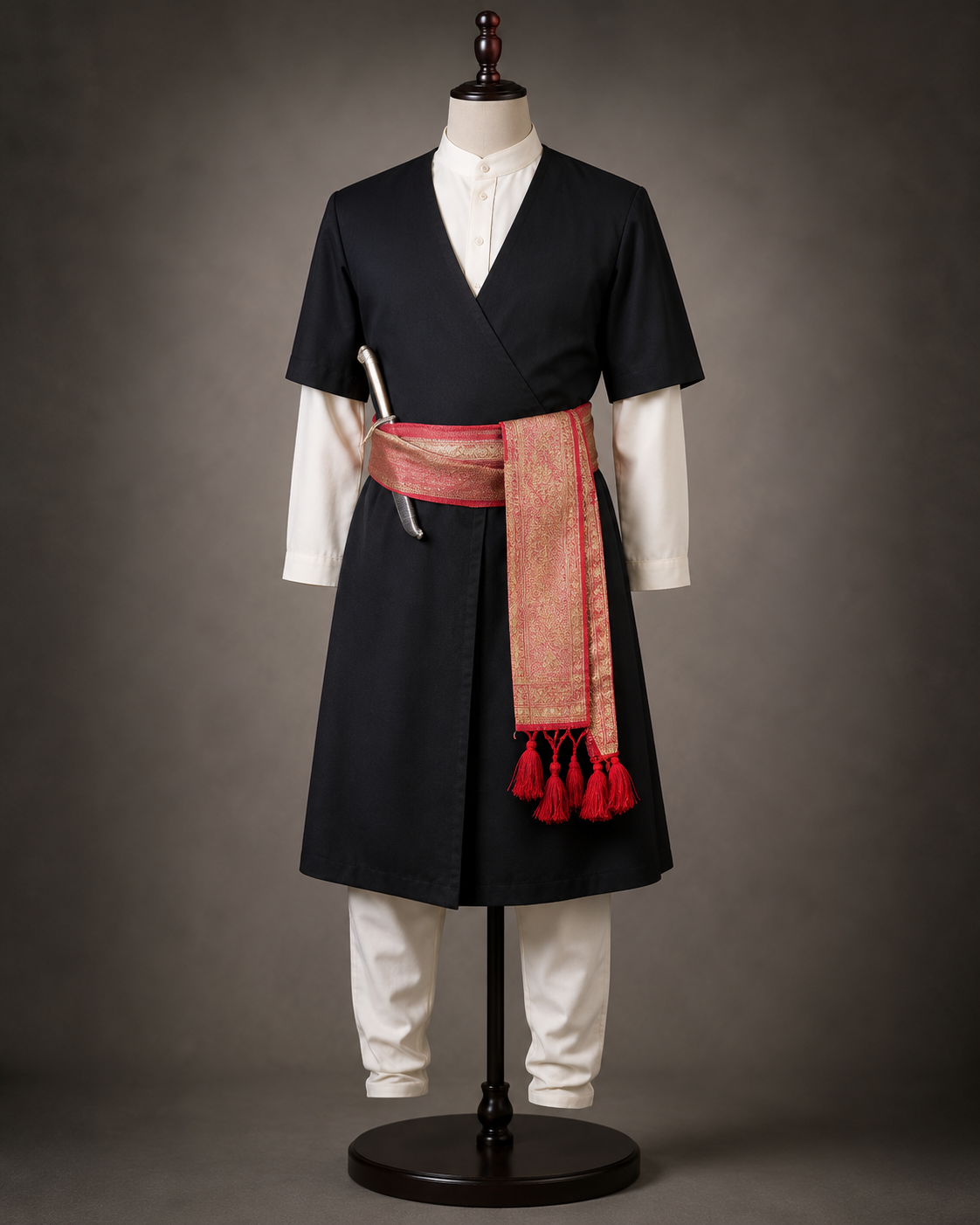
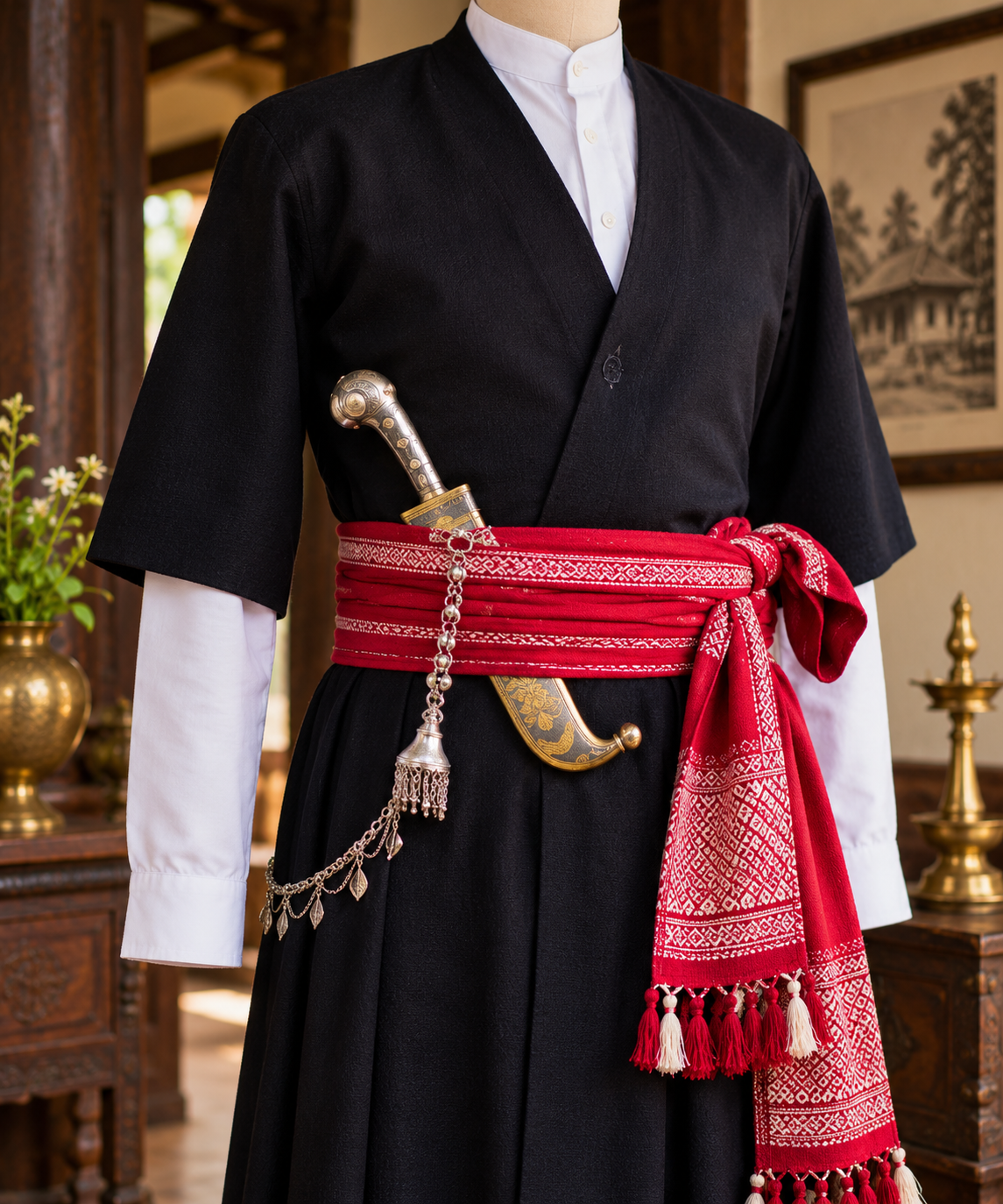
Historical context: Mande Thuni belongs to the traditional system of Kodava male dress and has been associated with formal and ceremonial identity. Historical documentation of Kodava wedding attire records the use of the turban alongside the white Kupya, Chele and Vastra.
The Mande Thuni is wrapped and arranged around the head, creating a distinctive rounded turban with a relatively flat upper surface
Reason for decline: The traditional forms of Kodava headgear have become less common as modern clothing and easier-to-wear contemporary alternatives have become widespread. The hand-wrapped Mande thuni in particular is now worn by very few men.
Revival efforts: The traditional forms of Kodava headgear have become less common as modern clothing and easier-to-wear contemporary alternatives have become widespread. The hand-wrapped Vastra in particular is now worn by very few men.
Kodava Attire How to Tie PANI KETT