About the Object
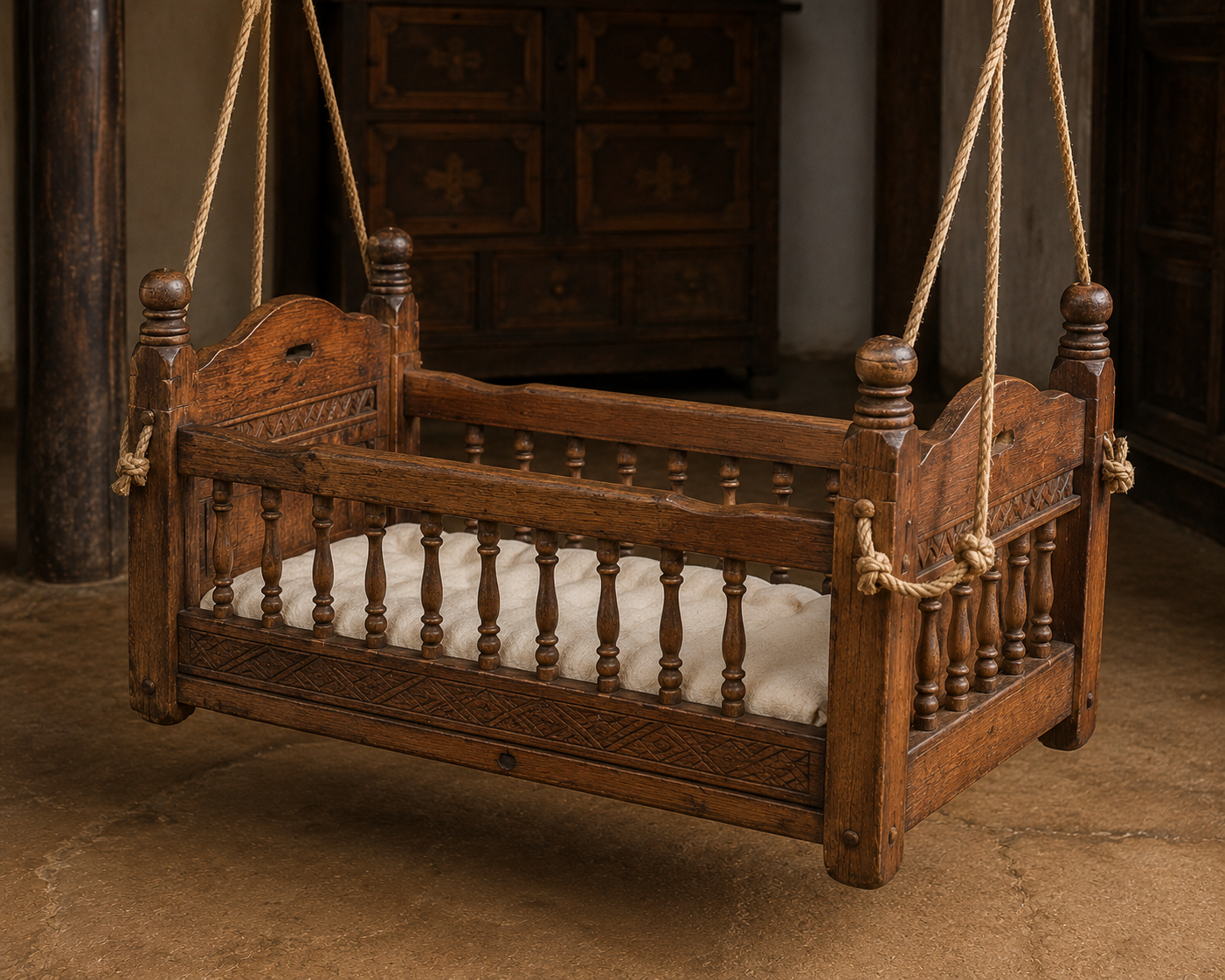
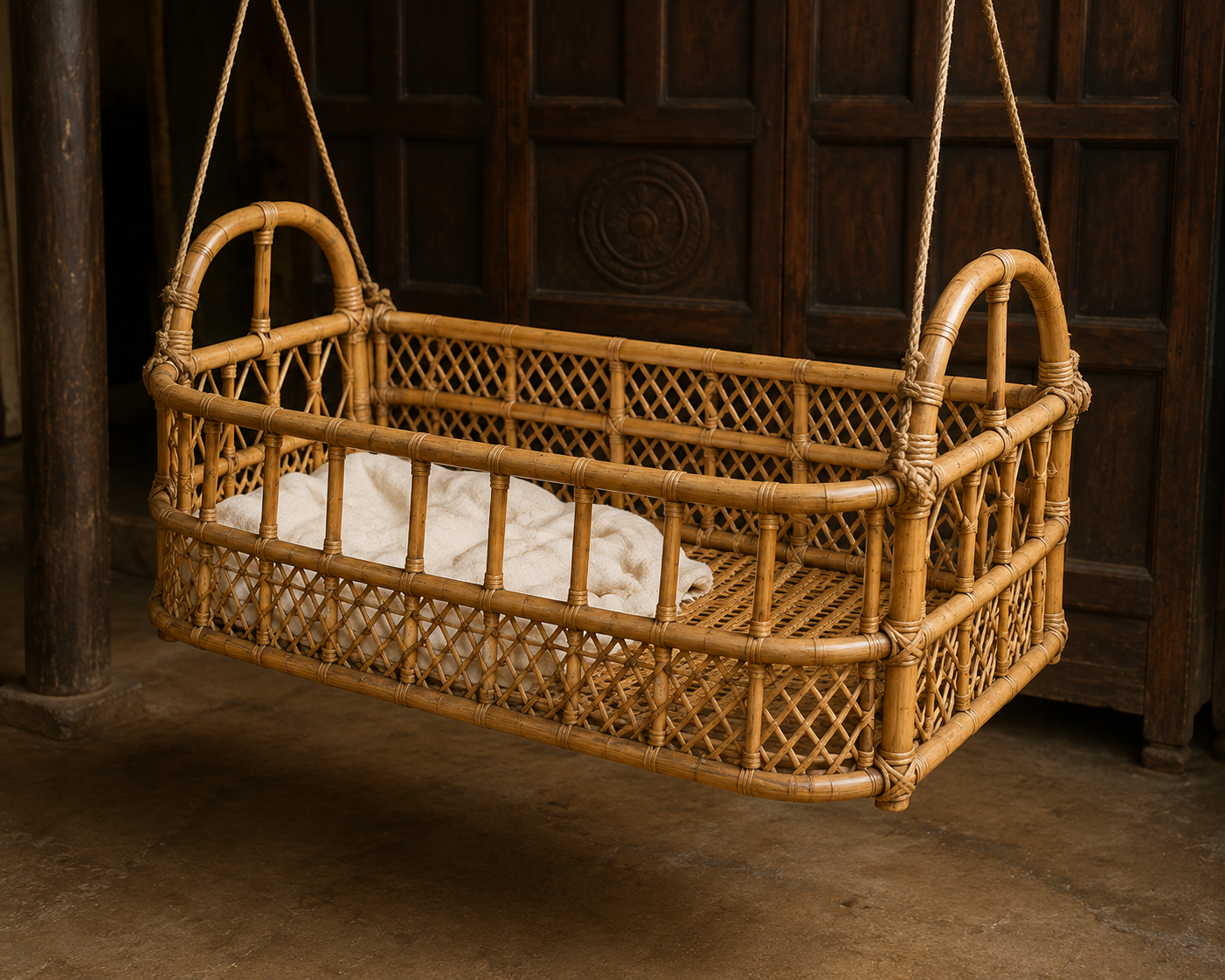
Thott is a traditional cradle used for infants in Kodava households. It was traditionally made from cane or wood.
The Thott was an essential household object associated with the care of infants in traditional Kodava homes. Cradles were made using materials available locally, particularly cane and wood, reflecting the practical craftsmanship of traditional households.
The cane form would have been lightweight and suited to the skills of local basket and cane craftsmen, while wooden versions provided a more solid and permanent construction.
How It Was Used
Traditional use: The primary purpose of the Thott was to hold and gently rock infants. It provided a dedicated resting and sleeping space for babies within the household. The cradle would have been kept inside the traditional Kodava house, in a suitable area where the infant could be cared for by family members.
Cultural significance: The Thott reflects the importance of infant care within the traditional Kodava household. It was a practical domestic object, but also part of the everyday environment in which children were raised.
Historical context: The Thott belongs to the traditional household material culture of Kodagu, from a period when domestic objects were commonly made using locally available natural materials The Thott represents an intimate aspect of traditional Kodava domestic life—the care of infants within the household. Made from cane or wood, it demonstrates how everyday necessities were produced using locally available materials and traditional craftsmanship.
Beyond its practical function as a cradle, the Thott provides an insight into the domestic environment of earlier generations of Kodavas. Its preservation in the Modha Goode Virtual Museum helps document the household objects, craftsmanship and family practices that formed an important part of Kodagu's living heritage
Material & Making
WoodBambooCane
Cane cradles were constructed by shaping and weaving cane into a strong cradle body. Wooden versions were made by shaping and joining wooden components to create a sturdy cradle.
The precise traditional construction methods may have varied between families and craftsmen
Who Used It? / Where? / When?
OwnershipNot yet recorded
Period
Pre-colonial
Status of traditionDeclining
The Tradition Today
Reason for decline: The traditional Thott gradually became less common as modern commercially manufactured cradles, cots and baby furniture became widely available.
Revival efforts: Although traditional Thott cradles are now uncommon, surviving examples can be preserved as important objects of Kodava domestic heritage.
Cane and wooden cradles may also inspire renewed interest in traditional craftsmanship and sustainable household objects.