About the Object
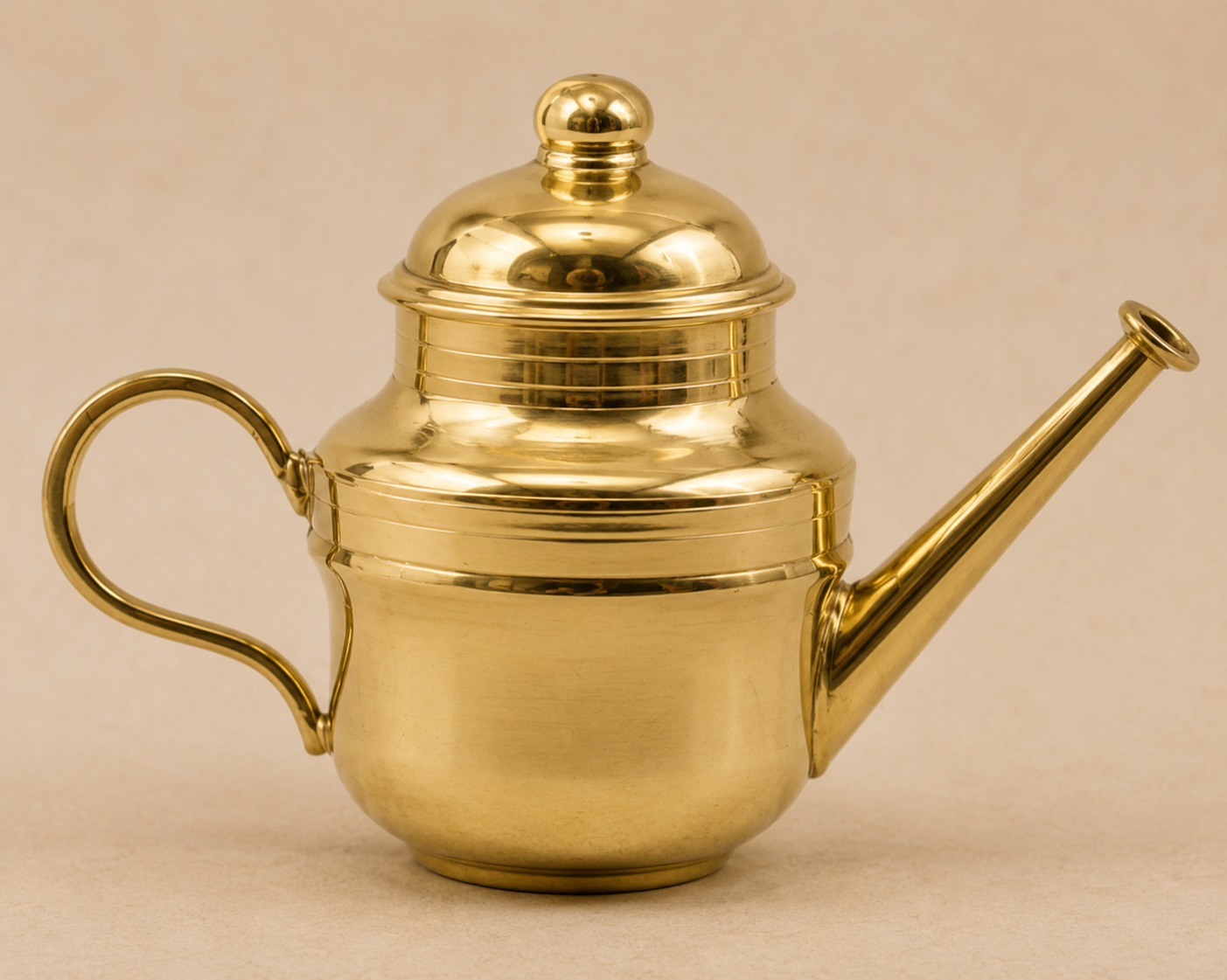
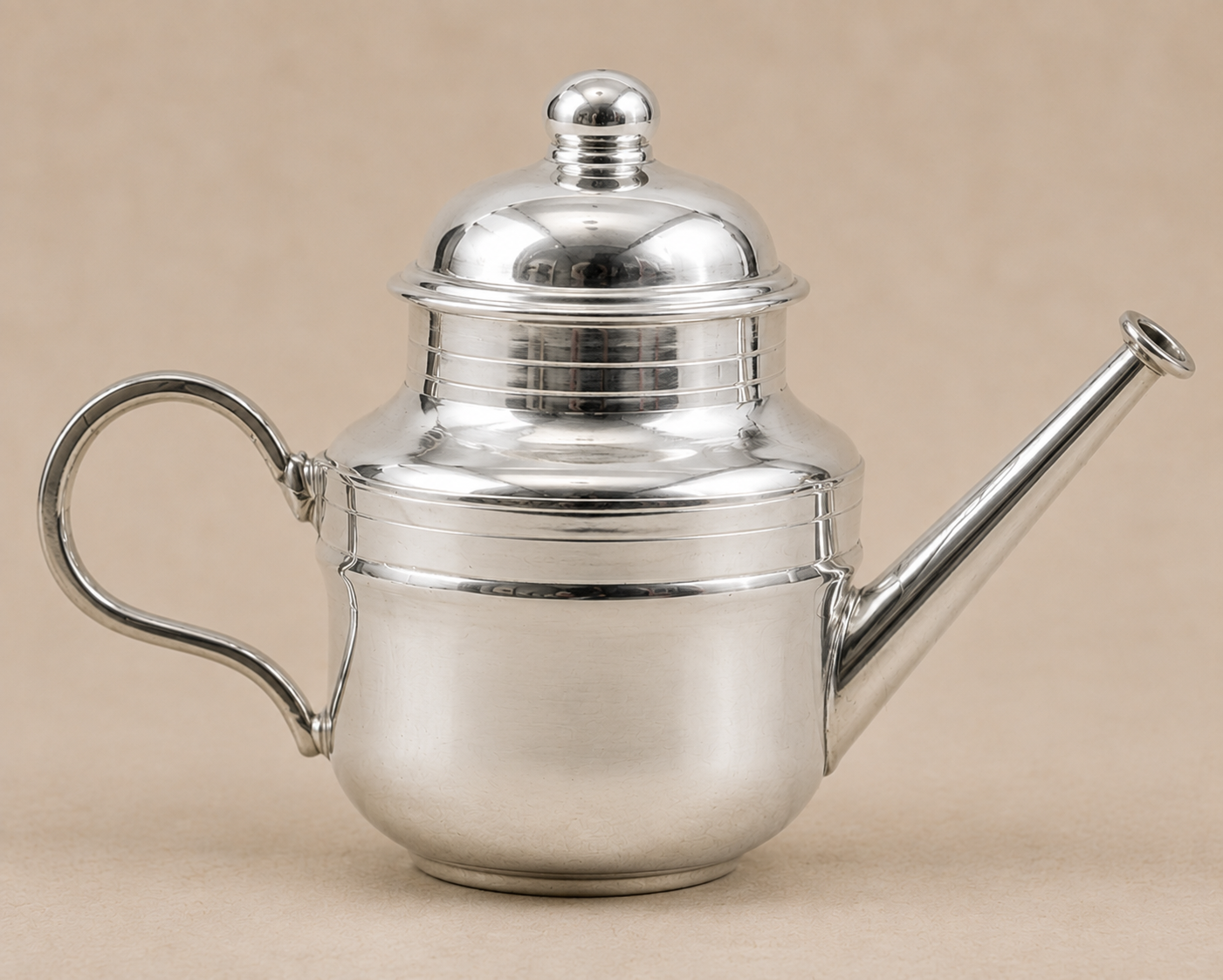
Kindi is a small metal vessel with a narrow spout, traditionally used during the Mangala wedding ceremony to hold milk.
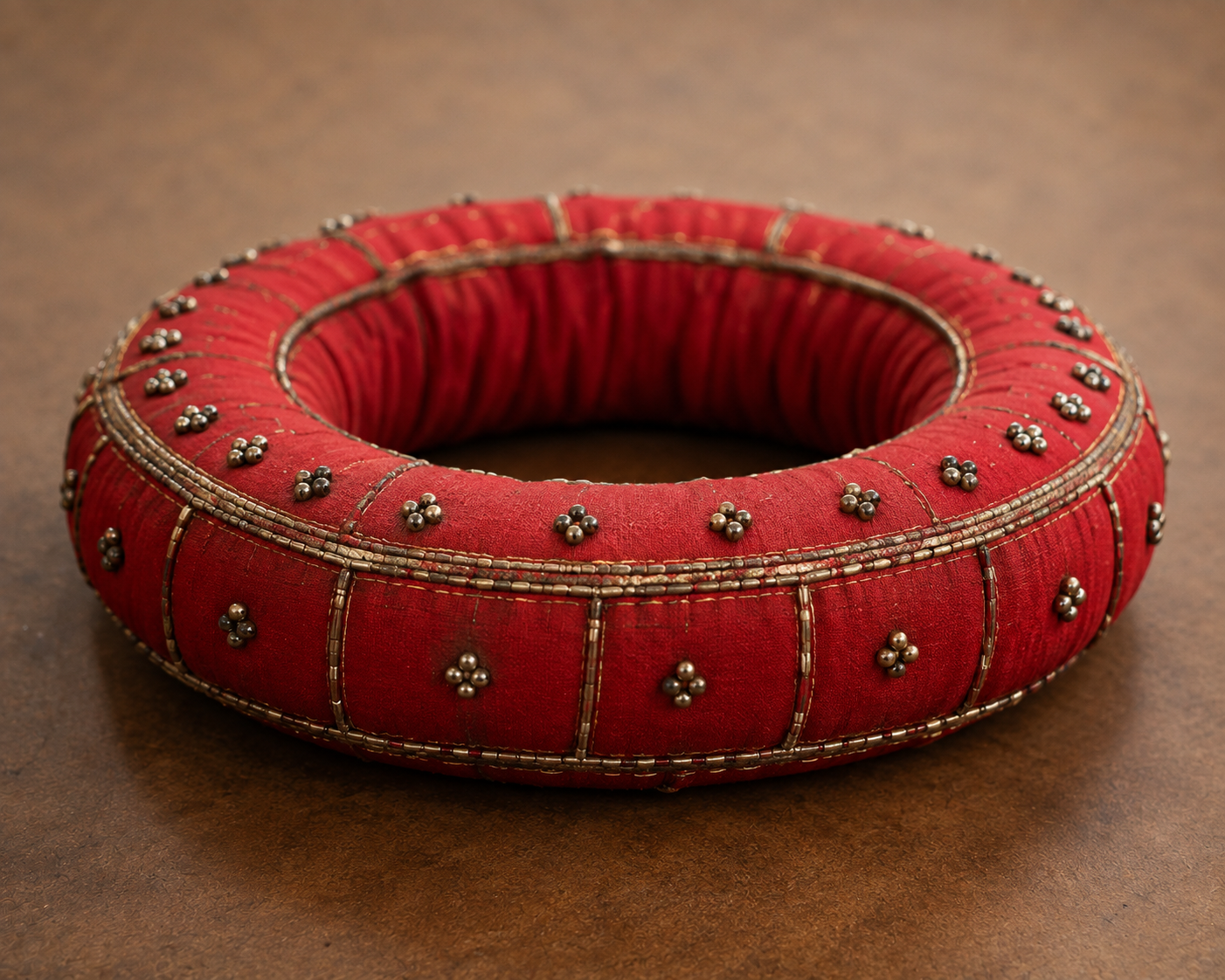
The Kindi is a small metal vessel with a narrow spout that has an important role in the traditional Kodava wedding ceremony. During Mangala, milk is poured into the Kindi and it is placed on a thaliyathakki bolcha, which is positioned on each of two mukkalis placed in front of the bride and groom. During the ceremony, elders bless the bride or groom and have them sip a drop of milk from the Kindi
How It Was Used
Traditional use: The Kindi was traditionally filled with milk and used during the Mangala ceremony for the bride and groom to sip a small quantity as part of the wedding ritual. In earlier times, it was also used as a small vessel for feeding babies, making it a practical household vessel as well as an important ceremonial object
Cultural significance: The Kindi carries an important message of gratitude and remembrance. As elders bless the bride or groom and have them sip the milk, the ritual reminds them that while entering a new relationship and finding a spouse, they should not forget the person who fed and nurtured them earlier.
Historical context: The Kindi forms part of the traditional Kodava Mangala wedding ritual, reflecting the importance given to blessings from elders and remembrance of one's parents and those who nurtured the couple. The practice is documented as part of the established Kodava wedding customs
Material & Making
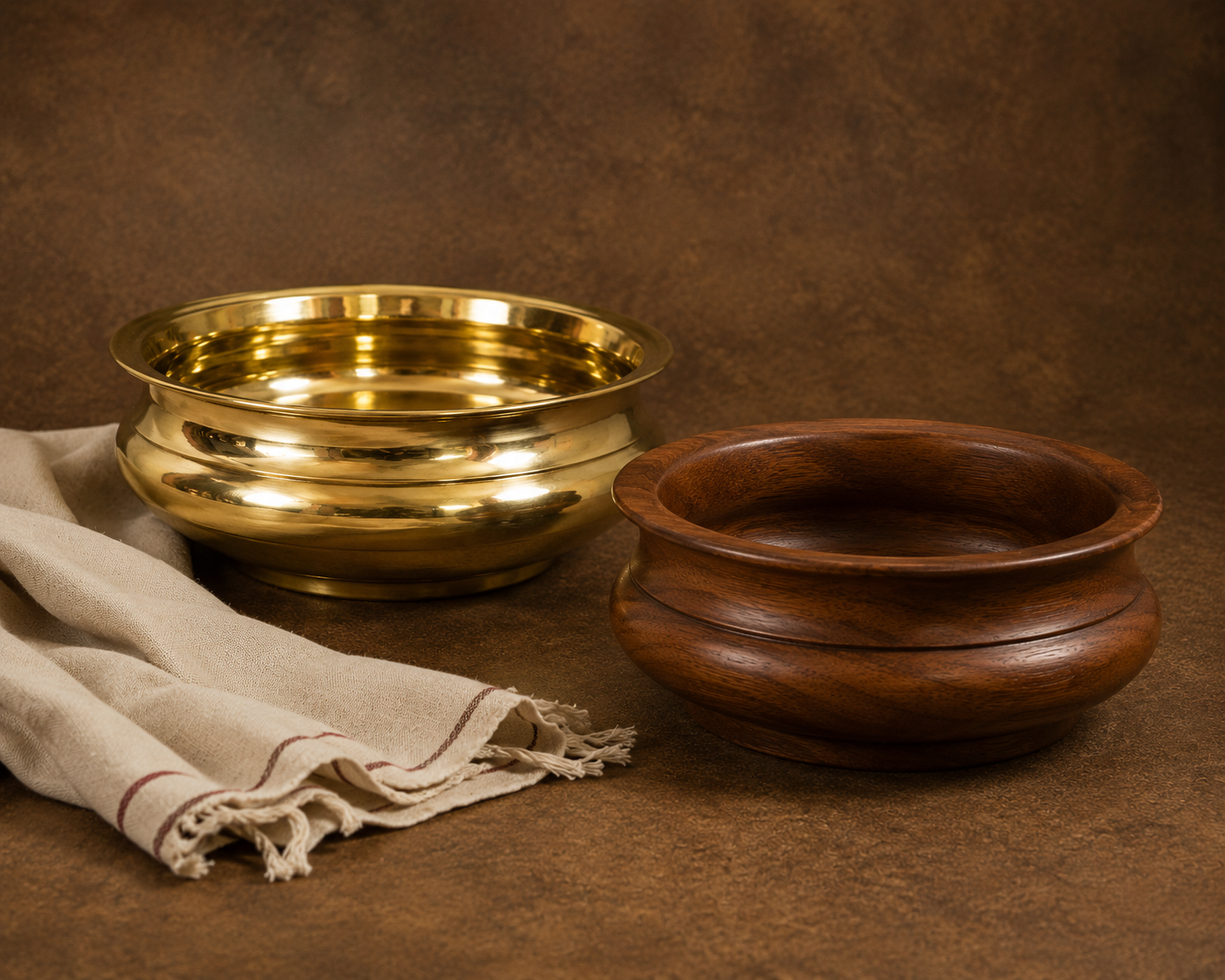
BrassSilverGold
Traditionally, the vessel would be shaped from metal into a small rounded container with a narrow, projecting spout, allowing liquid to be poured or sipped in a controlled manner. The metal would be formed, joined and finished by traditional metalworking techniques
Who Used It? / Where? / When?
OwnershipNot yet recorded
Period
Ancient
Status of traditionStill used ceremonially
The Tradition Today
Reason for decline: The use of the Kindi for feeding babies declined with the introduction of modern feeding products, particularly baby bottles fitted with rubber nipples, which provided a more convenient and controlled way of feeding infants. As these modern products became widely available, the traditional use of the Kindi for feeding babies gradually disappeared, although its ceremonial use during the Mangala wedding ritual continues.
Revival efforts: The strongest form of revival is its continued use during traditional Kodava weddings, particularly during the Mangala ceremony. Preserving the Kindi as part of wedding ritual collections, documenting surviving examples and teaching younger generations the meaning behind its use can help keep the tradition alive.
Sources
Source not recorded
Kodagu Heritage / KodavaClan — Virtual Modha Goode, with the specific Kindi documentation describing its form, use and relevance during the Kodava wedding ceremony
Reference link