About the Object
Moor Kuthi is a traditional Kodava butter-churning implement used to separate butter from curd
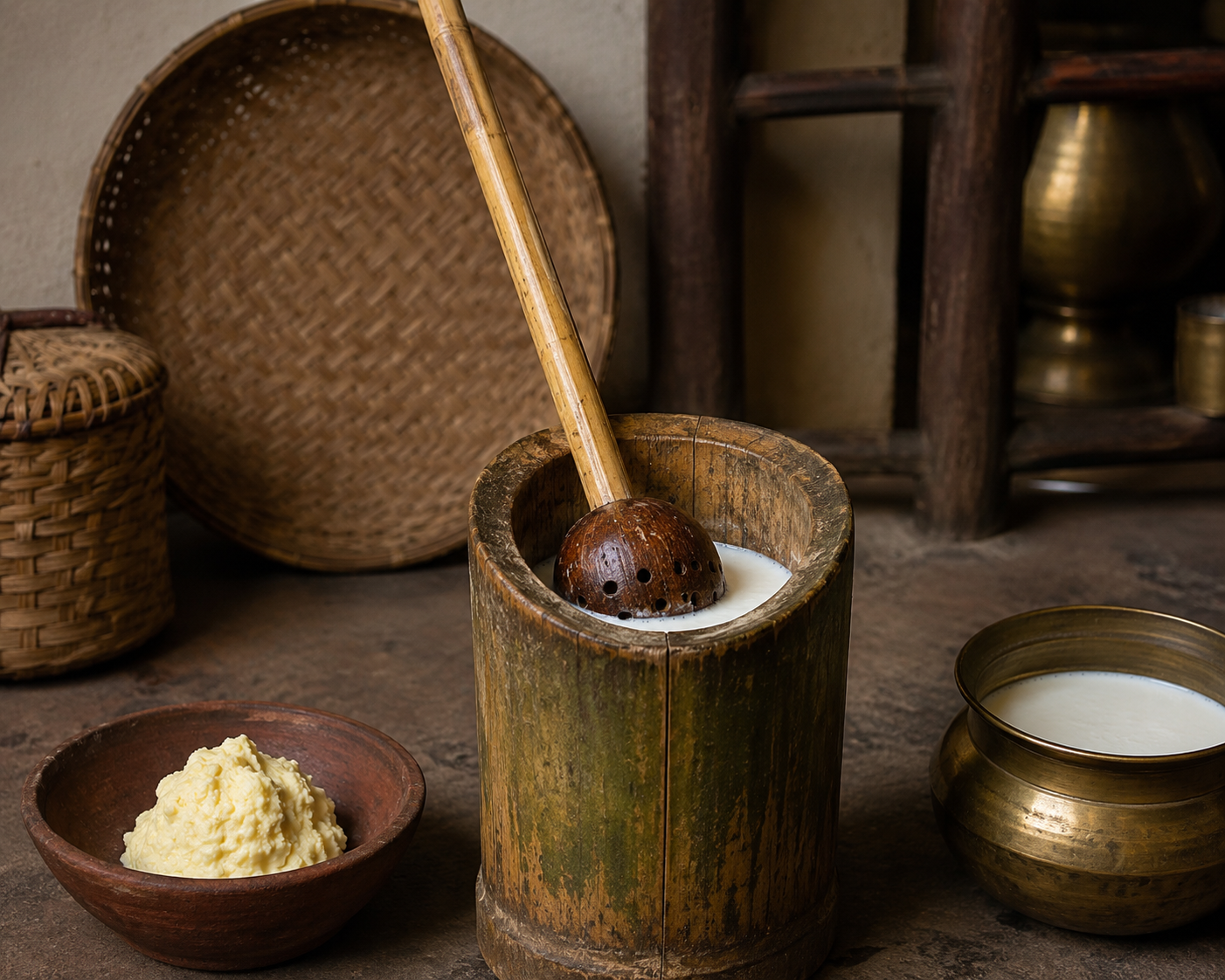
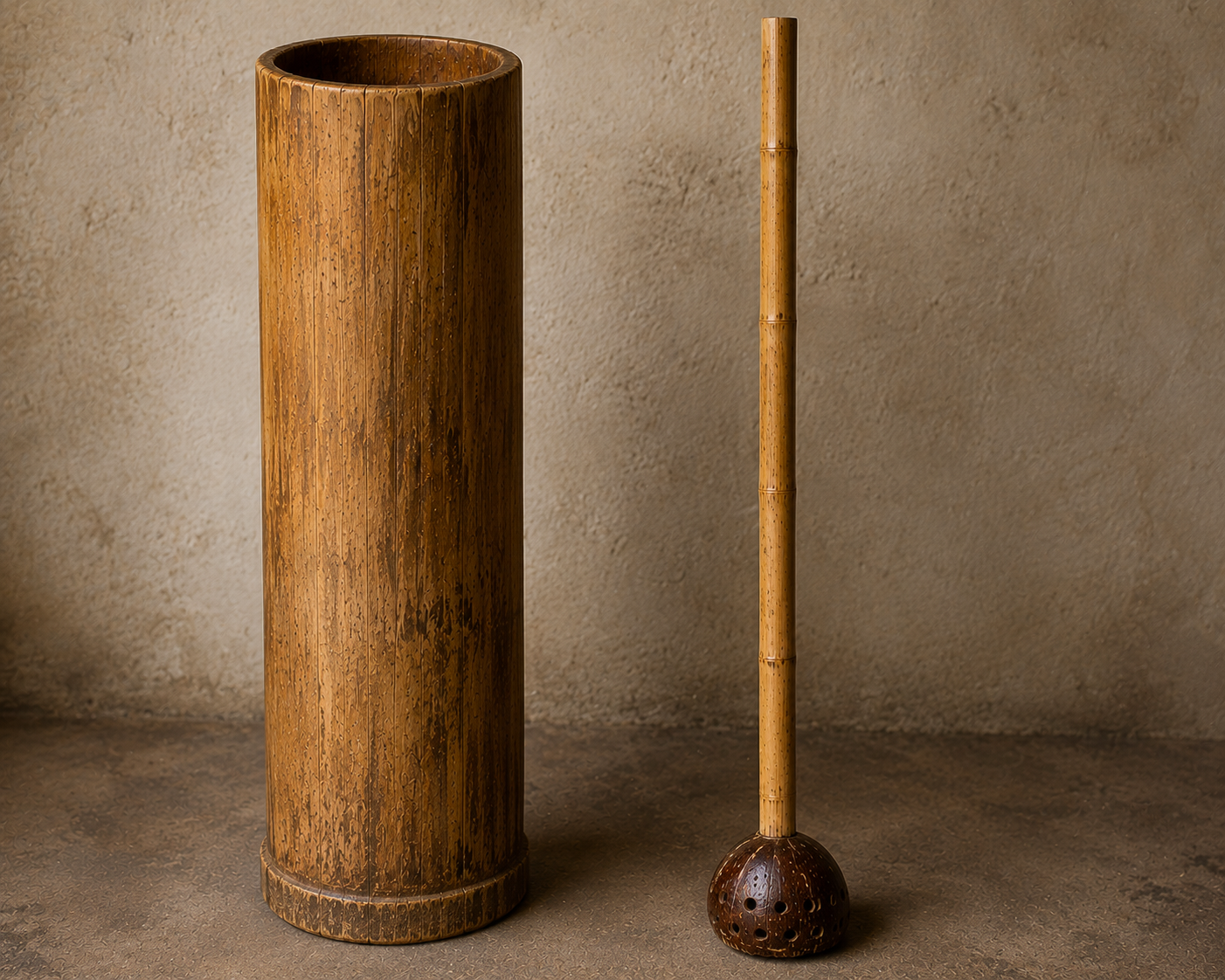
Moor Kuthi is a traditional Kodava butter-churning implement used to separate butter from curd. The kuthi is a sturdy bamboo stump or section used as the base into which the churning implement was repeatedly pounded.
The churning tool consisted of a long bamboo or cane stick with a coconut shell attached to its lower end. The coconut shell was perforated with several holes, allowing the curd and liquid to pass through as the stick was moved up and down.
How It Was Used
Traditional use: Cream was placed in the Moor Kuthi and the long bamboo churning stick was repeatedly pounded into it. The perforated coconut shell created movement and agitation within the cream, causing the butter to separate.
The butter was collected separately, while the remaining liquid was used as moor (buttermilk), making the process an important part of traditional household dairy preparation.
Cultural significance: Moor Kuthi reflects the self-sufficient nature of traditional Kodava households, where dairy products were processed at home using locally available materials.
It also demonstrates traditional knowledge of using bamboo, cane and coconut shell to create practical household implements with minimal resources
Material & Making
WoodBamboo
A strong, suitably sized bamboo section was selected to serve as the kuthi. A long, flexible bamboo or cane stick was prepared as the churning handle. A coconut shell was shaped and securely attached to one end of the stick. Small holes were made in the shell to allow the curd and liquid to flow through during churning.
The implement was simple, locally made and required no metal or mechanical components.
Who Used It? / Where? / When?
OwnershipNot yet recorded
Period
Ancient
Status of traditionRare
The Tradition Today
Reason for decline: The Moor Kuthi gradually declined with changing lifestyles and the introduction of modern kitchen appliances that made butter churning faster and more convenient. As households moved away from producing butter and buttermilk from home-made curd, the need for this traditional implement reduced.
Revival efforts: The Moor Kuthi can be revived by documenting surviving examples and recording oral histories from elders who have used the traditional churning method. The complete process, including the bamboo stump, cane pounder and perforated coconut-shell head, can be digitally preserved through the Modha Goode Virtual Museum.
Sources
KodavaClan archive