About the Object
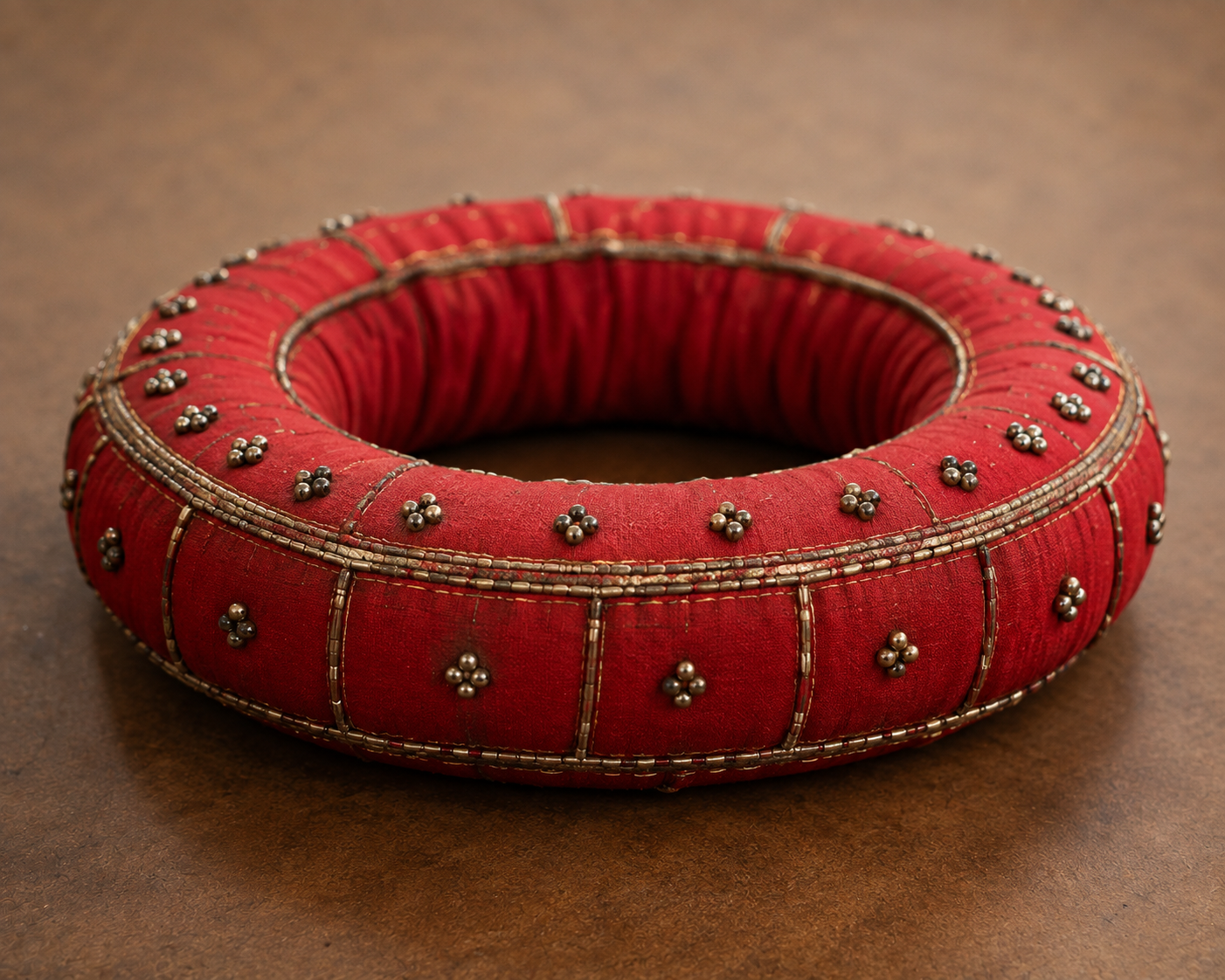
Thombda is a round, red, doughnut-like padded structure traditionally placed on the head to provide cushioning and support while carrying a load. It is particularly associated with the Kodava bride during the wedding ceremony
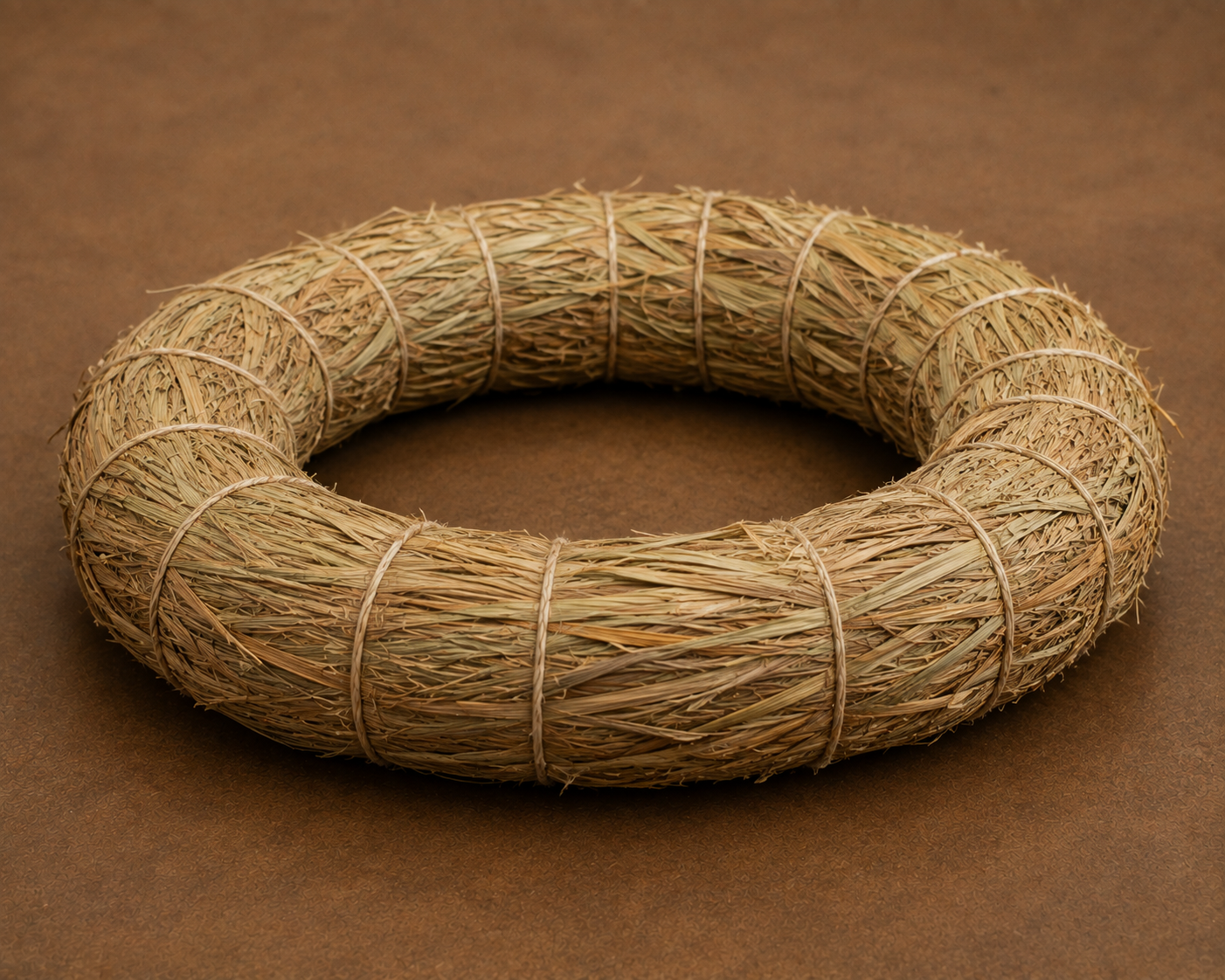
Thombda is a round pad made from soft material and designed to provide grip, cushioning and support on the head while carrying a load. It is commonly associated with the Kodava bride during the wedding ceremony, particularly during Ganga Puja, when the bride carries water on her head. Thombda is decorated with beads and thread work, giving it an attractive ceremonial appearance. It is also used while carrying poliya and during Ari Kadtho in the harvest season. The traditional forms include Mani Thombda and Pill Thombda.
How It Was Used
Traditional use: Used as a padded support while carrying loads on the head.
Used by the bride during Ganga Puja while carrying water on her head.
Used to carry poliya.
Used during Ari Kadtho in the harvest season.
Cultural significance: Thombda has both ceremonial and practical significance. Its presence on the bride's head during Ganga Puja connects an everyday load-carrying practice with the rituals of Kodava marriage. Its continued association with harvest activities also reflects the connection between Kodava wedding traditions, agriculture and everyday rural life
Historical context: Thombda belongs to the traditional material culture of Kodagu and reflects an older practice in which soft, locally made head supports were used to make carrying loads more comfortable. Its incorporation into the Kodava wedding ceremony demonstrates how practical household and agricultural objects could also acquire ceremonial significance.
Material & Making
Cotton
The Mani Thombda was formed into a round, ring-like padded structure using soft material. The outer surface could be decorated with beads and thread work, particularly when prepared for ceremonial use
for the pill thombada hay or dry grass is rolled and made to a donut shape
Who Used It? / Where? / When?
OwnershipNot yet recorded
Period
Ancient
Status of traditionStill used ceremonially
The Tradition Today
Reason for decline: The traditional use of Thombda has declined with changes in load-carrying practices, household technology and modern methods of transporting agricultural and domestic goods. Its practical use has therefore become less common, while its ceremonial use survives in traditional contexts.
Revival efforts: Its continued use during traditional Kodava wedding ceremonies and harvest practices helps preserve the object. Documenting Mani Thombda and Pill Thombda, recording surviving examples and preserving the knowledge of elders who know how they were made and used can further support its revival.
Sources
Source not recorded
Kodagu Heritage / KodavaClan — Virtual Modha Goode, specifically the Thombda documentation
Reference link