About the Object
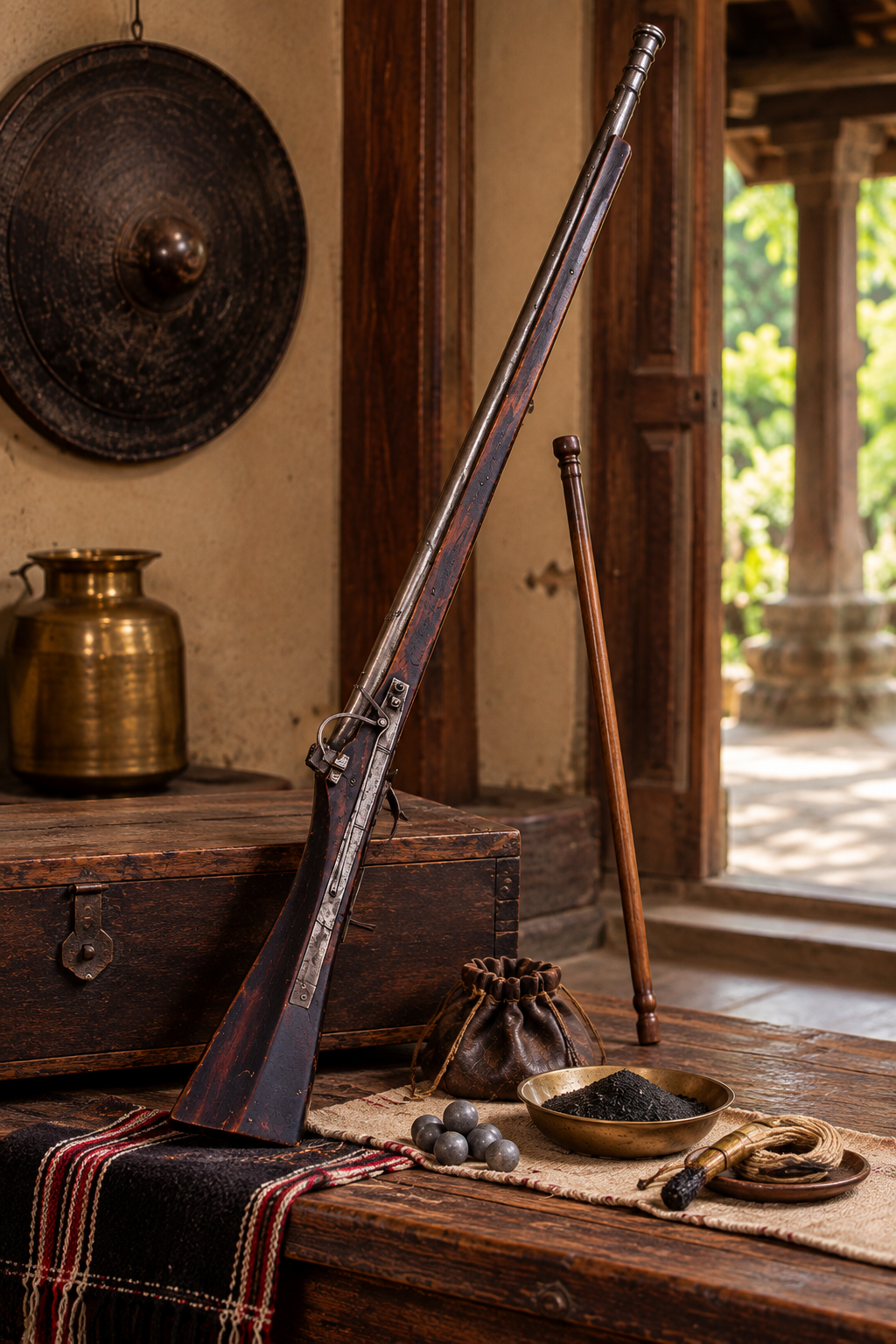
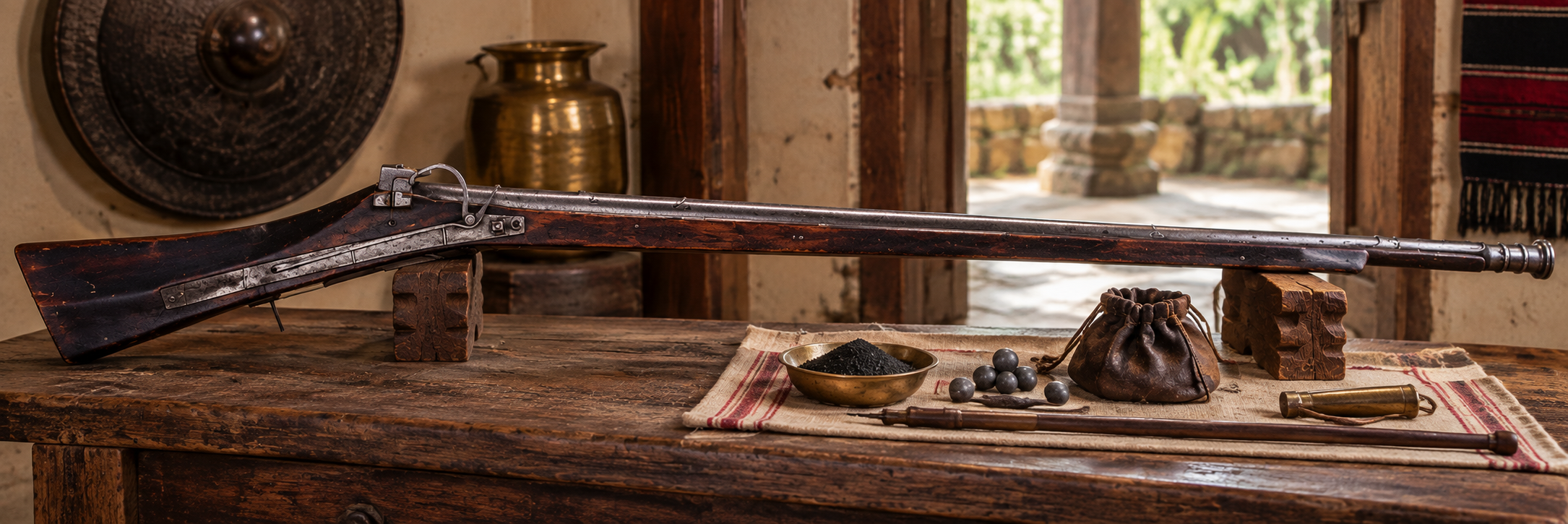
An early traditional firearm operated using a burning wick, known as Thiri, to ignite gunpowder through a touch hole.
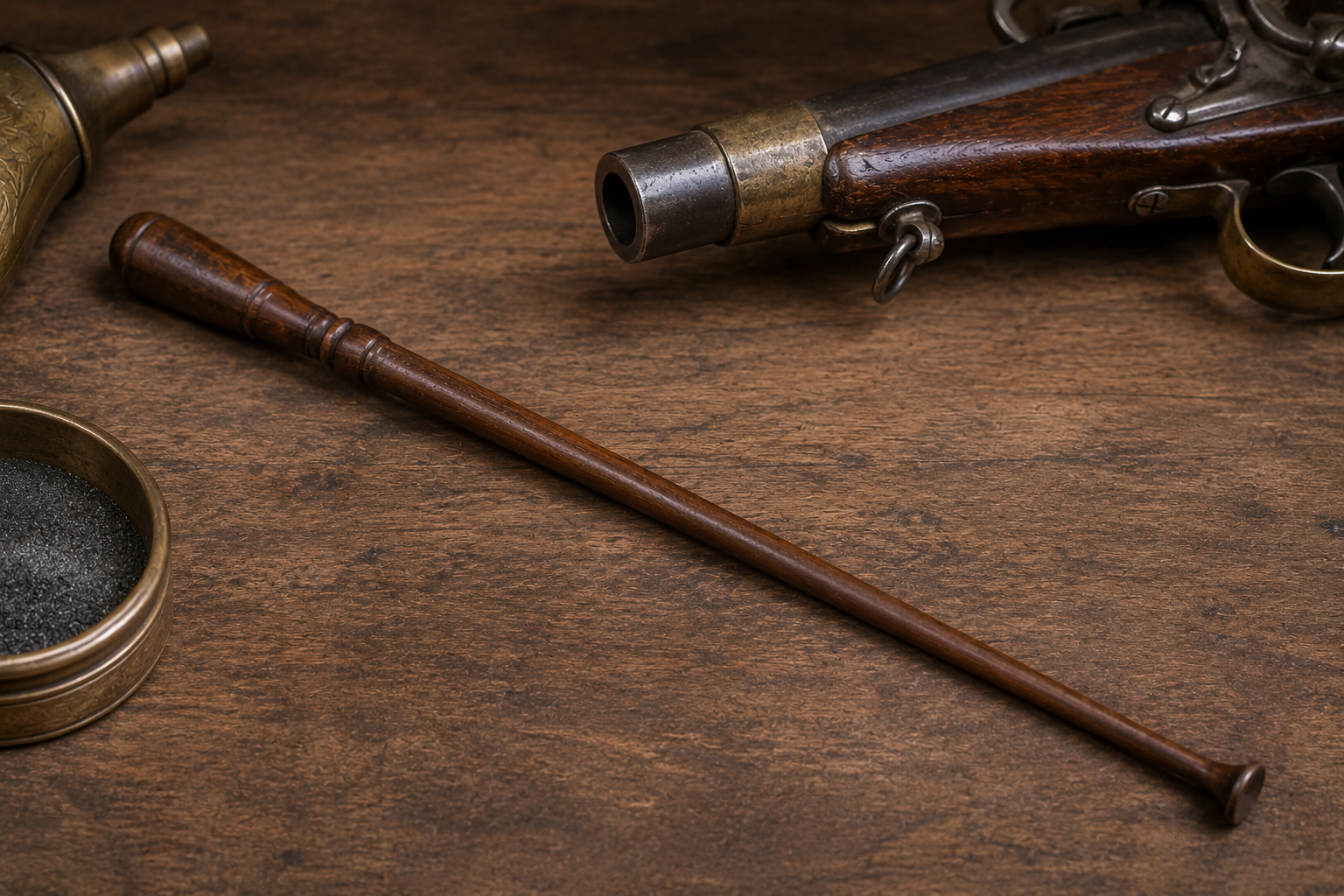
Thiri-Thoke was a traditional muzzle-loading firearm associated with an earlier period of Kodava martial and hunting traditions. The gun consisted of a long wooden stock, a metal barrel and a simple ignition mechanism in which a burning wick was brought into contact with a touch hole to ignite the gunpowder. Gunpowder and the projectile were loaded through the muzzle. An Achh Kol, a small rod or stick associated with loading the gunpowder, was used as part of the loading process. The firearm represents the period when firearms became incorporated into the traditional martial culture of Kodagu.
How It Was Used
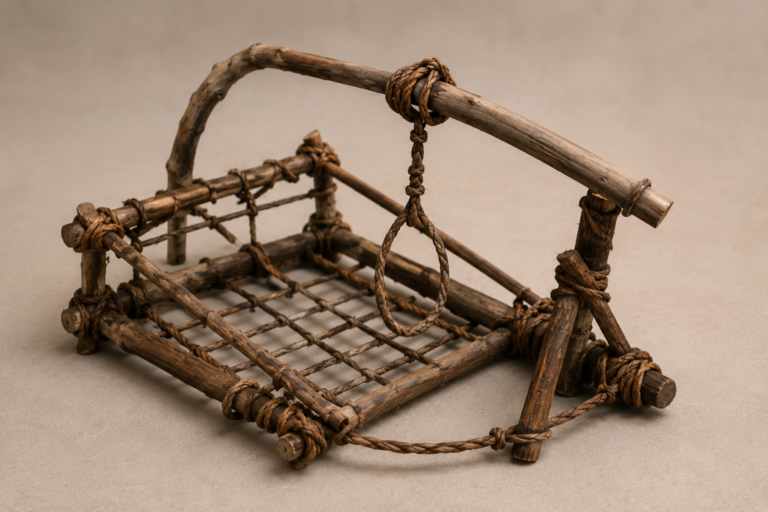
Traditional use: Thiri Thoke gradually replaced Pondhi, the earlier fireball-arrow weapon used in Kodava martial traditions, and went on to occupy a very important place in traditional Kodava life. With the arrival of the firearm, the Thiri Thoke became more than a weapon—it became deeply embedded in the community's traditions of hunting, protection, martial practice and ceremonial signalling.
Its use extended beyond combat and hunting. Gunfire was traditionally used as a signal during important community occasions, including births and deaths, giving the Thiri Thoke a recognised social and ceremonial role. Over time, it became firmly associated with Kodava identity, courage and the community's martial heritage.
The transition from Pondhi to Thiri Thoke represents an important change in Kodava weapon culture: the older fireball arrow gave way to the firearm, which subsequently held a strong and enduring place in Kodava tradition.
Cultural significance: Thiri Thoke was not only associated with hunting, protection and martial traditions but also had a social and ceremonial role as a means of signalling. In traditional Kodava society, firing the gun could be used to announce or signal significant occasions, including births and deaths within the community. This gave the firearm a place beyond warfare—as part of the communication and social customs of the community.
Historical context: Thiri Thoke represents an important stage in the evolution of Kodava martial traditions, when firearms became part of the established culture of hunting and protection. The Thiri was the wick used for ignition, while Thoke referred to the gun. The associated Achi Koll (ಅಚ್ಚಿ ಕೊಲ್) was a wooden rod used to fill and compact the gunpowder inside the muzzle of the firearm.
Material & Making
The wooden stock was shaped to hold the barrel securely. The metal barrel and ignition components were fabricated by traditional metalworking and fitted to the stock. A touch hole provided the route for ignition from the burning Thiri
Traditional firearms could vary considerably in barrel length, stock shape, metal fittings and ignition mechanism. Individual examples may also show differences resulting from local manufacture and repairs.
The Tradition Today
Reason for decline: Matchlock firearms became obsolete with the introduction of more advanced firearms and modern weapons. Changes in hunting practices and weapon regulations also contributed to their disappearance from everyday use.
Revival efforts: Today, surviving Thiri Thoke examples are primarily valuable as historical objects. They can be preserved through museums, heritage collections, oral-history projects and documentation of traditional Kodava martial cultur