About the Object
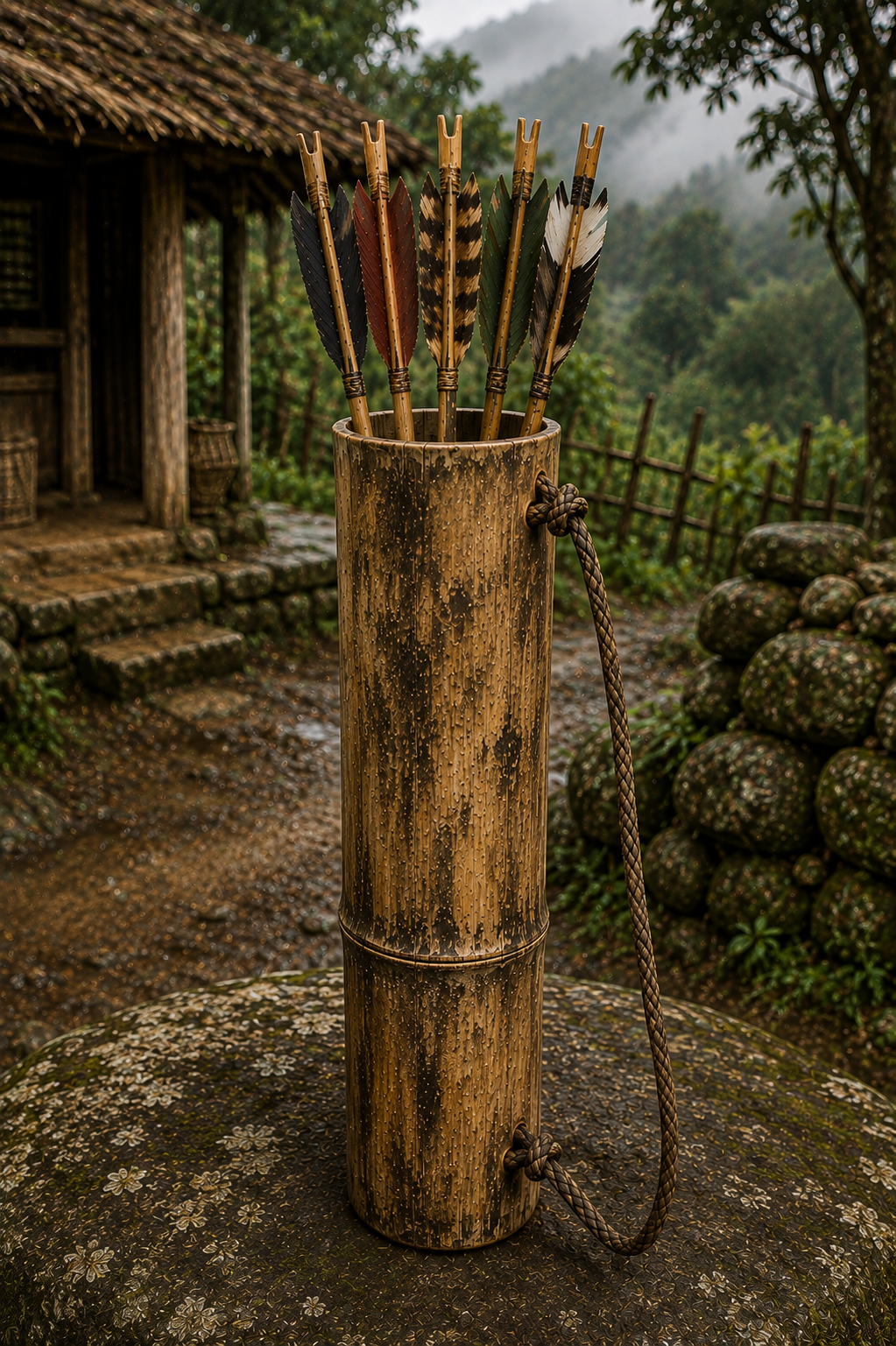
Ambthotti is a traditional quiver used by Kodavas to carry and hold arrows.
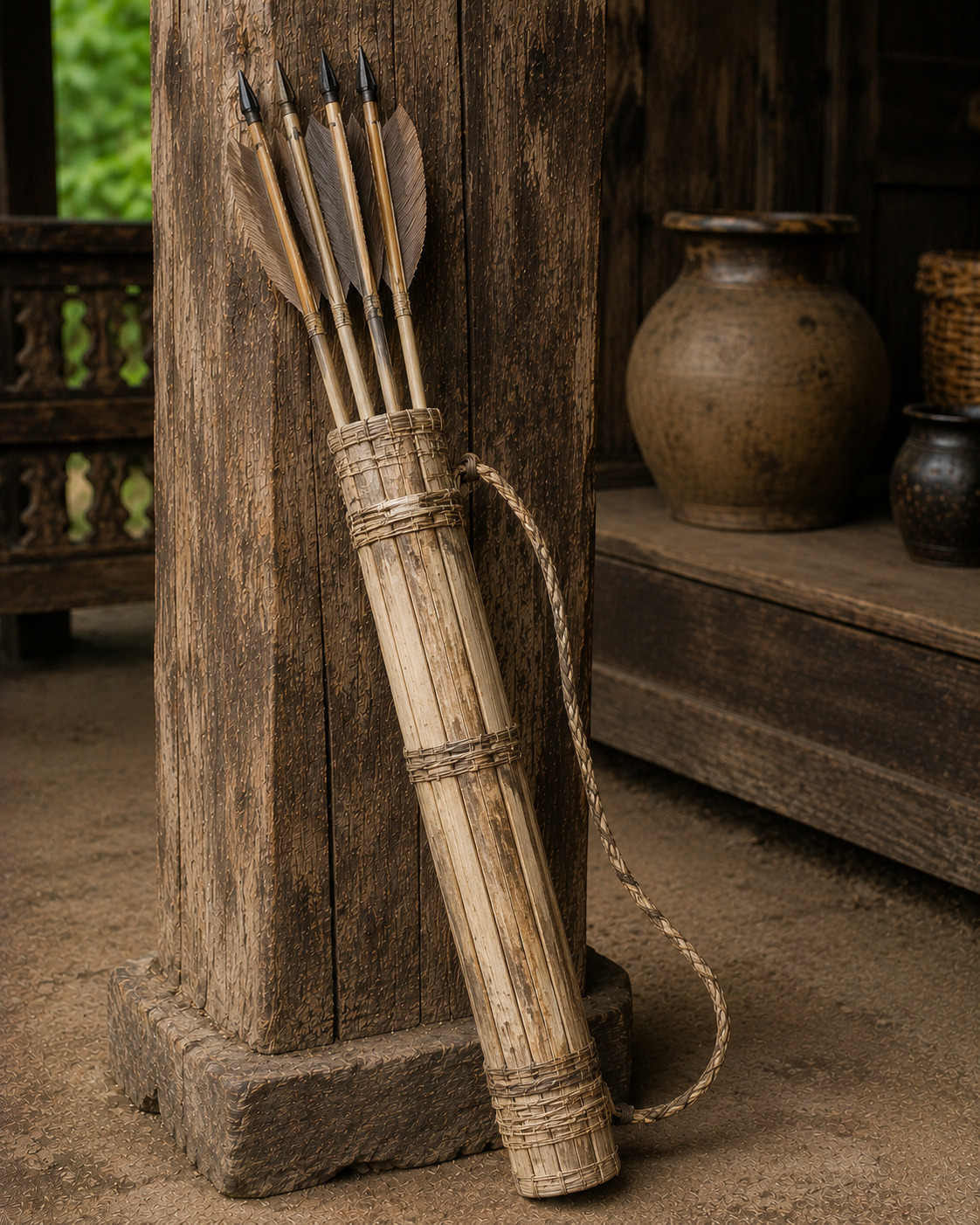
Ambthotti is a traditional quiver used by Kodavas to carry and hold arrows. It formed part of the traditional bow-and-arrow equipment used for hunting and reflects the martial traditions associated with the Kodava community. Traditionally made from locally available natural materials such as cane, bamboo, wood or leather, depending on the particular form and period of the quiver.The quiver was designed to keep arrows together, protect them while travelling and allow them to be quickly accessed when required.
How It Was Used
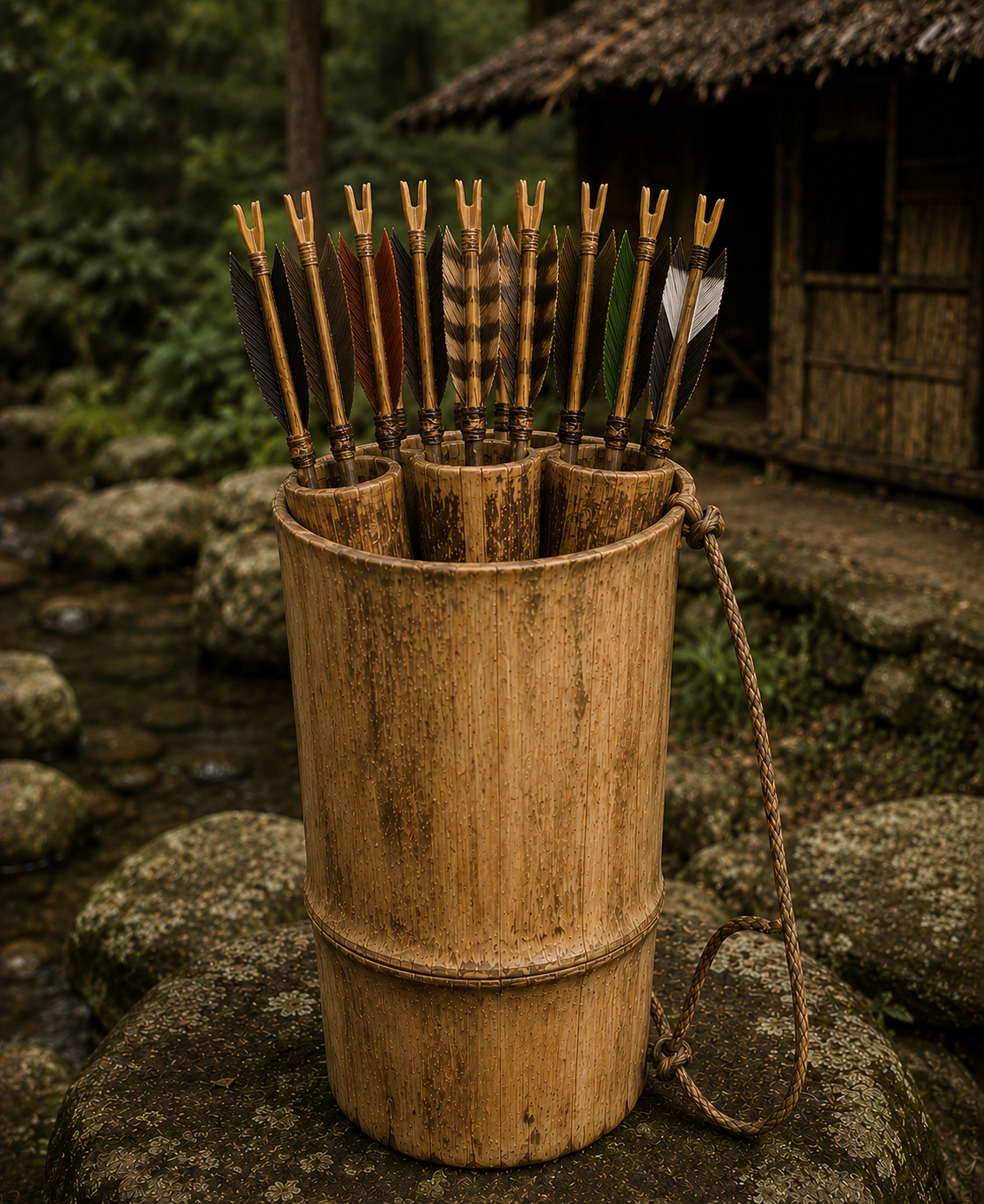
Traditional use: The Ambthotti was traditionally used to carry and organise arrows used with the bow during hunting and other outdoor activities. In some forms, a larger bamboo holder was designed to carry several smaller, individual quivers within it. Each smaller quiver could hold a specific group of arrows, while the larger outer holder brought them together into a single portable unit. This arrangement provided convenient access to the arrows while protecting them during movement through forests and fields.
The arrows were generally kept point-down inside the smaller quivers, with the notched ends (nocks) exposed above the opening, allowing them to be easily grasped and drawn when required. The larger outer holder could be carried using a cane or natural-fibre cord attached to its sides.
This design demonstrates the practical ingenuity of traditional Kodava equipment, using locally available bamboo and cane to create a lightweight, organised and durable system for carrying multiple sets of arrows
Cultural significance: The primary purpose of the Ambthotti was to carry and organise arrows used with the traditional bow. It allowed the user to transport several arrows without carrying them individually and kept the arrowheads safely contained.
The quiver would have been particularly useful while moving through the forests, fields and hilly terrain of Kodagu, where hunting and outdoor activities required equipment that was practical, lightweight and durable
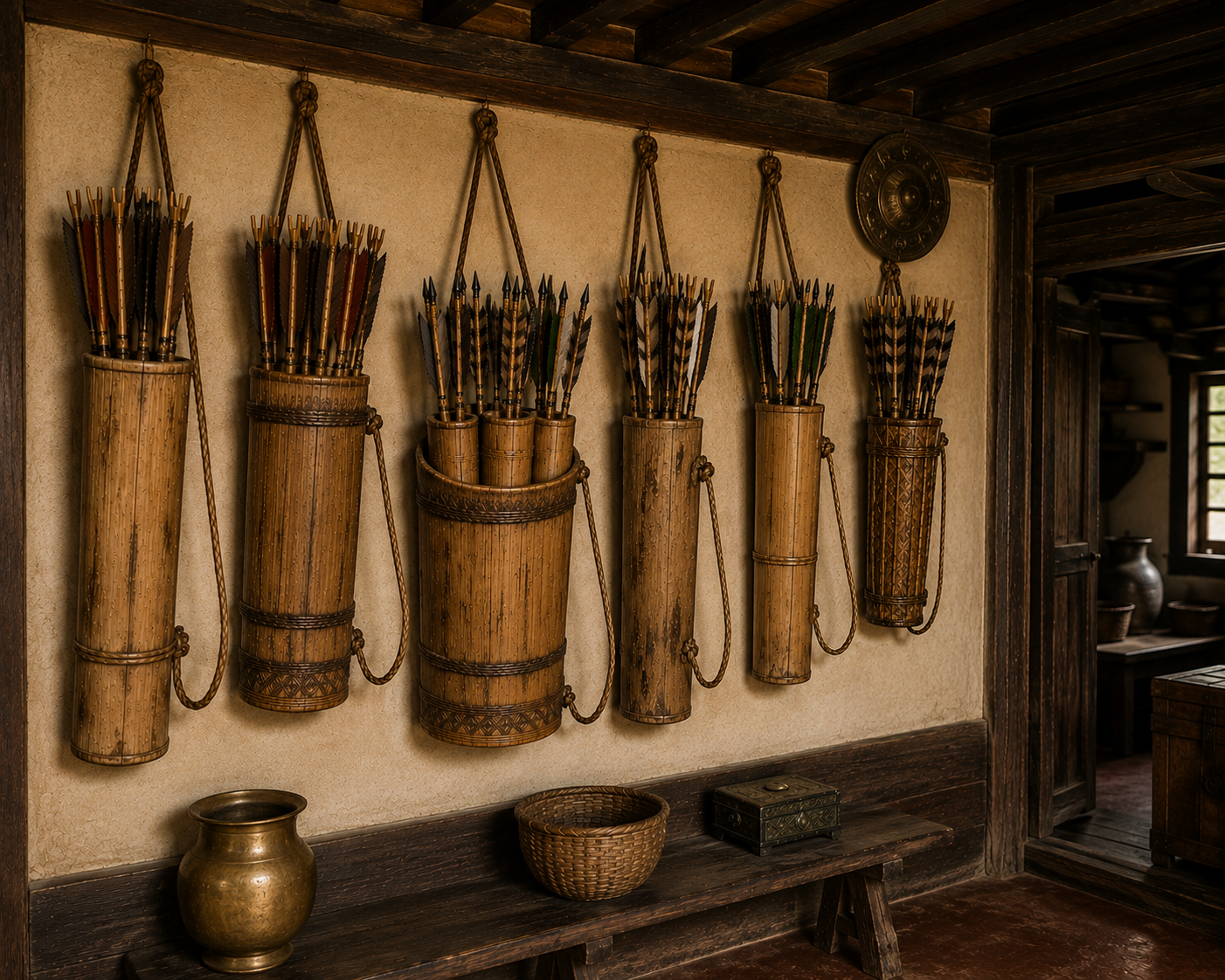
Historical context: The Ambthotti is significant as part of the traditional hunting and martial equipment of the Kodavas. It reflects a time when the bow and arrow were practical tools used in the forests and agricultural landscape of Kodagu. The quiver's construction from locally available bamboo and cane demonstrates the community's traditional knowledge of natural materials and functional craftsmanship.
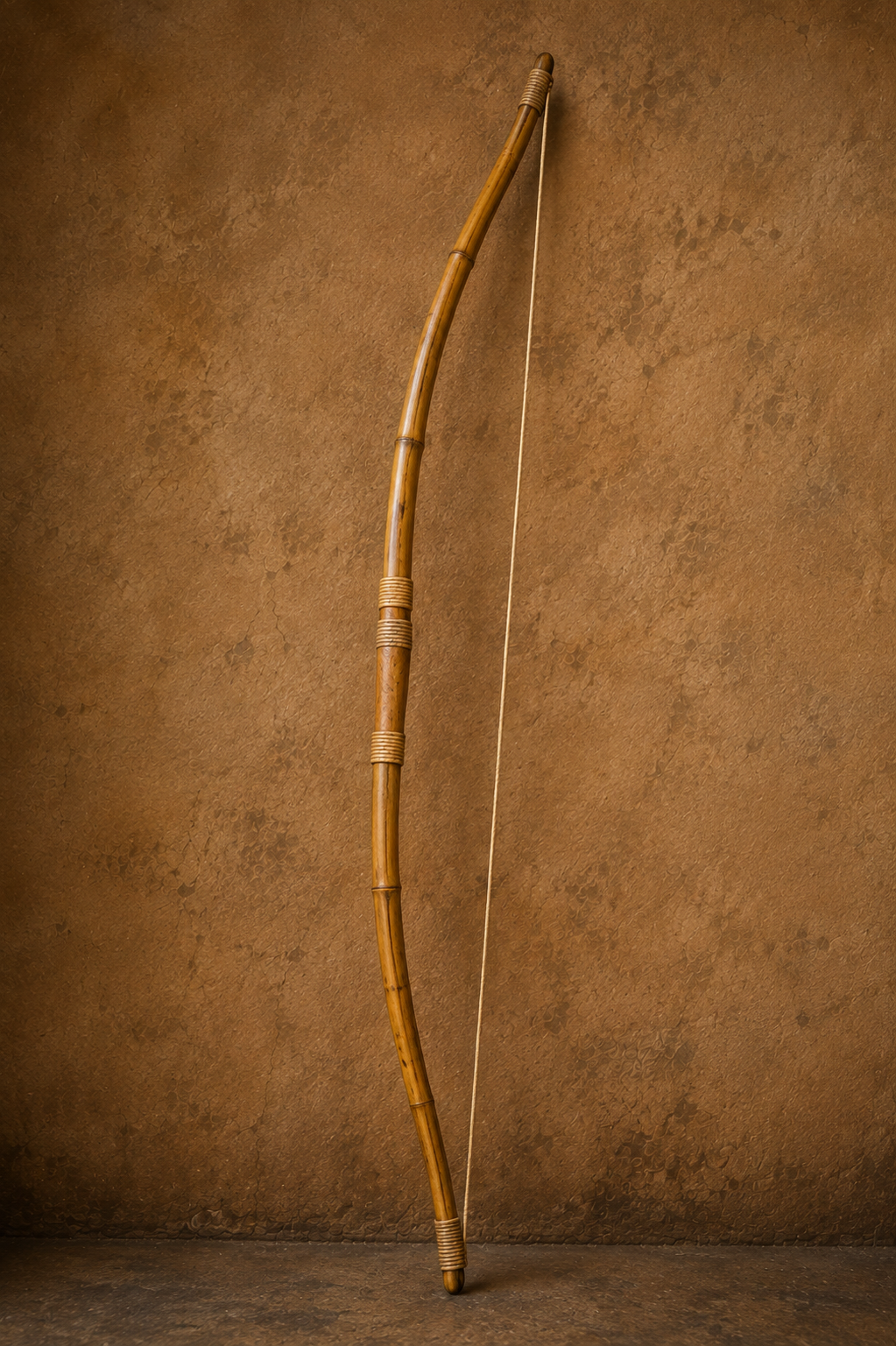
Its design—particularly the use of a larger bamboo holder with smaller internal arrow holders—shows how traditional equipment was organised for carrying, protecting and quickly accessing arrows. Together with the Ambh Bill and arrows, the Ambthotti provides a tangible link to the Kodava community's historical association with hunting, outdoor life, self-reliance and martial traditions.
Material & Making
WoodBambooCaneLeather
The use of a naturally hollow bamboo section made the quiver both functional and durable. The bamboo could be cleaned, shaped and finished while retaining its natural strength. Smaller internal holders could be made separately and inserted into the larger body.
Cane or natural fibre could be used for bindings and carrying straps. The simplicity of the construction reflects the traditional practice of transforming locally available materials into practical objects without unnecessary ornamentation.
Who Used It? / Where? / When?
OwnershipNot yet recorded
Period
Ancient
Status of traditionExtinct
The Tradition Today
Reason for decline: The use of Ambthotti declined with the gradual disappearance of traditional bow-and-arrow hunting and the introduction of firearms and modern equipment. Changes in forest use, hunting practices and regulations, together with changing lifestyles, removed much of the practical need for traditional quivers. As the bow and arrow ceased to be everyday equipment, the knowledge of making bamboo and cane Ambthottis also became increasingly uncommon
Revival efforts: The Ambthotti can be revived as part of the preservation of traditional Kodava craftsmanship and material culture. Surviving examples should be documented through detailed photographs, measurements, material identification and oral histories from elders familiar with their use. Different forms—including the large bamboo outer holder with smaller internal arrow holders—should be recorded rather than treating the Ambthotti as a single standard design.
Traditional artisans can be encouraged to recreate the quiver using bamboo, cane and natural fibre, while non-functional replicas can be displayed alongside the Ambh Bill and traditional arrows at cultural exhibitions and educational programmes. The Modha Goode Virtual Museum can preserve these variations digitally and document how the complete bow, arrow and quiver system was traditionally used.
Sources
KodavaClan archive
Entered from the KodavaClan Modha Goodē reference glossary, as supplied by the curator.
Reference link
bowarrowambh