About the Object
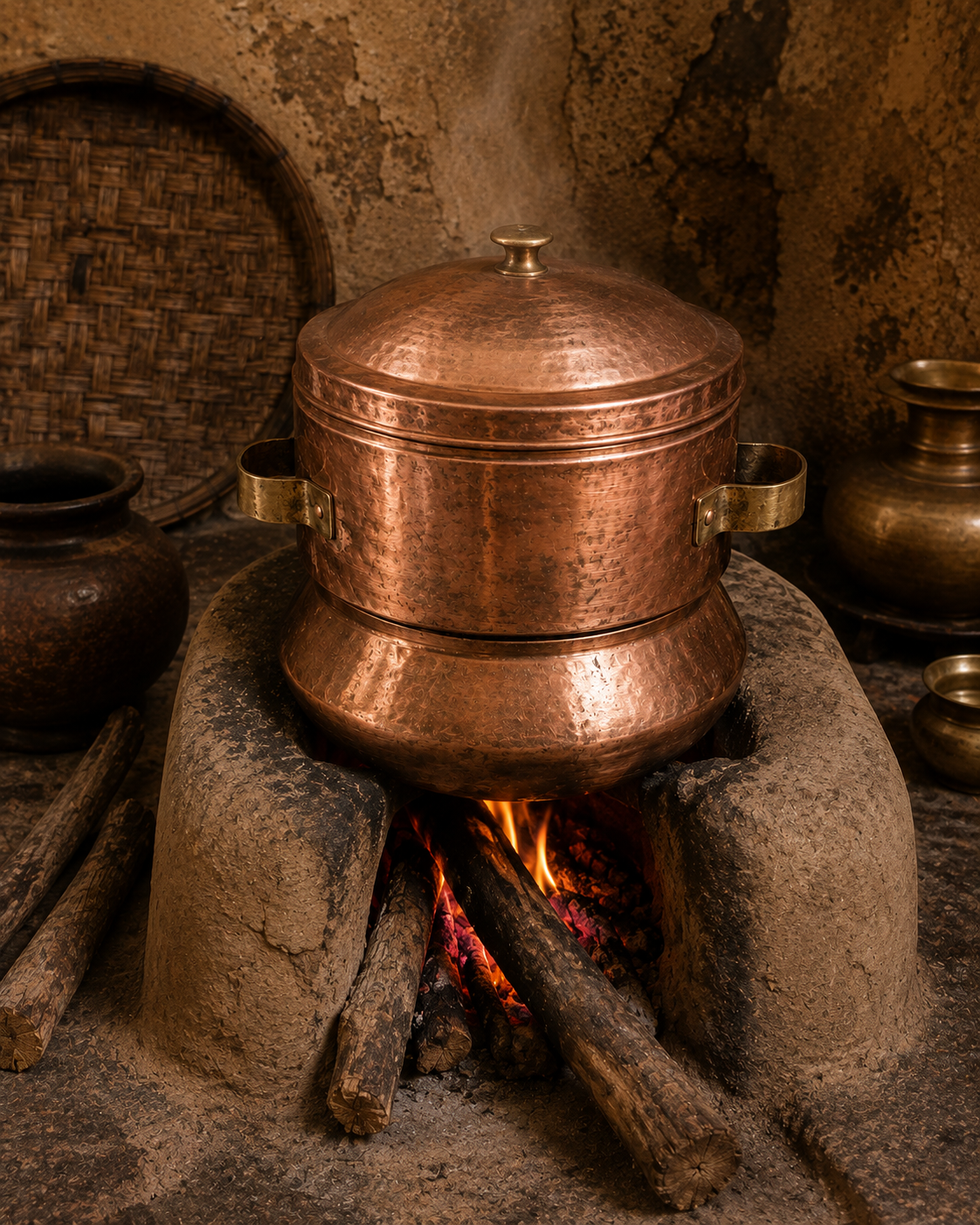
Sekala / Chekala is a traditional vessel used for cooking or baking food with steam. It was traditionally made from copper, brass or thin iron sheet. later with Aluminium too
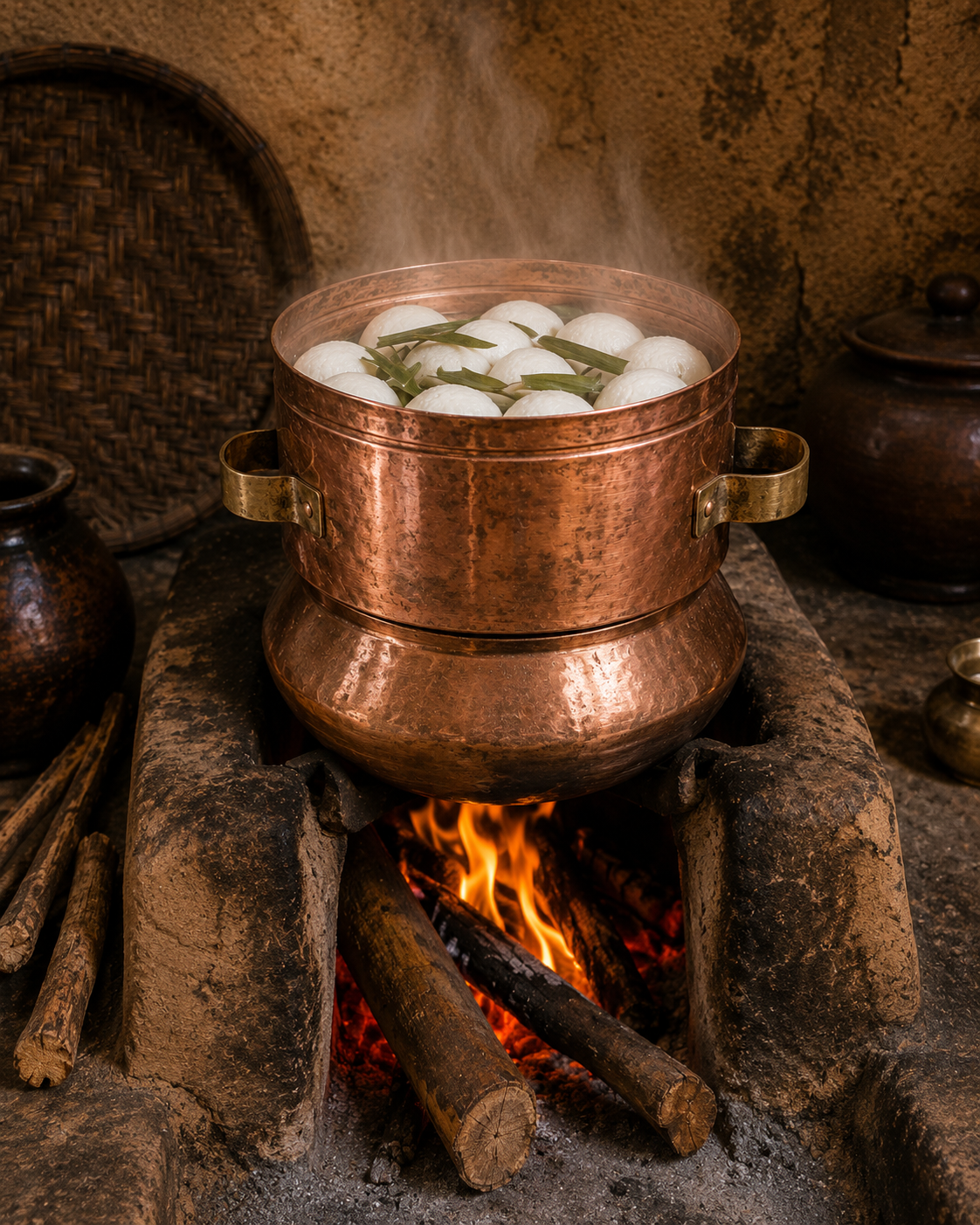
Sekala / Chekala is a traditional steam-cooking vessel designed to cook food using the heat and moisture generated by boiling water. The vessel consists of a lower section that holds water and an upper section in which the food is placed, allowing steam to rise and cook the contents.
It was particularly useful for preparing steamed foods in the traditional kitchen. Depending on availability and period, such vessels were made from copper, brass or thin iron sheet. The metal construction allowed the vessel to withstand repeated heating while providing an efficient method of steam cooking.
How It Was Used
Traditional use: Sekala / Chekala was used for steam-baking and steaming food, particularly in the traditional household kitchen. The vessel generally consists of stacked cylindrical sections, with the lower portion serving as the water chamber and the upper portion holding the food to be steamed.
The sections fit together so that steam generated in the lower chamber can rise into the upper chamber.
Cultural significance: Sekala / Chekala represents the practical ingenuity of the traditional Kodava kitchen, where steam was used as an efficient and gentle method of cooking food
Historical context: The vessel belongs to the traditional household cooking equipment used in Kodagu. Before modern pressure cookers, electric steamers and other kitchen appliances became widespread, such vessels provided an effective way to prepare steamed foods.
Material & Making
BrassIron
Metal sheets were shaped into cylindrical vessels and joined or formed to create the individual sections. Handles and rims were added where required.
Copper and brass examples were traditionally crafted by skilled metalworkers, while thin iron-sheet versions could be fabricated into lightweight cooking vessels.
Who Used It? / Where? / When?
OwnershipNot yet recorded
Period
Pre-colonial
Status of traditionRare
The Tradition Today
Reason for decline: The use of Sekala / Chekala declined with the introduction of modern steamers, pressure cookers, aluminium and stainless-steel cookware, which made cooking faster and more convenient
Revival efforts: Traditional cooking methods are increasingly being revisited as part of culinary and heritage preservation. Sekala / Chekala can be demonstrated in traditional kitchens, cultural programmes and heritage documentation to preserve knowledge of older cooking practices.
Sources
Source not recorded