About the Object
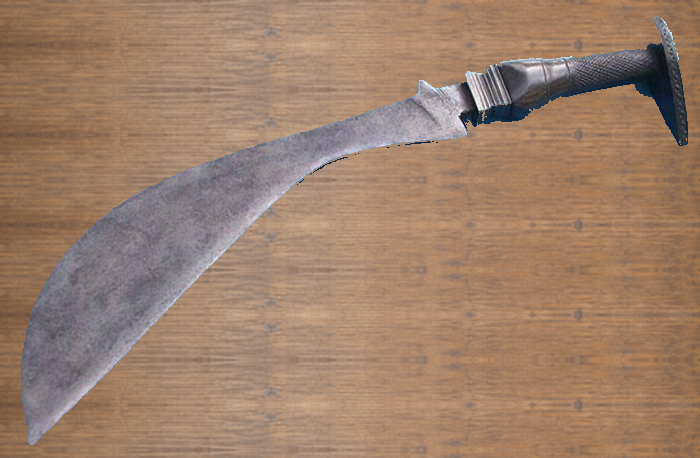
The Odi Kathi is a traditional Kodava war knife with a broad, heavy blade. Historically used during battle, it is now primarily used for ceremonial purposes, particularly during Kodava wedding
The Odi Kathi is a distinctive Kodava weapon characterised by its large, broad and strongly forged blade. The blade is sharp on the concave side, while the base is particularly thick, giving the weapon its characteristic strength and weight.
The handle is traditionally made from two pieces of horn. The Odi Kathi was historically carried as a weapon during warfare. Today, its principal role is ceremonial. During a Kodava wedding, the groom wears the Odi Kathi at the back of his waist, secured in a Thodang, with a chain called the Chengolae attached to the groom's waist. It is also traditionally used to chop down a banana stump during the wedding ceremony, symbolising strength.
How It Was Used
Traditional use: Used as a war knife during battle
Traditionally carried as part of the Kodava man's martial attire
Worn by the groom during traditional wedding ceremonies
Used to chop down a banana stump during the wedding ceremony as a demonstration of strength
Used in traditional Kathi-aat, where Kodava men perform a sword-fighting dance using the Odi Kathi and Peeche Kathi
Cultural significance: The Odi Kathi is one of the strongest symbols of Kodava martial heritage and identity. Its historical association with warfare reflects the traditional martial character of Kodava society, while its continued presence in wedding attire demonstrates how a former weapon has been transformed into a symbol of strength, courage and tradition.
Its use during the wedding ceremony, particularly when the groom chops the banana stump, connects the weapon's martial character with an important family and community celebration
Historical context: The Odi Kathi was historically a Kodava war weapon used during battle. Historical accounts associated with individual Kodava okkas also record Odi Kathis being received as gifts or recognition from rulers following military service. For example, the Adengada Okkа tradition records an Odi Kathi being gifted to Nanjappa, while the Thelapanda Okkа account mentions an Odi Kathi associated with royal recognition.
Material & Making
WoodBrassIron
The Odi Kathi has a large, well-forged metal blade, with the blade shaped to be sharp along its concave edge and substantially thicker towards the base.
The handle is traditionally constructed from two pieces of horn, forming a strong grip suited to the heavy blade.
Who Used It? / Where? / When?
OwnershipNot yet recorded
Period
Ancient
Status of traditionStill used ceremonially
The Tradition Today
Reason for decline: The Odi Kathi declined as an everyday weapon because its original battlefield function disappeared with changes in warfare and society. It is no longer used as a weapon in contemporary life and has largely transitioned into a ceremonial and cultural object.
Revival efforts: The Odi Kathi continues to be preserved through its ceremonial use in Kodava weddings, where the groom wears it as part of traditional attire and uses it during the banana-stump ceremony.
Its presence in traditional performances such as Kathi-aat, as well as its preservation in family collections, Ainmanes and heritage museums, provides additional opportunities to keep knowledge of the object alive. Documentation of surviving examples, including their blade shape, horn handles, Thodang and Chengolae, will help preserve the associated craftsmanship and traditions.
Sources
Source not recorded