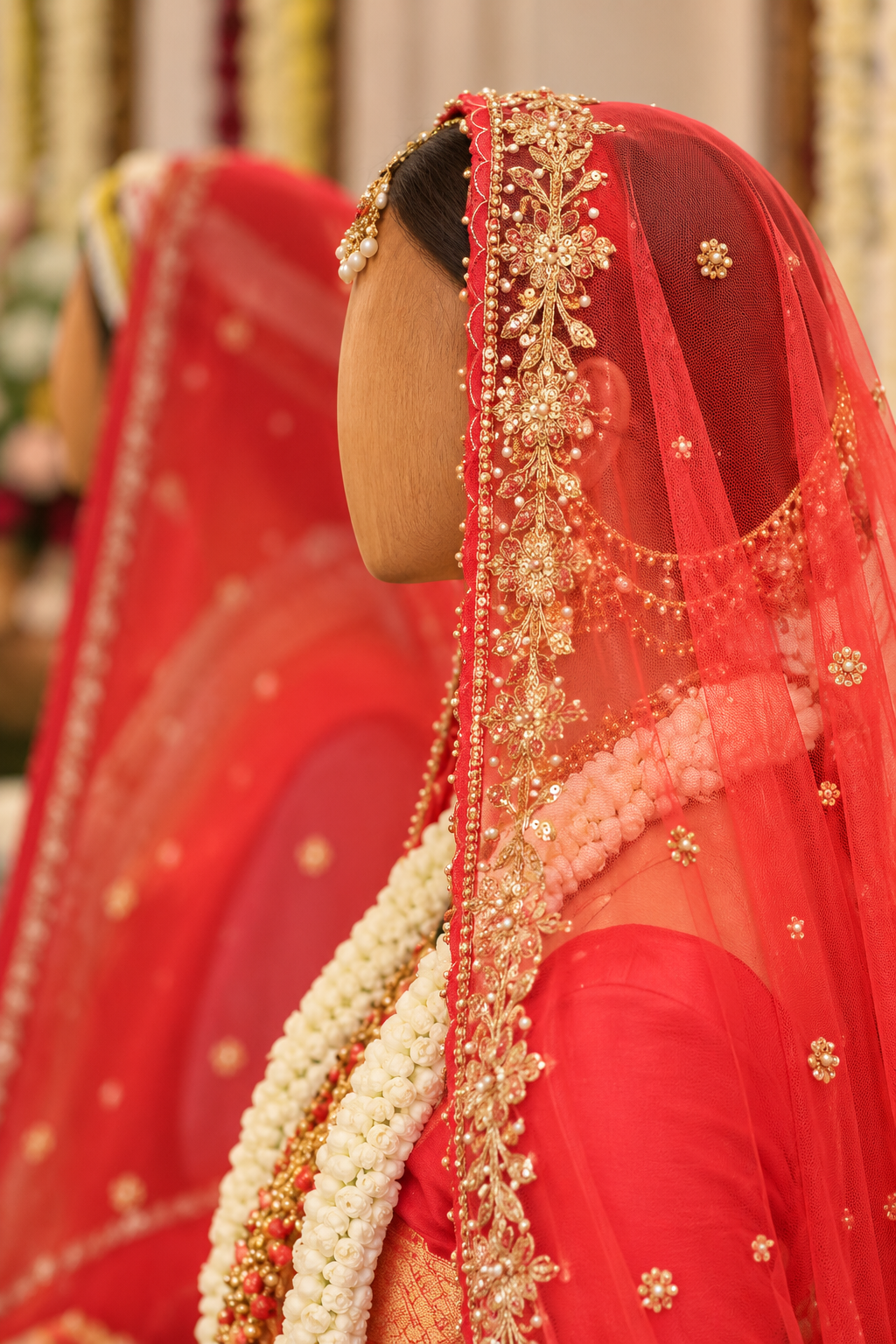
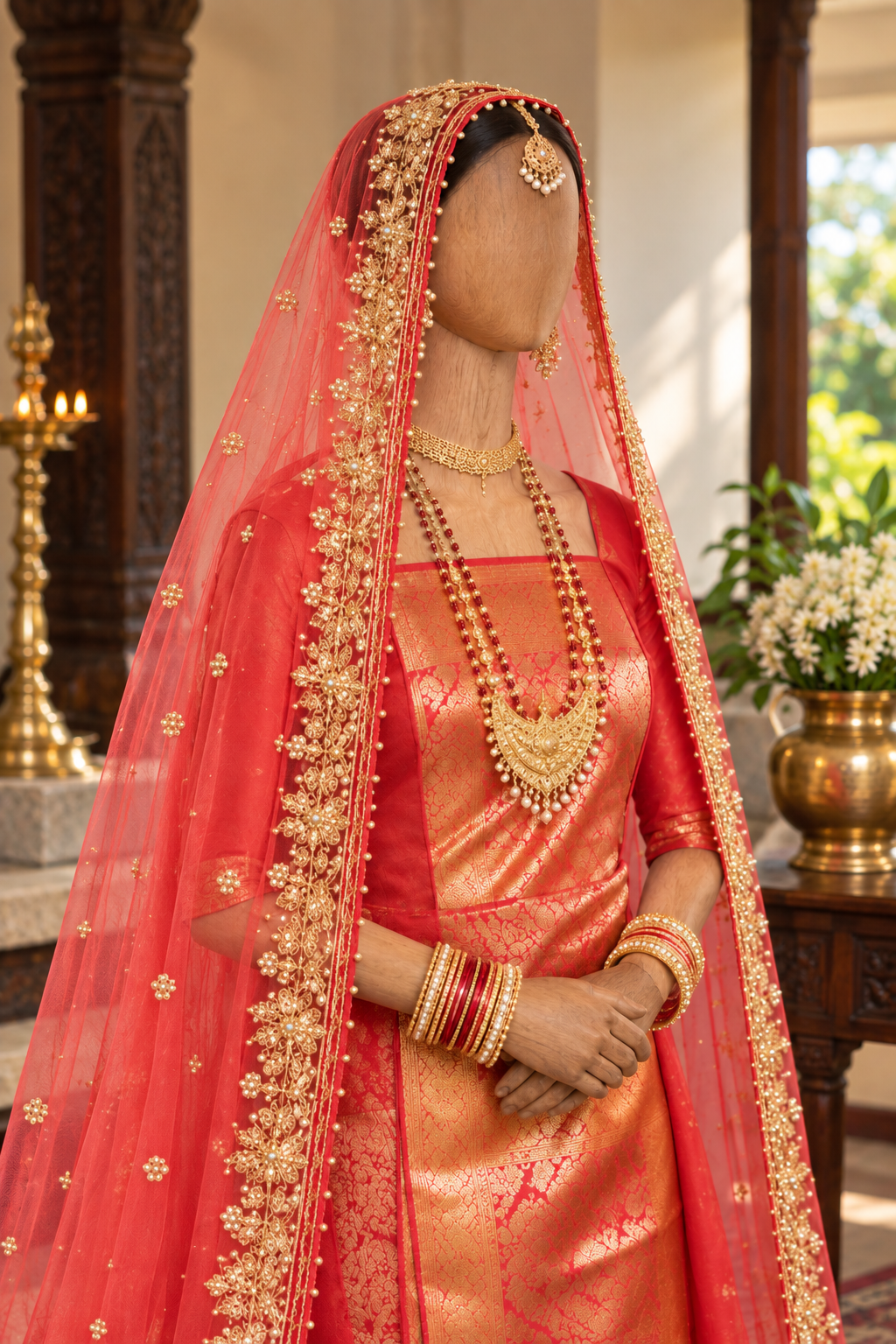
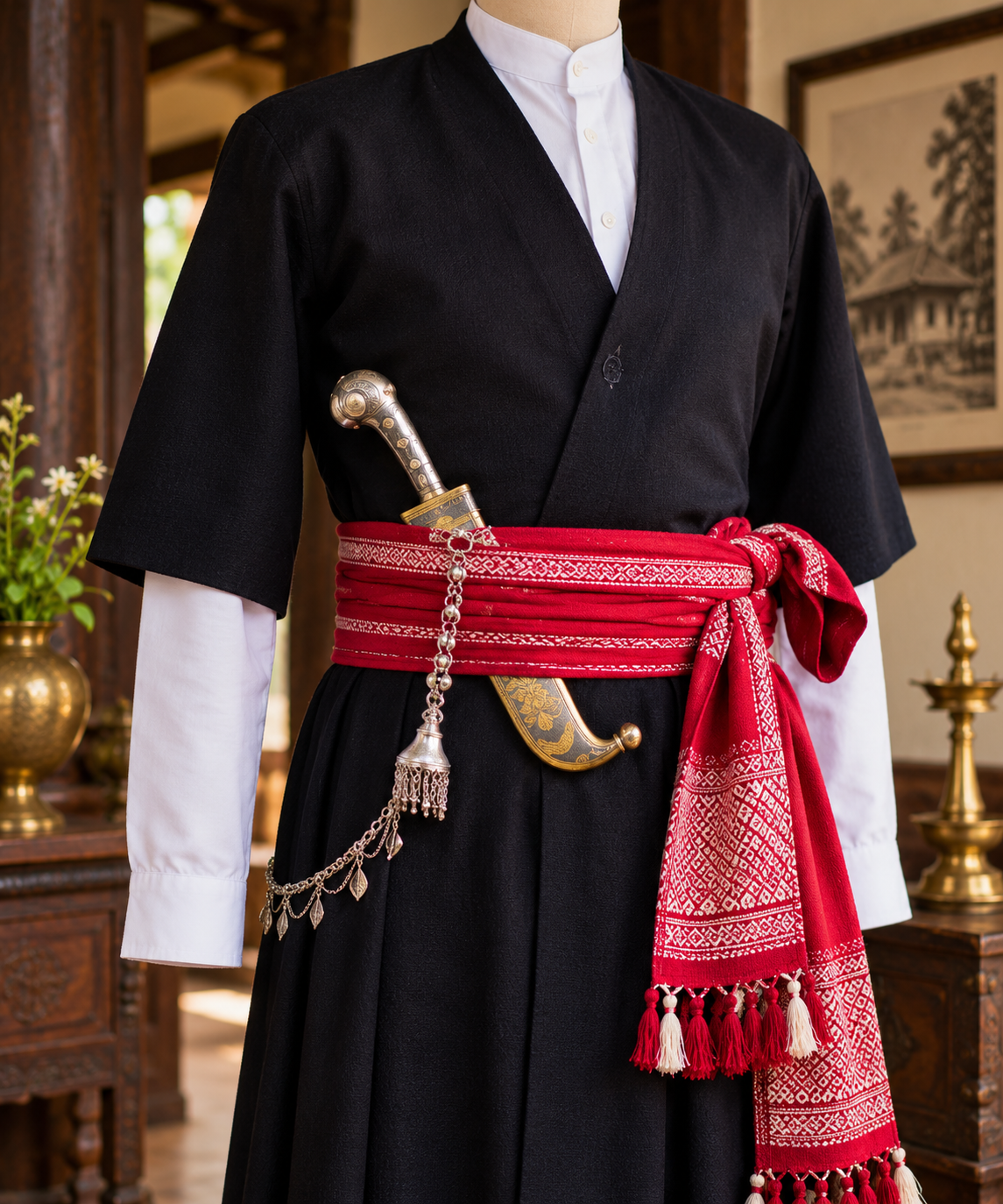
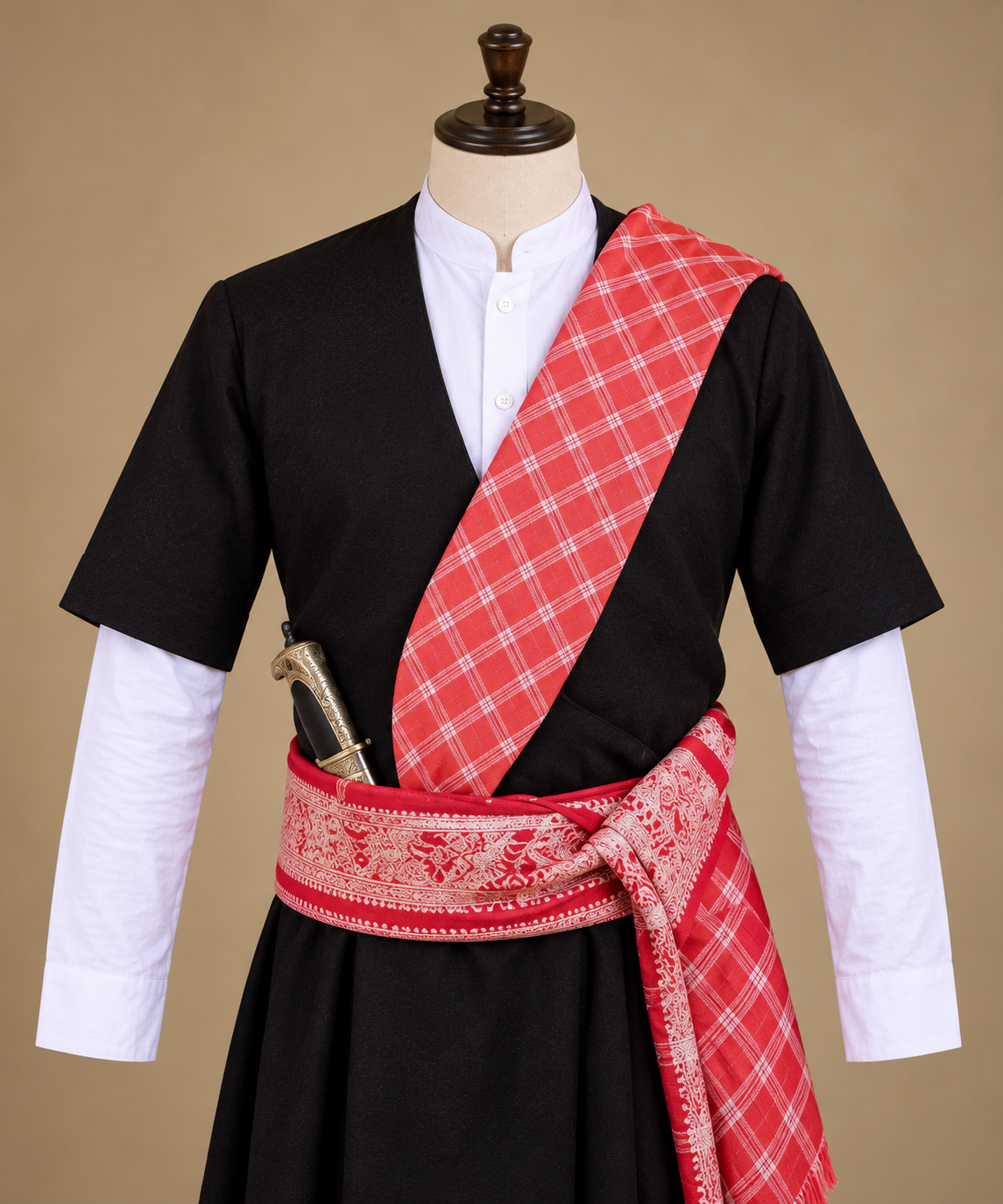
Muskoli is an important textile associated with traditional Kodava wedding attire and ceremonial practices. It is generally a long piece of red or deep-red fabric worn over the head and shoulders of the bride or groom. When worn over the head, it creates a veil-like covering, with the fabric falling gracefully along the sides and back.
The Muskoli is often distinguished by its decorative borders and ornamental embroidery. Traditional and ceremonial examples may feature gold embroidery, zari work, floral motifs, beads, sequins or embellished edging. The body of the cloth may be relatively plain or decorated with smaller motifs.
Muskoli is not merely a decorative element of wedding clothing. Its use forms part of the traditional ceremonial presentation of the bride and groom, particularly as family members, relatives and guests gather to convey their good wishes and blessings to the couple.
Traditional use: Muskoli is traditionally associated with Kodava weddings and is used by both the bride and the groom. It is worn over the head and shoulders as part of their ceremonial attire.
During the wedding, guests approach the bride and groom and offer their good wishes, blessings and greetings. The Muskoli forms part of the traditional appearance of the couple during this important social and ceremonial interaction.
Cultural significance: Muskoli has significance as both a textile and a ceremonial element of Kodava wedding dress. Its use by both the bride and groom distinguishes it from garments associated exclusively with one gender.
e.
Historical context: Muskoli belongs to the traditional Kodava system of wedding dress and ceremonial textiles, where clothing was closely connected with important family and community occasions.
Kodava weddings traditionally brought together extended families, relatives and members of the community. The bride and groom were formally presented in their traditional attire, and guests participated by offering their good wishes and blessings. Muskoli formed part of this ceremonial appearance and continues to represent that connection between dress, marriage and community participation.
The cloth was traditionally produced as a long rectangular woven textile and subsequently finished and decorated. Decorative borders could be incorporated during weaving or added through embroidery and other ornamental techniques.
Elaborate examples required skilled workmanship to create floral, geometric or other decorative patterns along the borders and body of the fabric. The finished cloth needed to be sufficiently long and flexible to allow it to be worn over the head, draped over the shoulders or spread across the lap during the wedding.
Reason for decline: Not applicable. Muskoli continues to be used as part of traditional Kodava wedding practices, although the fabrics, decorative styles and methods of presentation may have changed over time.
Revival efforts: Muskoli remains a living element of Kodava wedding tradition, used by both brides and grooms. Its continued presence during weddings helps preserve the traditional appearance of the couple and the customs associated with receiving the blessings and good wishes of guests.
You are preserving Muskoli — Traditional Kodava Bridal Veil.