About the Object
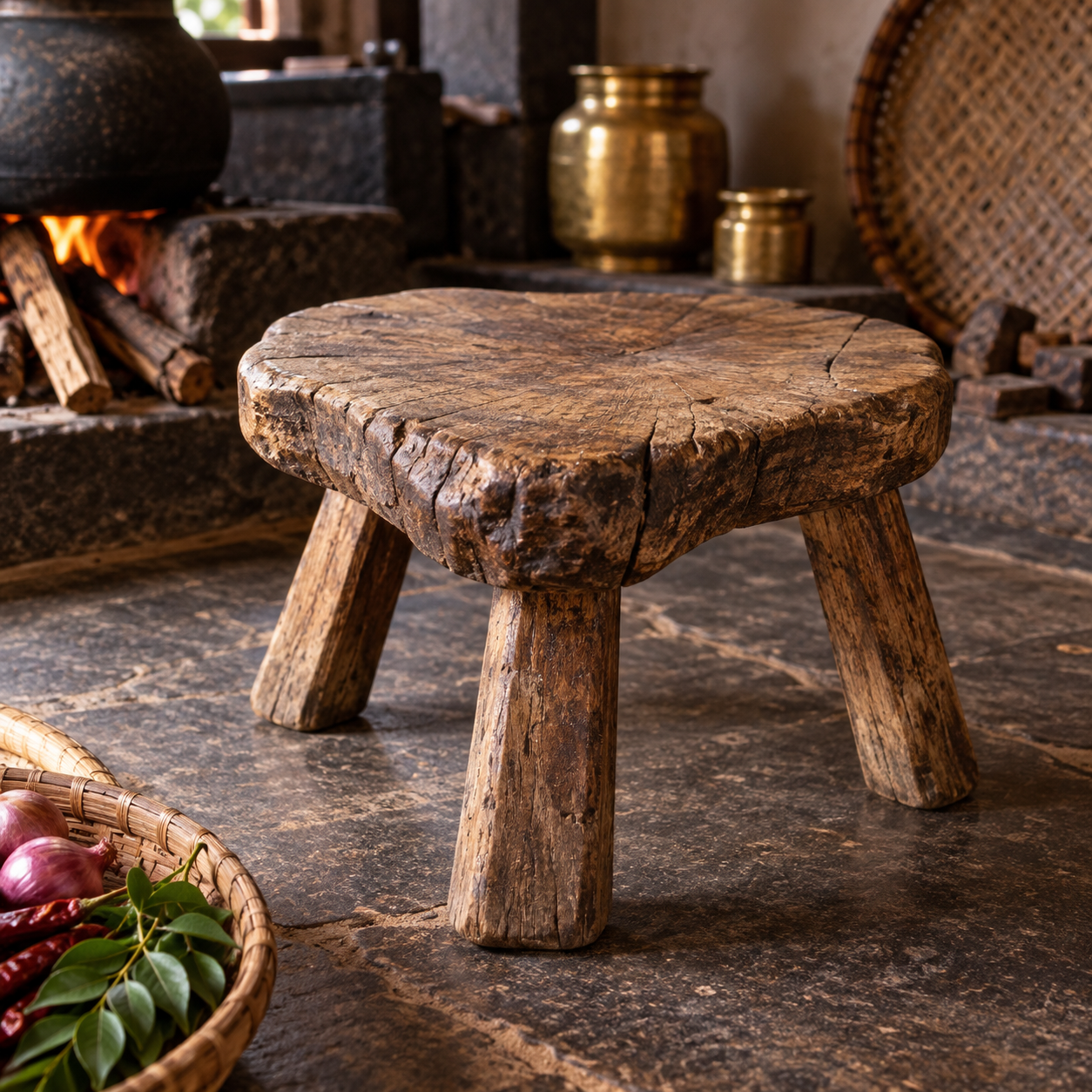
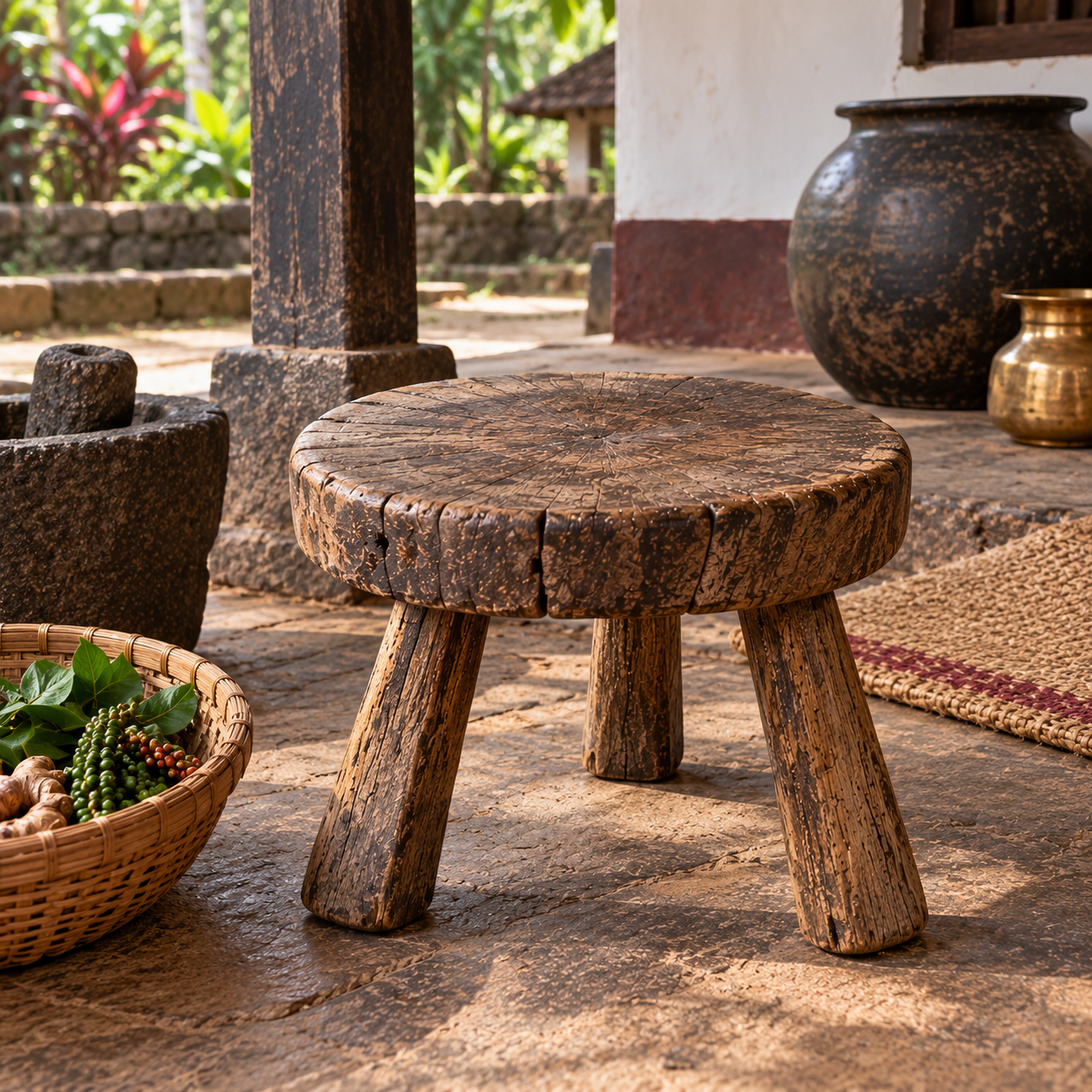
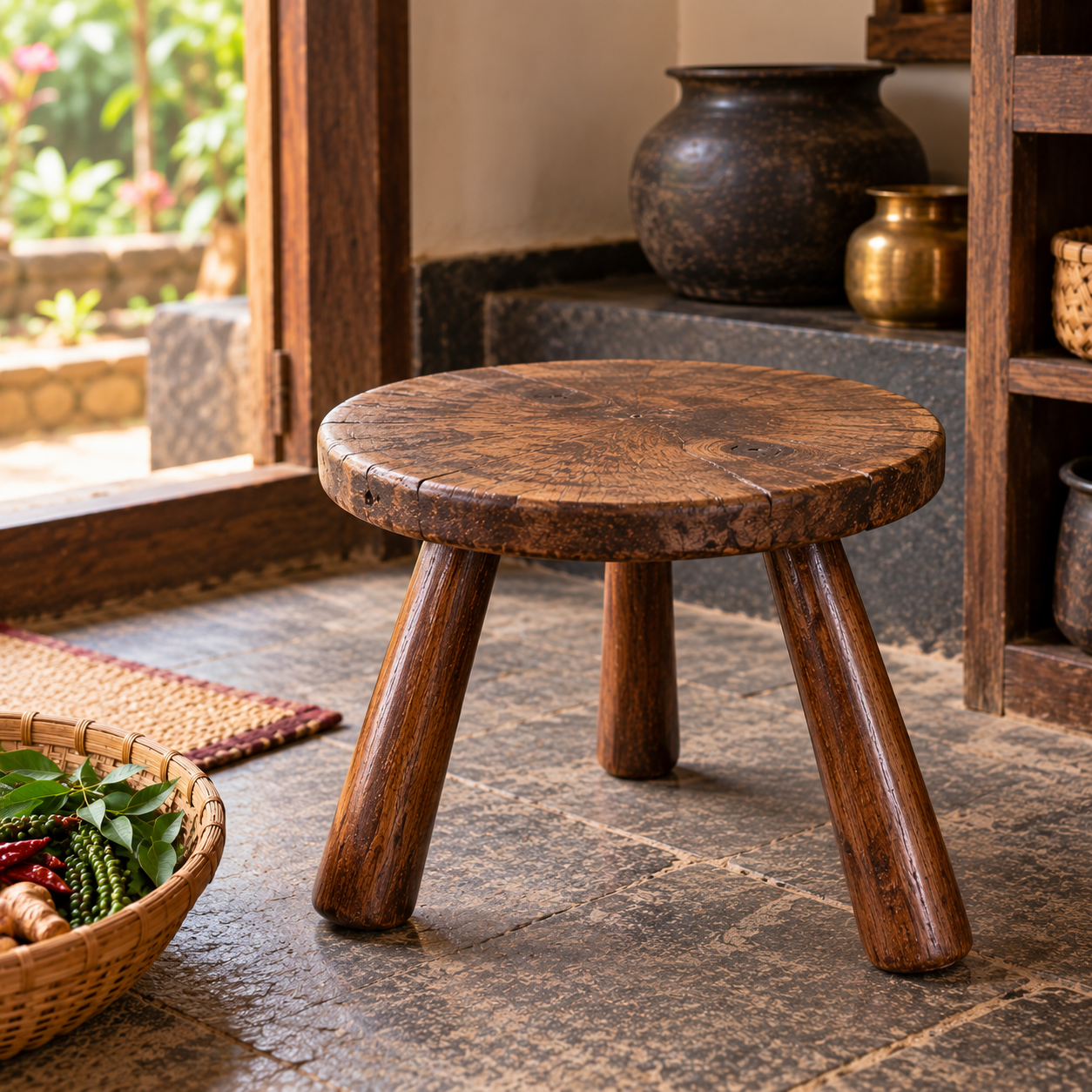
A simple traditional wooden stool with three legs, usually having a round or roughly circular seat.
Mukkali is a traditional three-legged stool made primarily from wood. It generally has a thick, solid, round or roughly circular wooden seat supported by three sturdy legs. The legs are positioned to provide a stable base while requiring only three points of contact with the ground. This makes the Mukkali particularly practical on the uneven floors commonly found around traditional homes, kitchens, courtyards and outdoor spaces. Its simple construction reflects the functional approach of traditional woodworking, using minimal material while providing a strong and dependable seat.
How It Was Used
Traditional use: Used as a low seat for sitting, resting, working in the kitchen, performing household tasks and other everyday activities. compulsorily used in weddings for both the bride & the Groom to sit.
Cultural significance: Its simplicity and practicality made it a useful everyday household object. The three-legged design is especially suited to traditional uneven floors and outdoor ground.
Historical context: Mukkali belongs to the everyday wooden furniture and domestic material culture of traditional Kodagu households. It represents a period when basic household furniture was commonly made from locally available timber.
Material & Making
Wood
A thick piece of timber is shaped into the seat, while three wooden legs are cut and fitted securely underneath. The legs may be slightly angled outward to improve stability. Traditional examples may rely largely on carefully fitted wooden joints.The three-leg construction is its defining feature. With only three points of contact, the stool can remain stable on an uneven surface without rocking as easily as a four-legged stool
Mukkali may vary in seat diameter, thickness, height and leg shape. Some examples may have roughly shaped natural edges, while others have more carefully finished seats.
Who Used It? / Where? / When?
OwnershipNot yet recorded
Period
Ancient
Status of traditionStill used ceremonially
The Tradition Today
Reason for decline: Modern chairs, stools and factory-made furniture have largely replaced simple traditional wooden stools in contemporary homes.
Revival efforts: Mukkali can continue to be used in heritage homes, traditional kitchens, rural households and cultural demonstrations. Its simple form also makes it suitable for revival by local woodworkers. however during weddings its compulsorily used for both the bride & the Groom to sit.
Sources
Source not recorded