About the Object
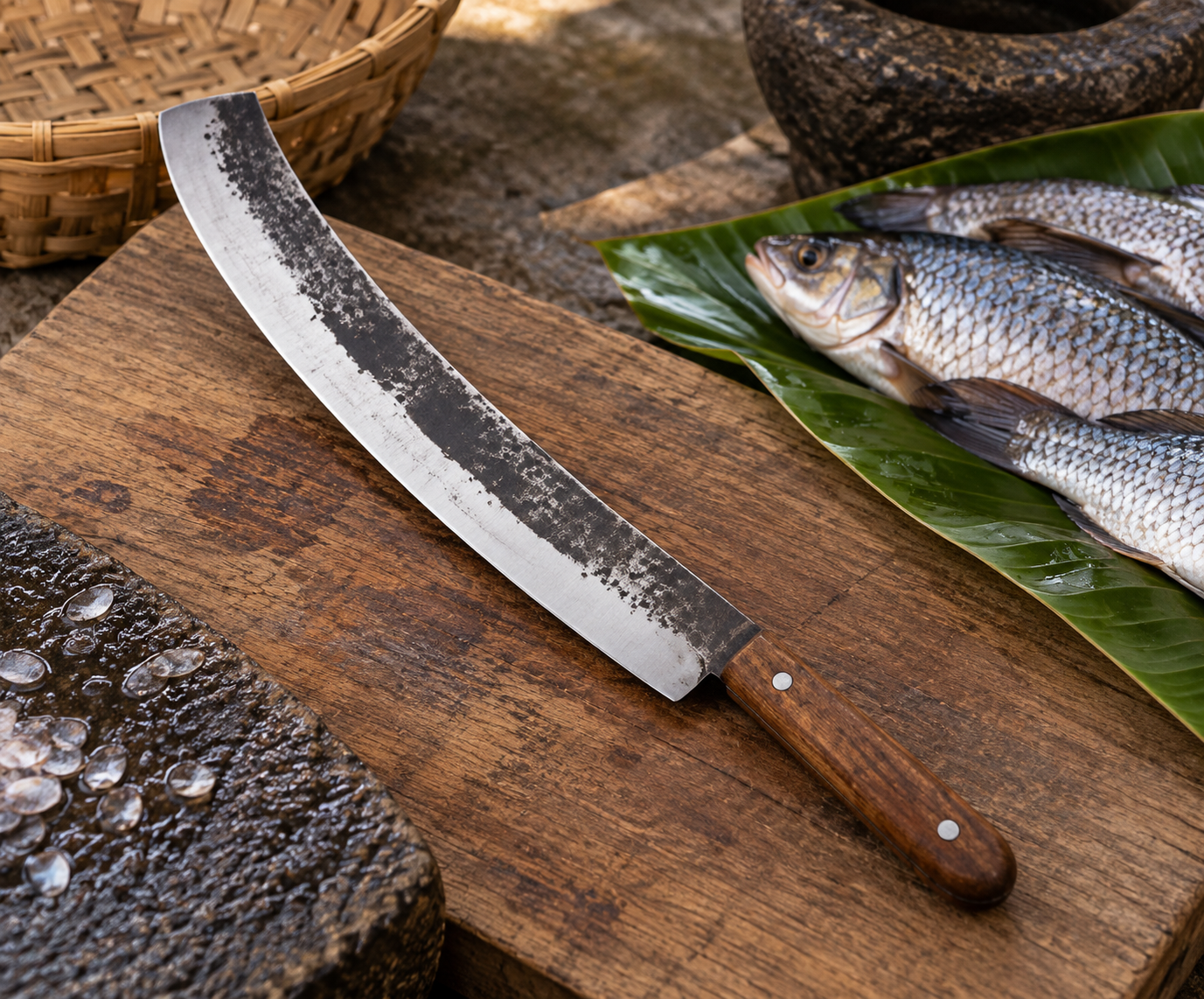
Mimbaal is a traditional knife specially used for cleaning and preparing fish. It could also be used occasionally for cleaning and cutting other types of meat.
The Mimbaal was a practical kitchen knife associated particularly with the preparation of fish. Its primary purpose was to clean fish before cooking, making it an important tool in traditional household kitchens.
Fish preparation involved removing unwanted portions and preparing the fish into pieces suitable for cooking. The Mimbaal was designed as a dedicated cutting implement for this work and, when required, could also be used for preparing other meat.
Like many traditional kitchen implements, its value lay in its simplicity, durability and suitability for a specific household task. It reflects the specialised tools that were once part of everyday food preparation in Kodava homes.
How It Was Used
Traditional use: Traditional Use
Cleaning fish
Preparing fish for cooking
Cutting and trimming fish
Occasionally cleaning or preparing other meat
Cultural significance: Mimbaal demonstrates how traditional Kodava tools evolved from practical experience. Its development from Baal Kathi into a specialised fish-cleaning implement shows the refinement of household technology according to specific culinary requirements.
Historical context: The history of Mimbaal is particularly significant because it represents a transition from a general-purpose traditional knife to a specialised kitchen implement.
The longer Baal Kathi was historically used for cleaning. As the need for a more convenient tool for fish preparation arose, the form was adapted and transformed into the specialised Mimbaal.
This is an example of traditional knowledge being passed through generations not only by preserving tools, but also by modifying them to suit changing practical needs.
Material & Making
WoodIron
The blade would traditionally be produced by a blacksmith, who forged and shaped the metal, followed by grinding and sharpening the cutting edge.A wooden handle would then be shaped and securely fitted to the blade, producing a durable kitchen implement.The history of Mimbaal is particularly significant because it represents a transition from a general-purpose traditional knife to a specialised kitchen implement.
The longer Baal Kathi was historically used for cleaning. As the need for a more convenient tool for fish preparation arose, the form was adapted and transformed into the specialised Mimbaal.
This is an example of traditional knowledge being passed through generations not only by preserving tools, but also by modifying them to suit changing practical needs.
Who Used It? / Where? / When?
OwnershipNot yet recorded
Period
Pre-colonial
Status of traditionStill used ceremonially
The Tradition Today
Reason for decline: The traditional Mimbaal declined with the introduction of:
Modern kitchen knives
Commercially manufactured fish-cleaning tools
Stainless-steel knives
Disposable and specialised modern kitchen implements
Revival efforts: Traditional fish-cleaning knives can be preserved through heritage kitchens, museum collections, traditional cooking demonstrations and documentation of Kodava culinary practices.
Surviving examples can also help document the traditional techniques used to prepare fish and meat.