About the Object
The source identifies the object as Mann Chatti (ಮಣ್ಣ್ ಚಟ್ಟಿ) and describes it as a traditional vessel made from mud or clay.
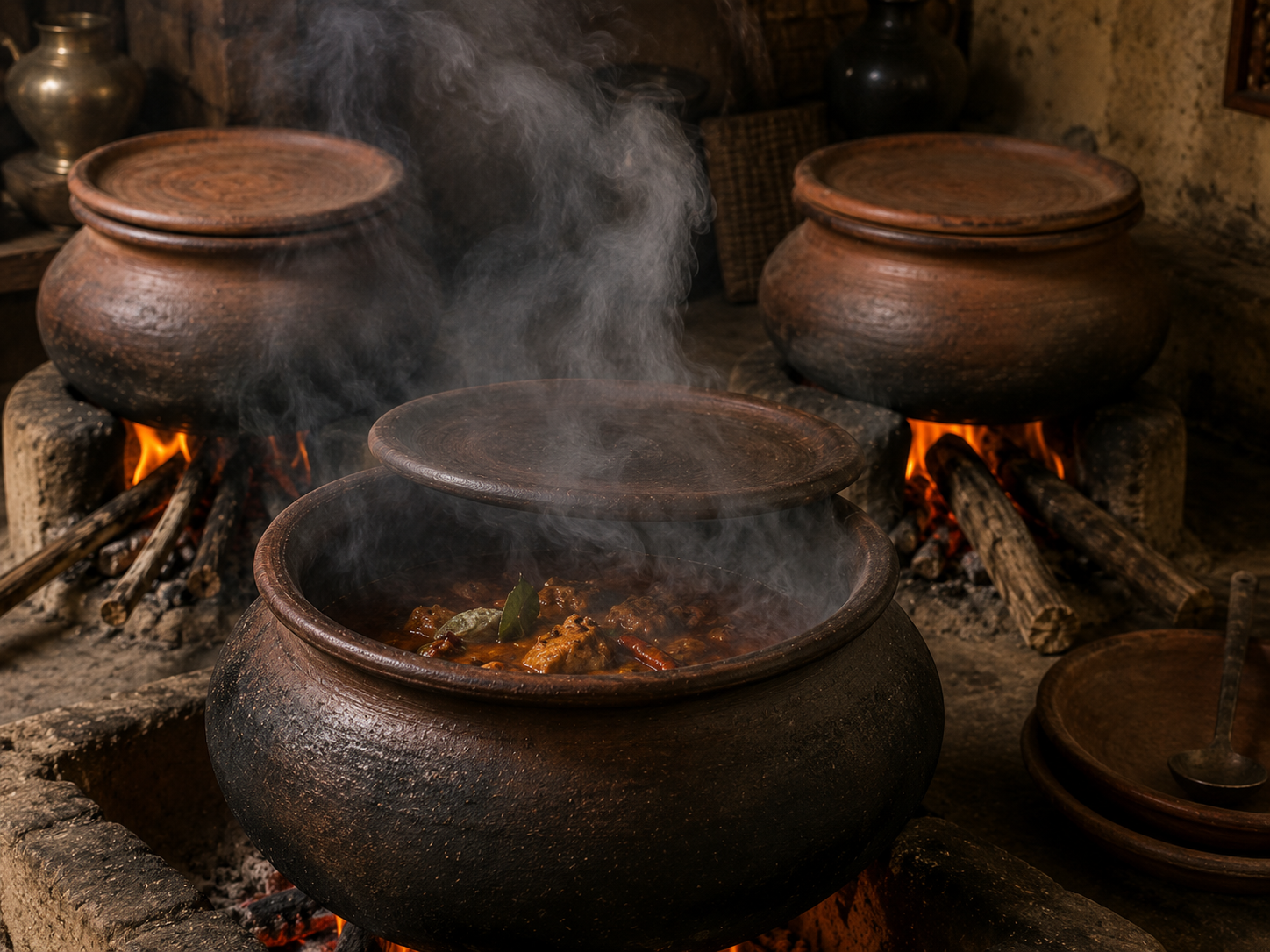
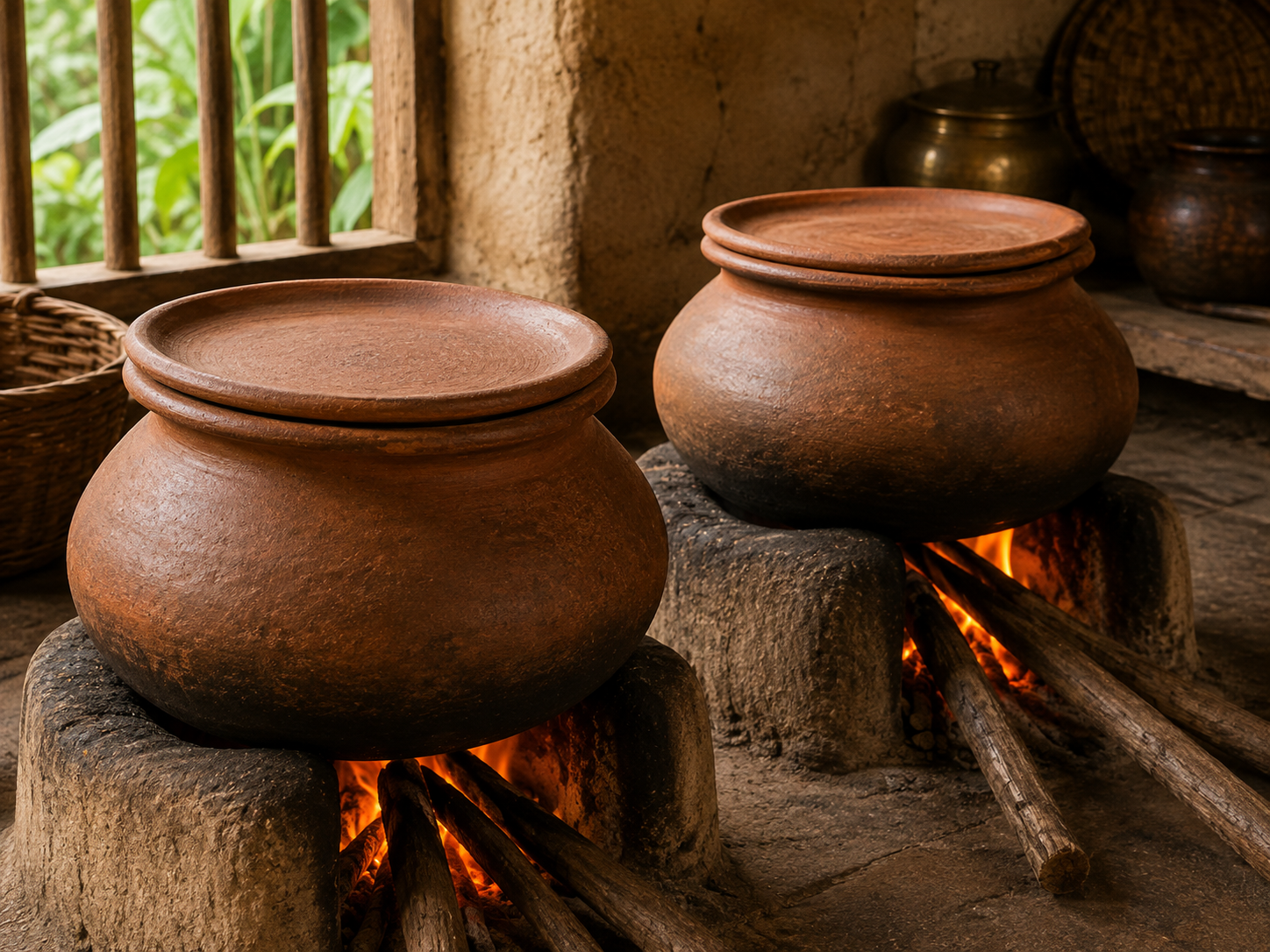
Mann Chatti is a traditional earthen vessel made from mud or clay, once forming part of the everyday household vessels used in Kodava homes, particularly in the kitchen. It represents a period when household utensils were made from naturally available materials and produced locally Mann Chatti represents the close relationship between the traditional Kodava household and the natural environment surrounding it. Made from mud or clay, the vessel was shaped by hand into the required form and then hardened to become a useful household object.
Earthen vessels such as Mann Chatti were once an important part of traditional kitchen life. Rather than relying on factory-manufactured utensils, households used objects made locally from materials available in the surrounding landscape.
The simplicity of Mann Chatti is an important part of its heritage value. It demonstrates how ordinary domestic objects could be created from the earth itself and transformed through human skill into functional vessels. The object therefore represents not only traditional kitchenware but also an older way of living in which material, craft and everyday life were closely connected.
How It Was Used
Traditional use: Mann Chatti was used as a traditional household and kitchen vessel, particularly for cooking and preparing food.
Its earthen construction made it suitable for use over traditional cooking fires, where food could be cooked slowly and steadily. Clay vessels were especially suited to preparations requiring gentle, prolonged heating.
Cultural significance: Mann Chatti represents the traditional Kodava kitchen and its relationship with the natural environment.
It demonstrates how an everyday household requirement could be fulfilled using material obtained directly from the land. The vessel also reflects the importance of traditional cooking practices, where food was prepared over a hearth using wood as fuel.
Its significance lies in its simplicity: earth, shaped by human hands, became an indispensable part of household life.
Historical context: Mann Chatti belongs to the period when traditional households relied extensively on locally produced utensils and natural materials.
Before the widespread availability of modern metal and manufactured cookware, clay vessels were an important part of domestic kitchens across South India. In the Kodava context, Mann Chatti formed part of the traditional collection of household vessels
Material & Making
Clay
The traditional manufacture of Mann Chatti involved preparing suitable clay and shaping it into the required vessel.
The basic process involved:
Selecting suitable clay.
Cleaning and preparing the clay.
Adding water and kneading it into a workable mass.
Shaping the clay into the vessel form.
Smoothing and finishing the surface.
Allowing the shaped vessel to dry.
Hardening it through firing.
The final vessel was thus created through the transformation of earth into a durable household object, a process specifically highlighted in the Kodagu Heritage documentation
Who Used It? / Where? / When?
OwnershipNot yet recorded
Period
Ancient
Status of traditionDeclining
The Tradition Today
Reason for decline: The decline of Mann Chatti was part of the broader transformation of traditional kitchens.
Aluminium, stainless steel, iron and other manufactured cookware gradually became more widely available, offering greater durability, lighter weight and easier handling. As modern kitchenware replaced traditional vessels, the everyday use of earthen cookware diminished.
Revival efforts: Although its everyday use has declined, the traditional clay vessel continues to attract interest because of the renewed appreciation for traditional cooking, natural materials and heritage food practices.
Mann Chatti can therefore be revived not merely as an antique object but as a living element of traditional cuisine, particularly where cooking over a natural fire or preparing traditional recipes is being recreated