About the Object
Kokke Thandh is a traditional walking stick made from wood, rattan or cane,
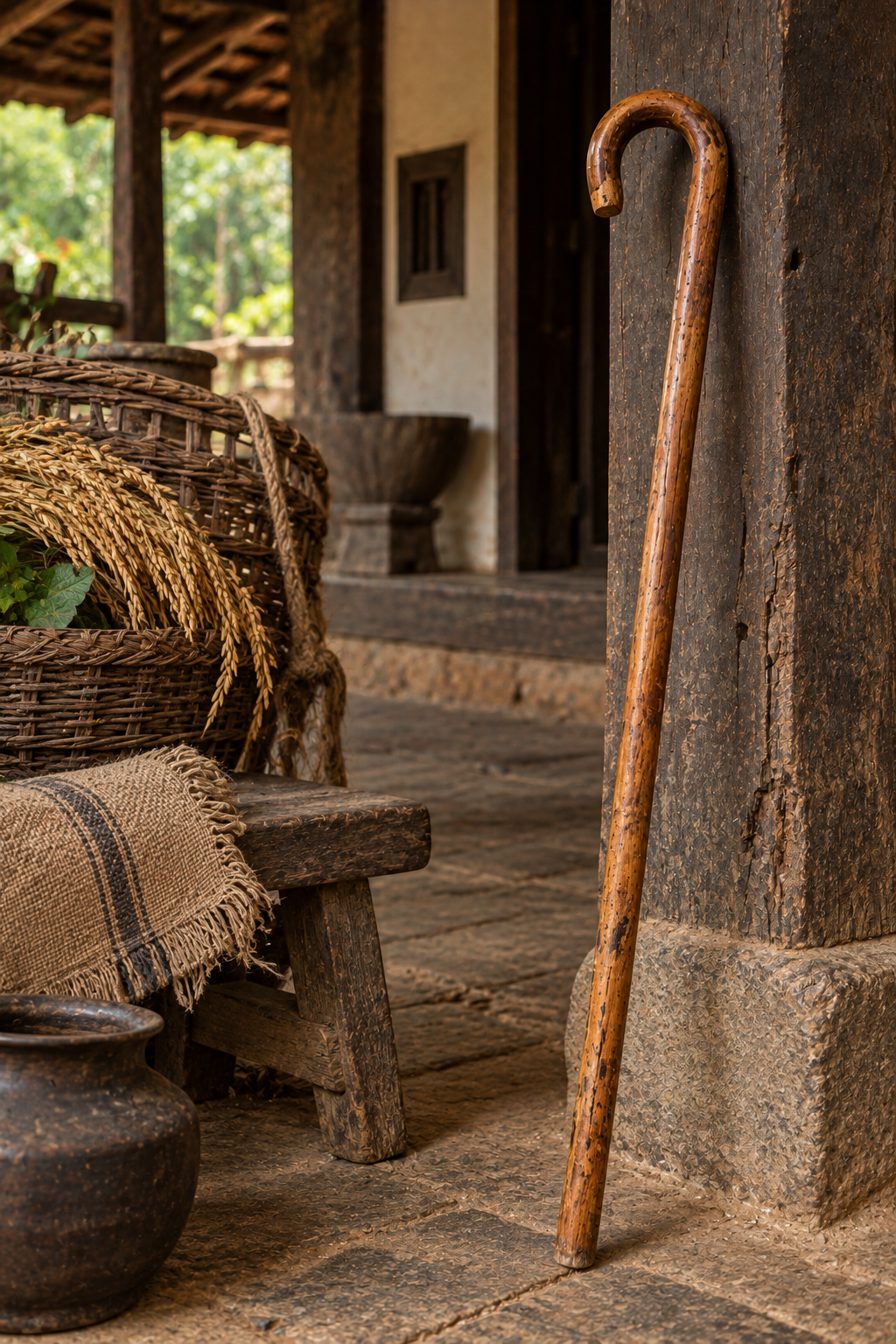
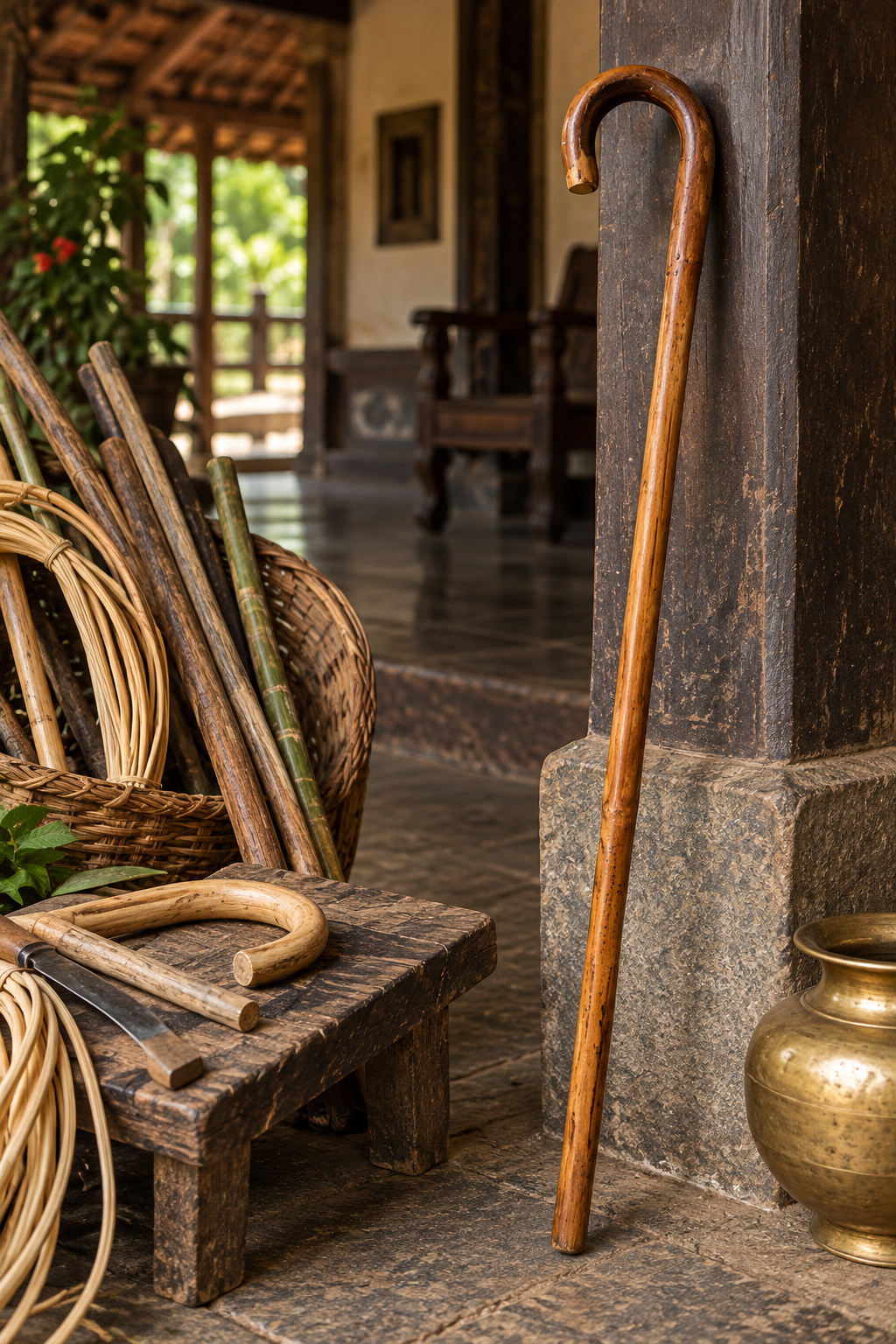
Kokke Thandh is a traditional walking stick made from wood, rattan or cane, with one end curved into a hook-like handle. The curved end provides a firm grip and helps the user maintain support while walking.
Kokke Thandh is a simple yet practical traditional walking aid. It is generally a long, slender stick with one end naturally or deliberately curved to form a hook-shaped handle. The stick provides stability and support while walking, particularly for elderly people. Its form reflects the use of locally available natural materials and traditional craftsmanship.
How It Was Used
Traditional use: Used as a walking aid and support stick, particularly by elderly people while walking.
The stick is long and slender, with a distinctive curved or hooked upper end that allows the user to hold it securely. The lower end remains straight and is placed on the ground for support.
Cultural significance: Kokke Thandh represents the practical everyday objects used in traditional Kodava households. It reflects a simple approach to mobility and support using materials readily available in the surrounding environment.
Used around traditional homes, agricultural areas, pathways and village surroundings, wherever additional support was required while walking.
Historical context: Walking sticks of this form were part of traditional rural life, particularly when walking was the principal means of moving between homes, fields and nearby places.Kokke Thandh is a simple but meaningful example of traditional Kodava material culture. Its hooked form demonstrates how everyday objects were designed around practical needs, while its use of wood, rattan and cane reflects the community’s traditional knowledge of locally available natural materials.
Material & Making
A suitable straight and strong piece of wood, rattan or cane was selected. The upper portion was naturally curved or shaped into a hook, while the remaining length was kept relatively straight and smooth for comfortable handling.
Who Used It? / Where? / When?
OwnershipNot yet recorded
The Tradition Today
Reason for decline: Its traditional form became less common with the availability of modern manufactured walking sticks and mobility aids, as well as changing lifestyles and reduced dependence on locally made household implements.
Revival efforts: The traditional Kokke Thandh is less commonly seen as an everyday household object, although similar hooked walking sticks may still be used by some elderly people.
The form can be preserved through continued traditional use and by documenting surviving examples, particularly those made by local craftspeople using wood, rattan or cane.