How It Was Used
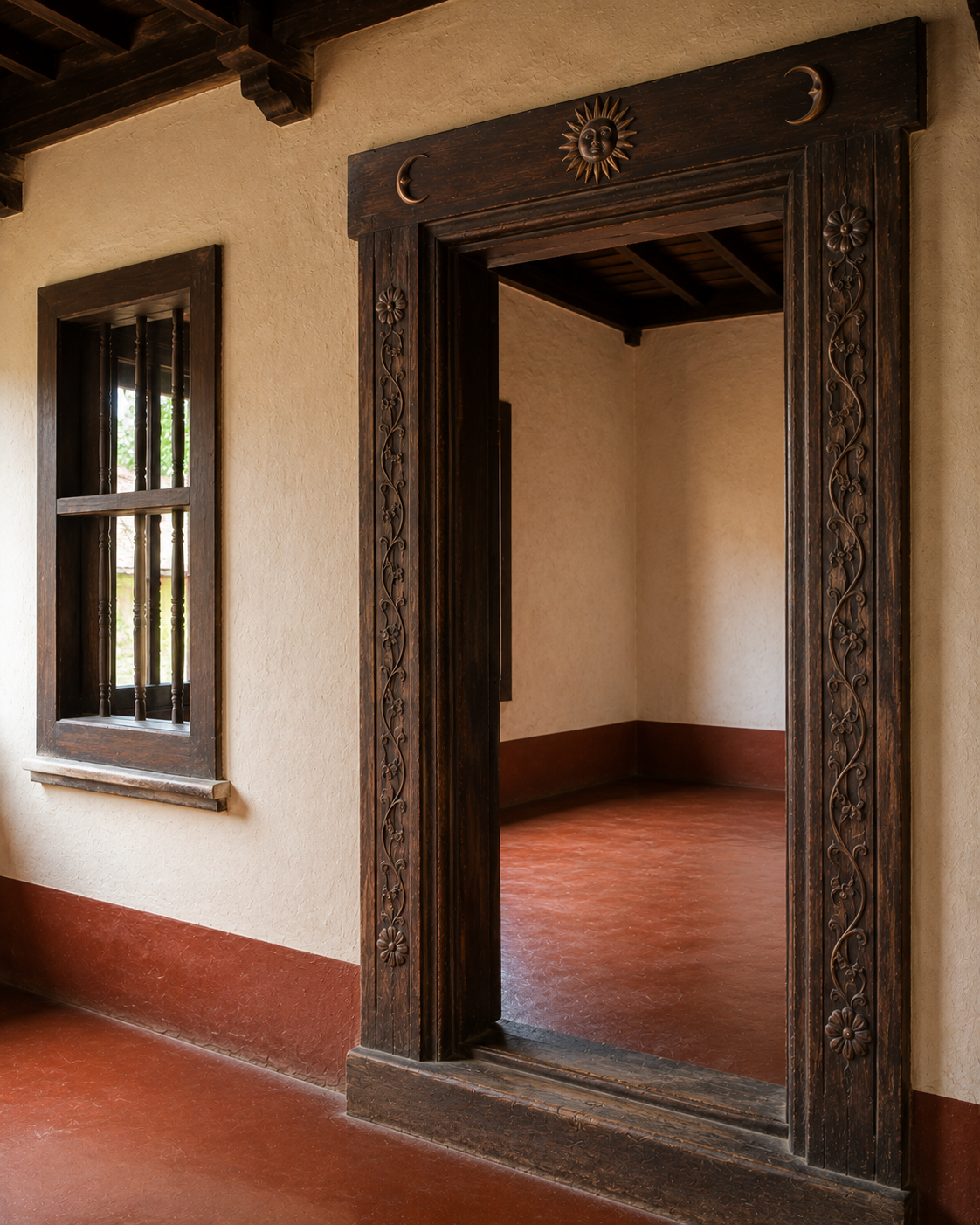
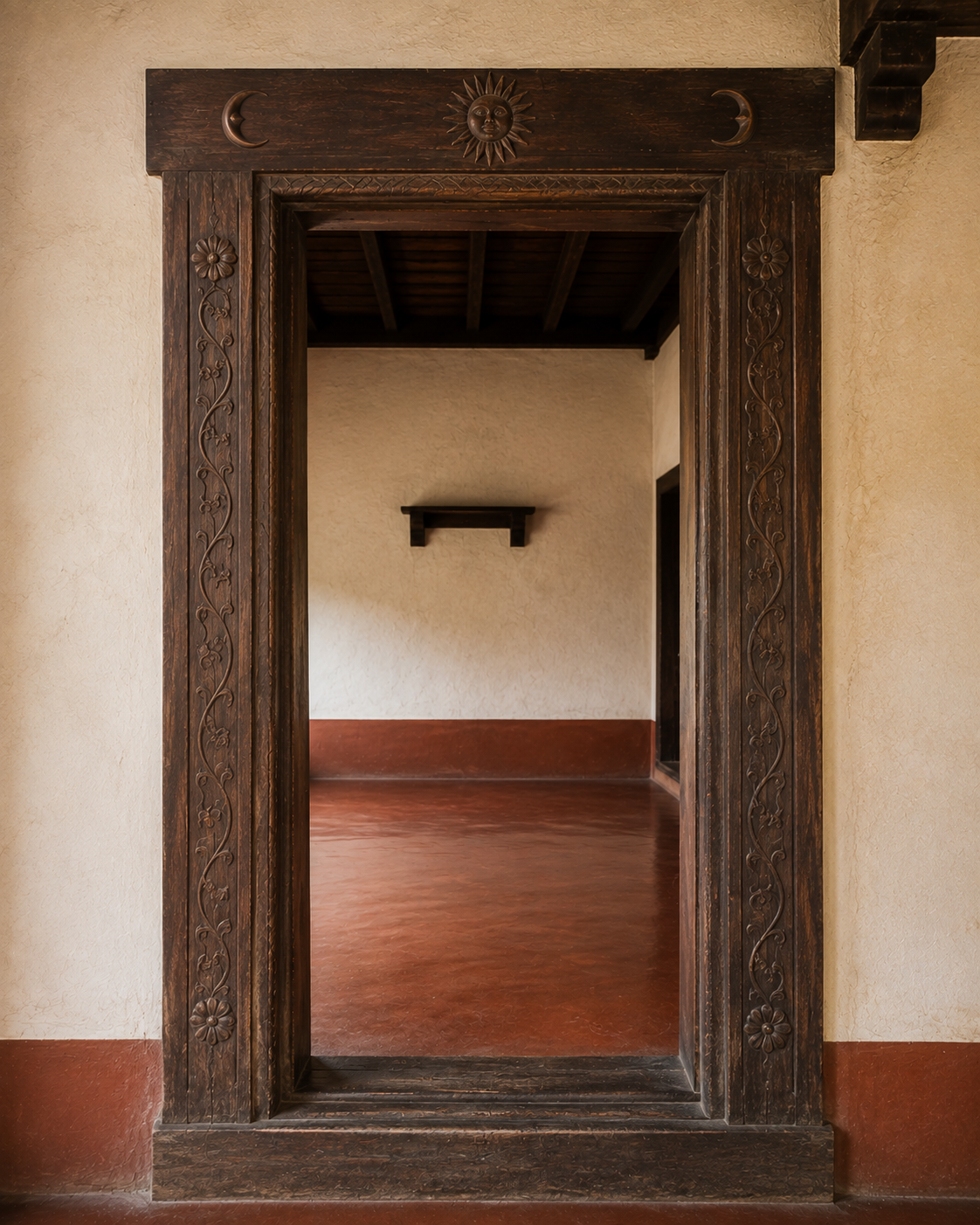
Traditional use: Kattole was used as the fixed frame supporting the door of a traditional house, forming the structural boundary of an entrance. Kattole is an important part of traditional Kodava architectural heritage. Beyond being a functional door frame, it represents the woodworking and joinery knowledge used to construct traditional entrances. Its association with Ainmanes makes it valuable for understanding the architectural traditions of Kodagu.
Cultural significance: As an architectural element of traditional houses and Ainmanes, the Kattole forms part of the built heritage of Kodagu. The source categorises the object under Ainmanes and Kodava Thakk
Historical context: The Kattole provides the framework into which the door is installed, allowing the door to operate as a movable barrier at the entrance. Kattole belongs to the architectural vocabulary of traditional Kodagu buildings, particularly Ainmanes, which are central to the architectural heritage of Kodava families. The source places Kattole within the categories of Ainmanes and Kodava Thakk
The Tradition Today
Reason for decline: Mordern slimmer doors to fit slimmer walls of modern architecture
Revival efforts: Preservation can focus on documenting surviving traditional door frames, their joinery techniques and their use in existing Ainmanes, particularly before older structures are altered or replaced.