About the Object
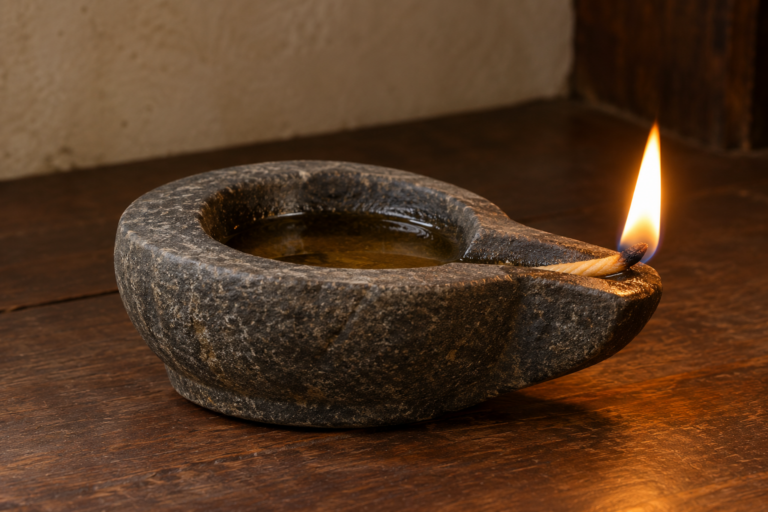
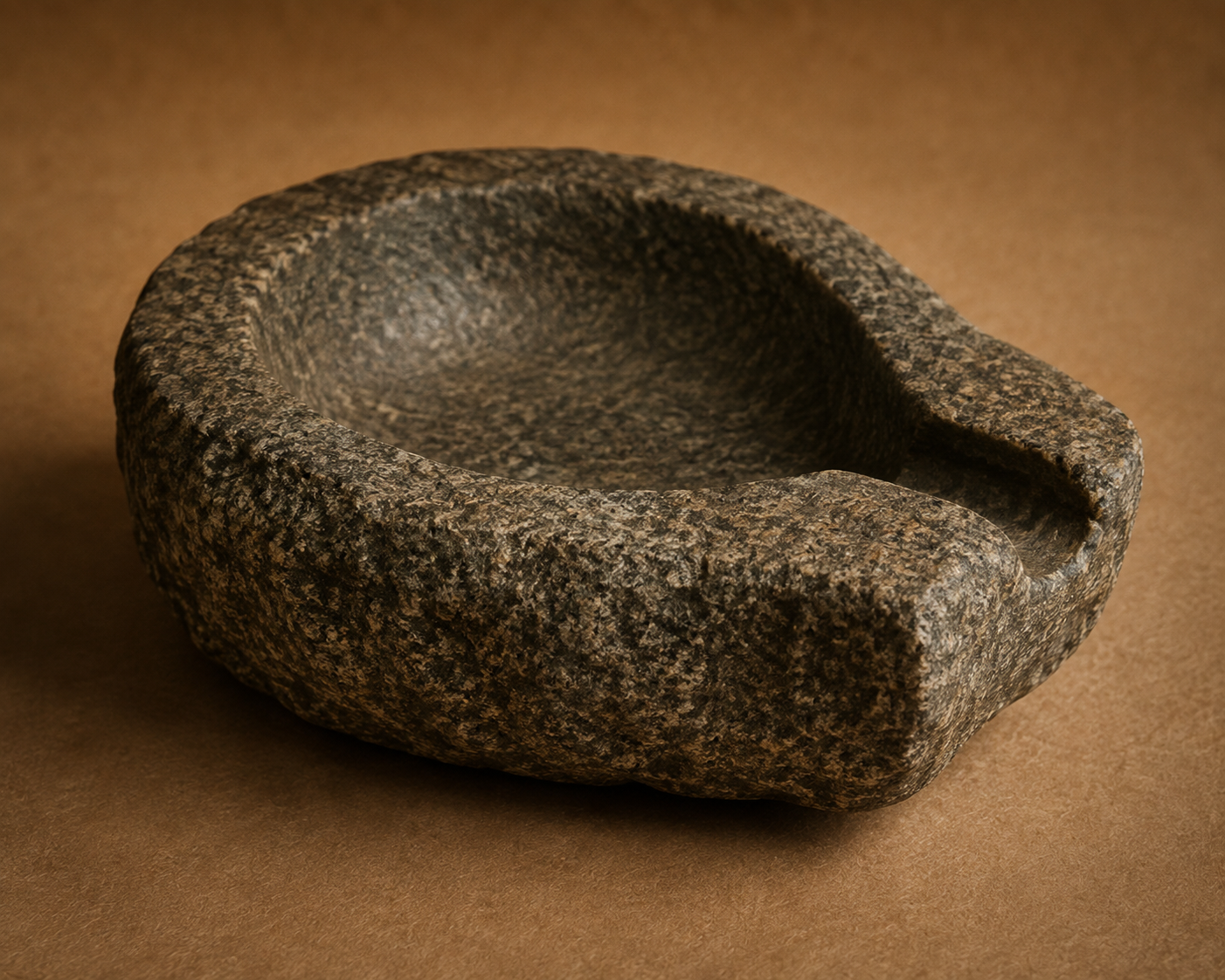
Kall Bolcha is a traditional stone lamp from Kodagu, shaped to hold oil and a wick and used as a simple, durable source of illumination
Kall Bolcha was made from a suitable piece of stone and shaped by hand into a stable lamp. A depression or cavity in the stone served as the oil reservoir, with a small area provided for the wick.Stone was valued for its durability. Unlike lamps made from fragile materials, a well-made Kall Bolcha could remain in use for many years.Kall Bolcha provides an insight into the everyday technology of earlier generations in Kodagu. Its simple design demonstrates how natural stone was transformed into a durable and useful household object, while also reflecting traditional craftsmanship and resource-conscious living.
How It Was Used
Traditional use: The lamp was primarily used to provide light using oil and a wick. It could be used inside traditional homes and other spaces where dependable illumination was required.
Cultural significance: Kall Bolcha represents an element of traditional Kodagu lighting and material culture. It reflects how everyday objects could serve both practical and cultural purposes.
Historical context: Before electric lighting became widespread, lamps were an essential part of everyday life. A stone lamp provided illumination during evenings and enabled household activities after sunset.
Material & Making
Stone
The lamp was fashioned from a suitable piece of stone and shaped and smoothed by hand to create a functional form. A depression or cavity was created in the stone to hold the oil required for burning the lamp. A small designated area allowed the wick to be positioned at the edge of the oil reservoir, enabling the oil to be burned for illumination. Making a Kall Bolcha required knowledge of selecting suitable stone, shaping it, smoothing it and creating a functional cavity without compromising its strength.
Who Used It? / Where? / When?
OwnershipNot yet recorded
Period
Ancient
Status of traditionStill used ceremonially
The Tradition Today
Reason for decline: The use of Kall Bolcha declined with the widespread adoption of electric lighting and modern lighting technologies, which replaced traditional oil lamps for everyday illumination.
Revival efforts: Although no specific revival programme is documented on the source page, preserving surviving Kall Bolcha lamps and documenting their traditional use can help retain knowledge of traditional lighting practices and material craftsmanship. The object should be documented through photographs, measurements, details of the stone used, construction techniques and oral histories from people familiar with traditional stone lamps