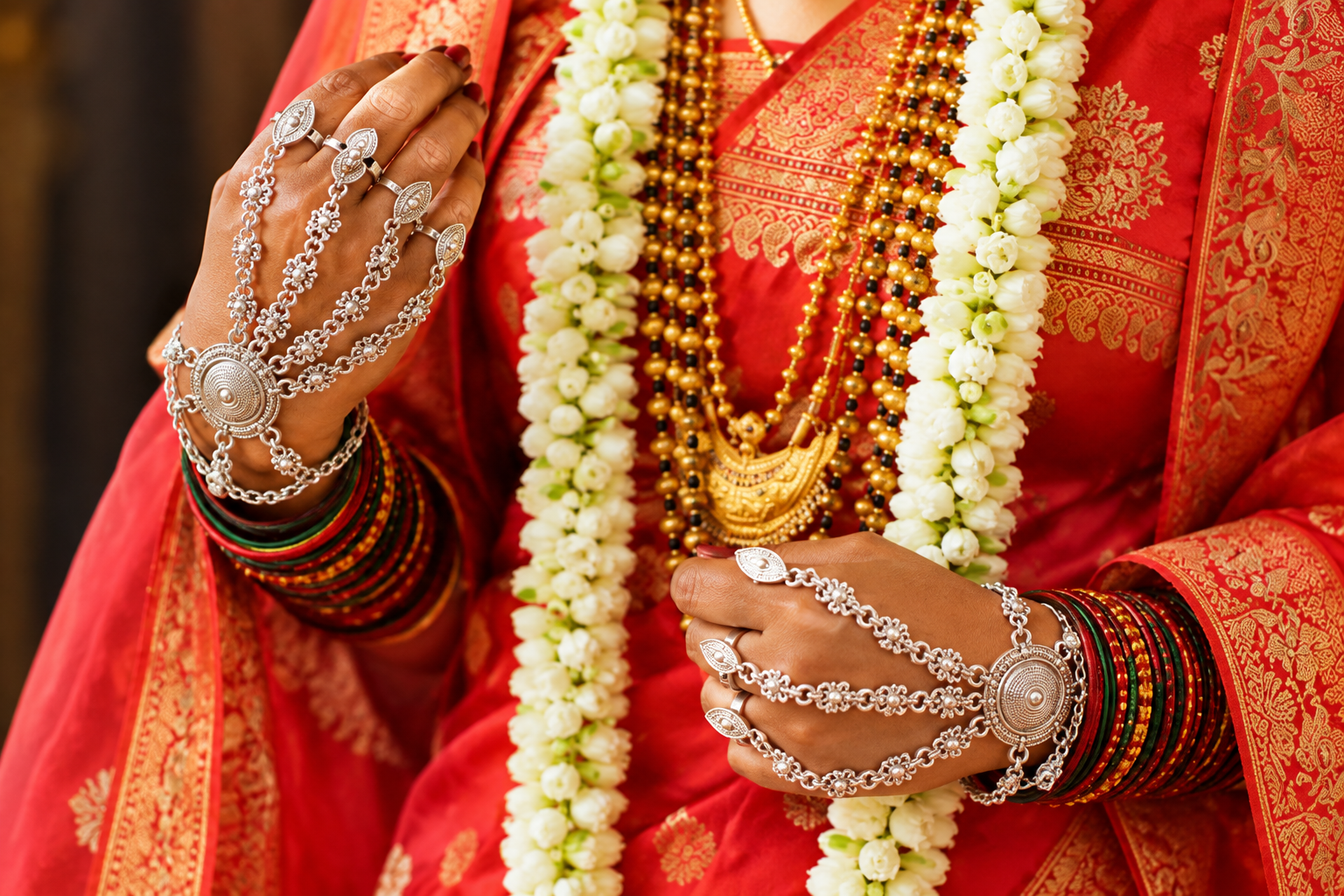
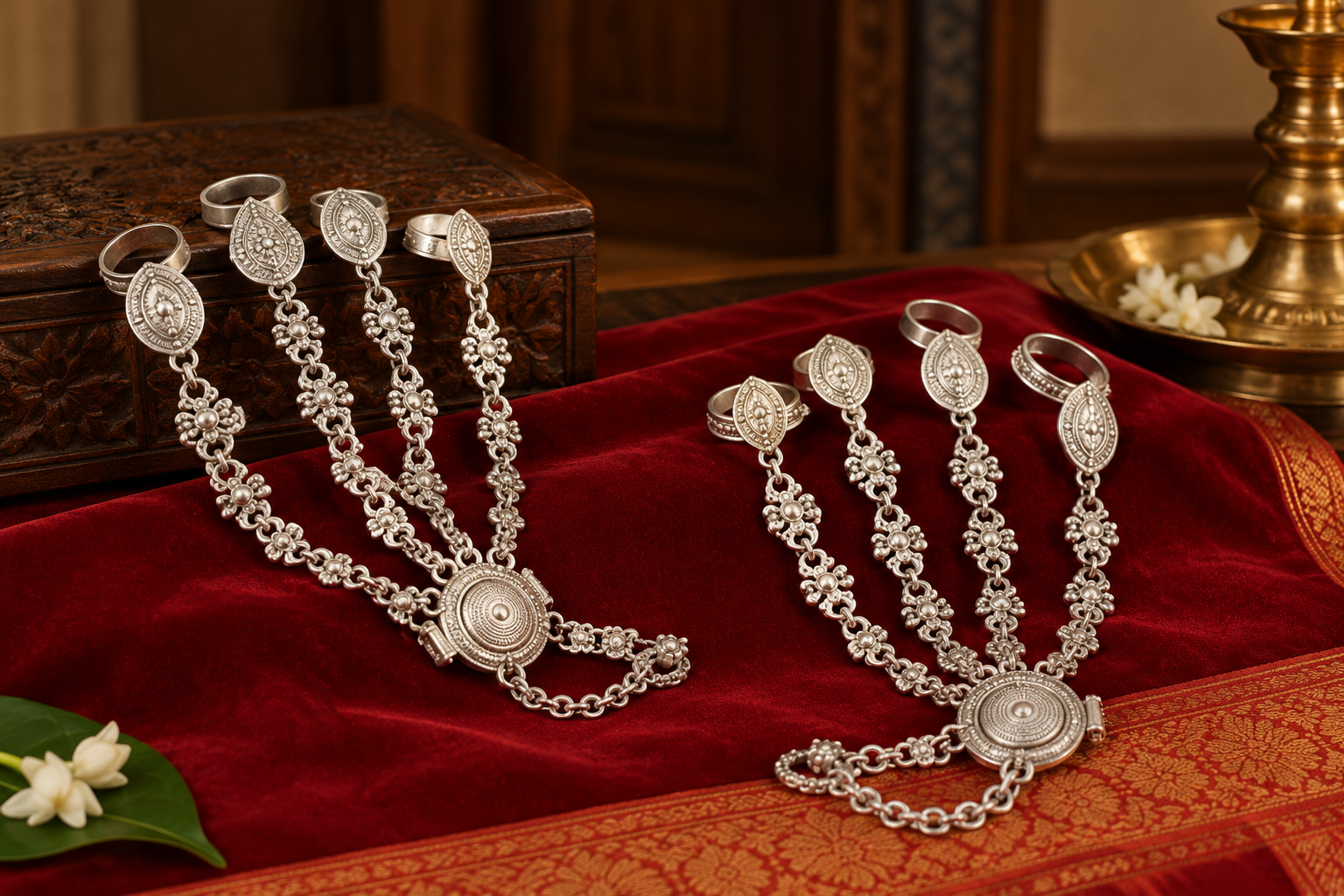
Kaipili is an important component of the traditional jewellery worn by a Kodavathi bride. The ornament is designed to adorn the hands, with silver rings worn on the fingers connected by fine chains to decorative elements placed across the back of the hand and around the wrist.
The arrangement combines rings, chains and ornamental silver motifs into a single coordinated piece. The intricate workmanship gives the ornament a distinctive appearance while allowing it to sit naturally across the hand.
As part of bridal adornment, Kaipili contributes to the complete traditional appearance of the Kodavathi bride and represents the importance given to jewellery in Kodava wedding traditions.
Traditional use: Kaipili is traditionally worn by the Kodavathi bride as part of her bridal jewellery, adorning the fingers, back of the hand and wrist with interconnected silver chains and decorative elements.Kaipili consists of finger rings connected by delicate silver chains, with ornamental pieces arranged across the hand and a larger decorative element near the wrist.
The chains allow the different components to move naturally with the hand while maintaining the overall arrangement of the ornament
Cultural significance: Kaipili forms part of the traditional bridal jewellery of the Kodavathi. It is not simply an ornament for the hand but contributes to the distinctive visual identity of a Kodava bride during marriage ceremonies.
The use of silver and intricate interconnected craftsmanship reflects the importance of jewellery as part of traditional ceremonial dress.
Historical context: Traditional Kodava bridal jewellery developed as a distinctive system of ornaments worn together as part of ceremonial attire. Kaipili belongs to this wider tradition of jewellery associated with the Kodavathi bride.
Its craftsmanship also reflects the skills of traditional silversmiths who produced detailed ornaments for ceremonial and family use.
Kaipili requires skilled traditional silver craftsmanship. Individual rings, chains and decorative elements are formed separately and then carefully joined together.
The ornamental portions may be shaped, engraved or worked with fine detailing before being assembled into the complete hand ornament. The final piece requires careful finishing so that the chains and rings remain flexible and comfortable to wear.The most distinctive feature of Kaipili is its interconnected construction. Multiple finger rings are linked through delicate chains and ornamental elements, creating a unified piece that follows the contours of the hand.
The fine silverwork and detailed decorative motifs demonstrate the skill required to produce traditional bridal jewellery.
Reason for decline: Not Declining
Revival efforts: Kaipili can continue to be preserved through its use in traditional Kodava weddings, cultural events and heritage documentation.
You are preserving Kaipili ಕೈಪಿಲಿ — Traditional Silver Hand Ornament.