| ||||||||||||||||||||||||
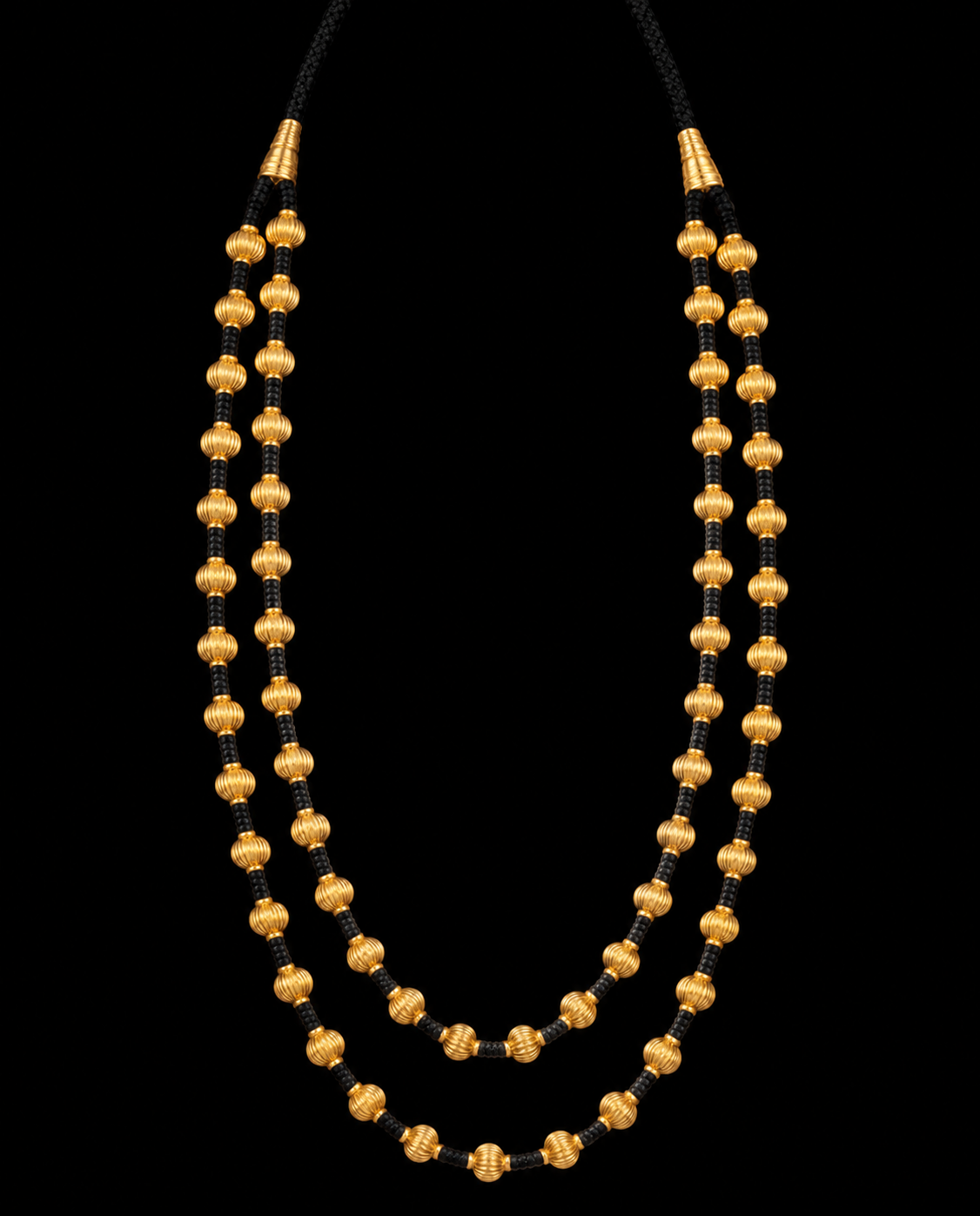
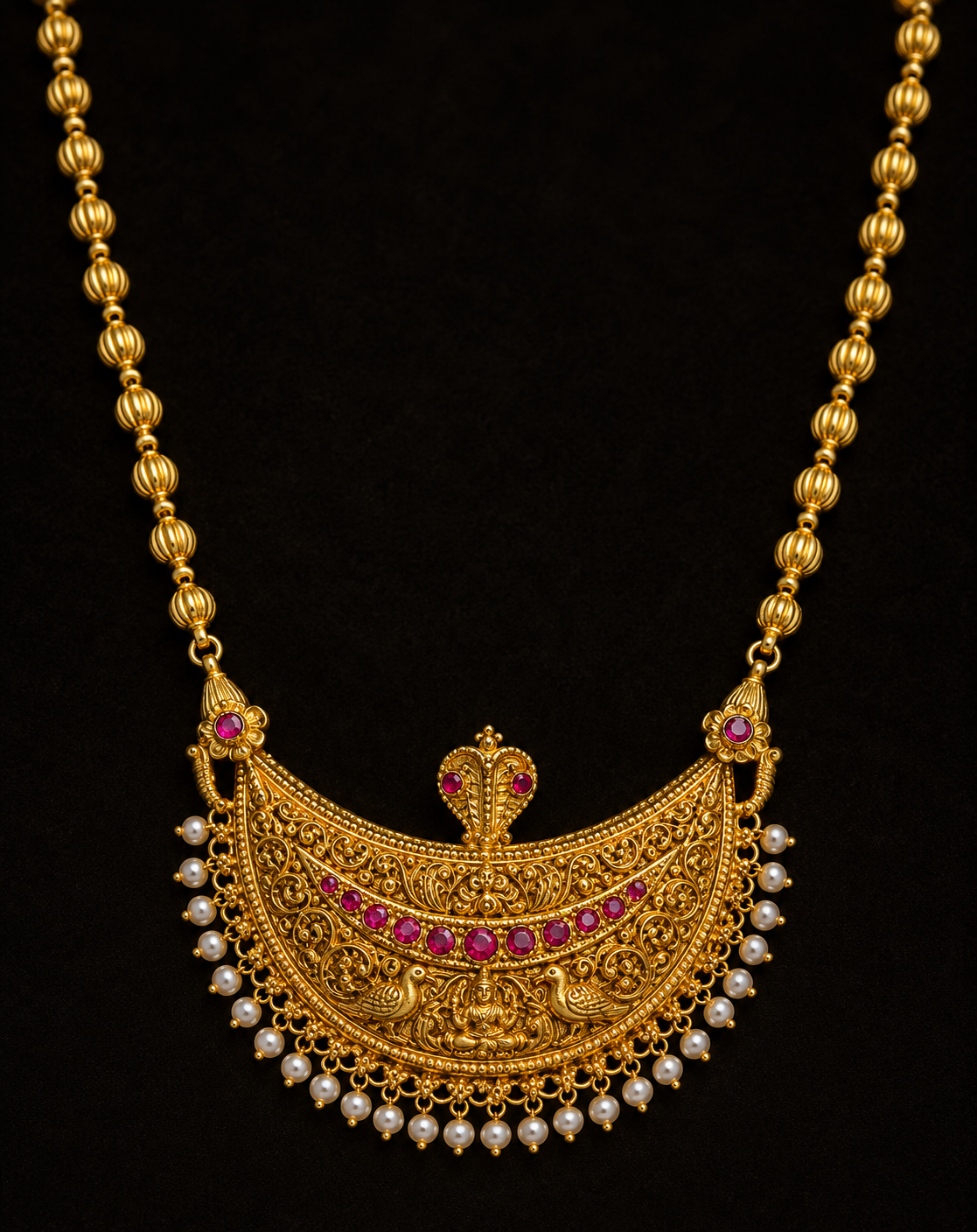
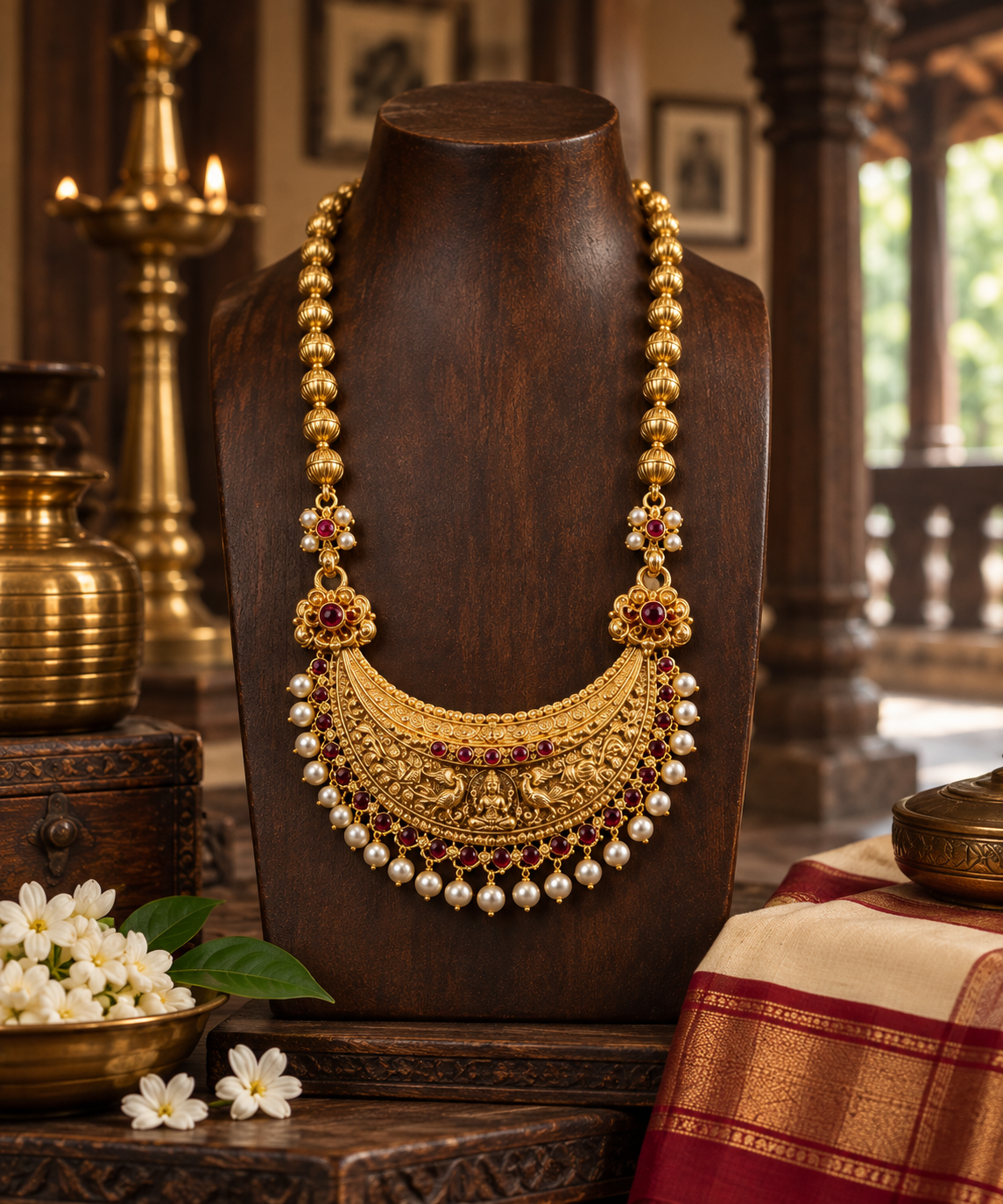
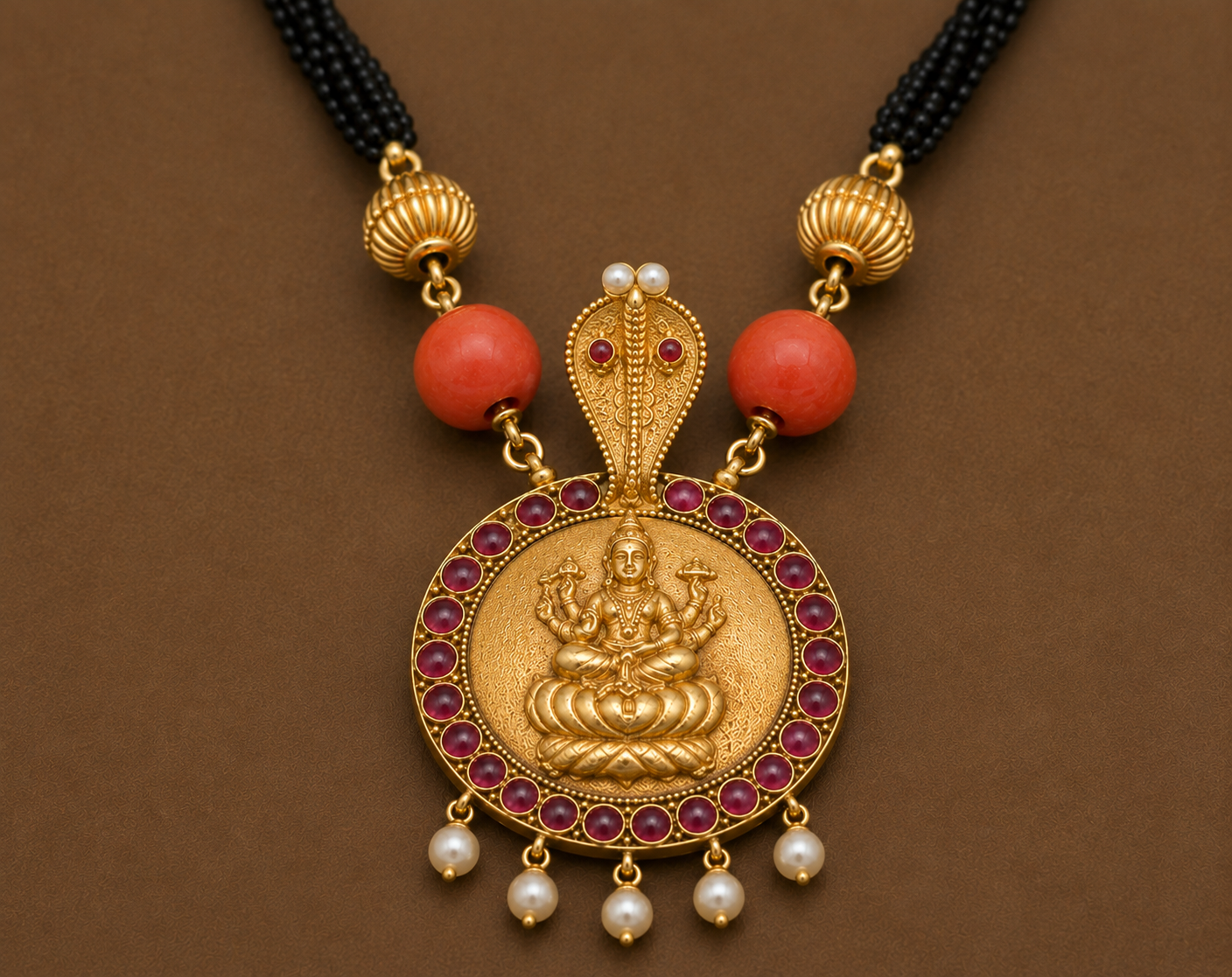
The Kokkethathi consists of a crescent-shaped pendant set with rubies and framed with pearls. The pendant is filled with lac and features the image of a seated Lakshmi, the Goddess of Wealth, flanked by two birds and a cobra with a distended hood. The pendant is attached to a long, single-row chain made of Gund, or hollow gold beads
Traditional use: The Kokkethathi is a mandatory part of the traditional jewellery of a Kodava bride. It is worn as an important neck ornament during the wedding ceremony and forms part of the distinctive Kodava bridal jewellery ensemble.
Cultural significance: The Kokkethathi carries strong symbolic meaning. The seated Lakshmi represents the Goddess of Wealth, while the birds and the cobra with its expanded hood contribute to the pendant's symbolism of wealth and fertility. Its mandatory place in bridal jewellery gives it particular importance in Kodava wedding tradition.
Historical context: The Kokkethathi belongs to the traditional jewellery heritage of Kodagu and has been preserved as an important element of Kodava bridal attire. Its combination of religious imagery, natural motifs and precious materials reflects the distinctive character of traditional Kodava jewellery.
The pendant is crafted in a crescent form, with rubies set into the gold and pearls forming its outer frame. The hollow pendant is filled with lac, while the decorative figures and motifs are incorporated into its face. The pendant is then attached to a long single-row chain of hollow gold Gund beads.
Reason for decline: not declined
Revival efforts: The Kokkethathi can be preserved through its continued use in traditional Kodava weddings, documentation of family heirlooms, photographic recording, oral histories and preservation of the traditional jewellery-making techniques used to create the pendant and Gund bead chain.