About the Object
Hande is a large traditional vessel used primarily in the bathroom to heat water.
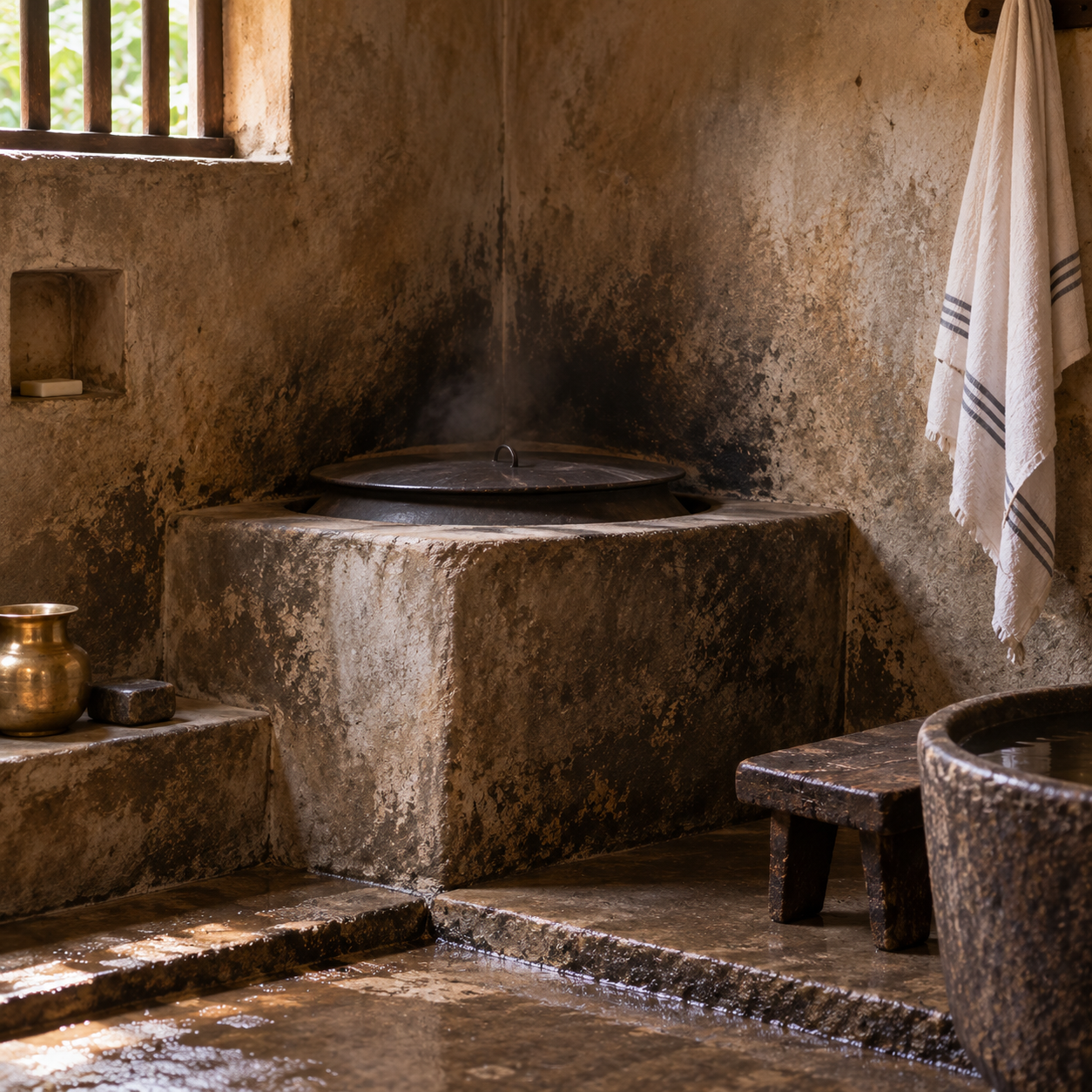
Hande was a large, heavy vessel associated with the traditional bathroom or Gudda of earlier households. It was used to heat a large quantity of water for bathing, particularly when bathrooms were equipped with wood-fired heating arrangements.
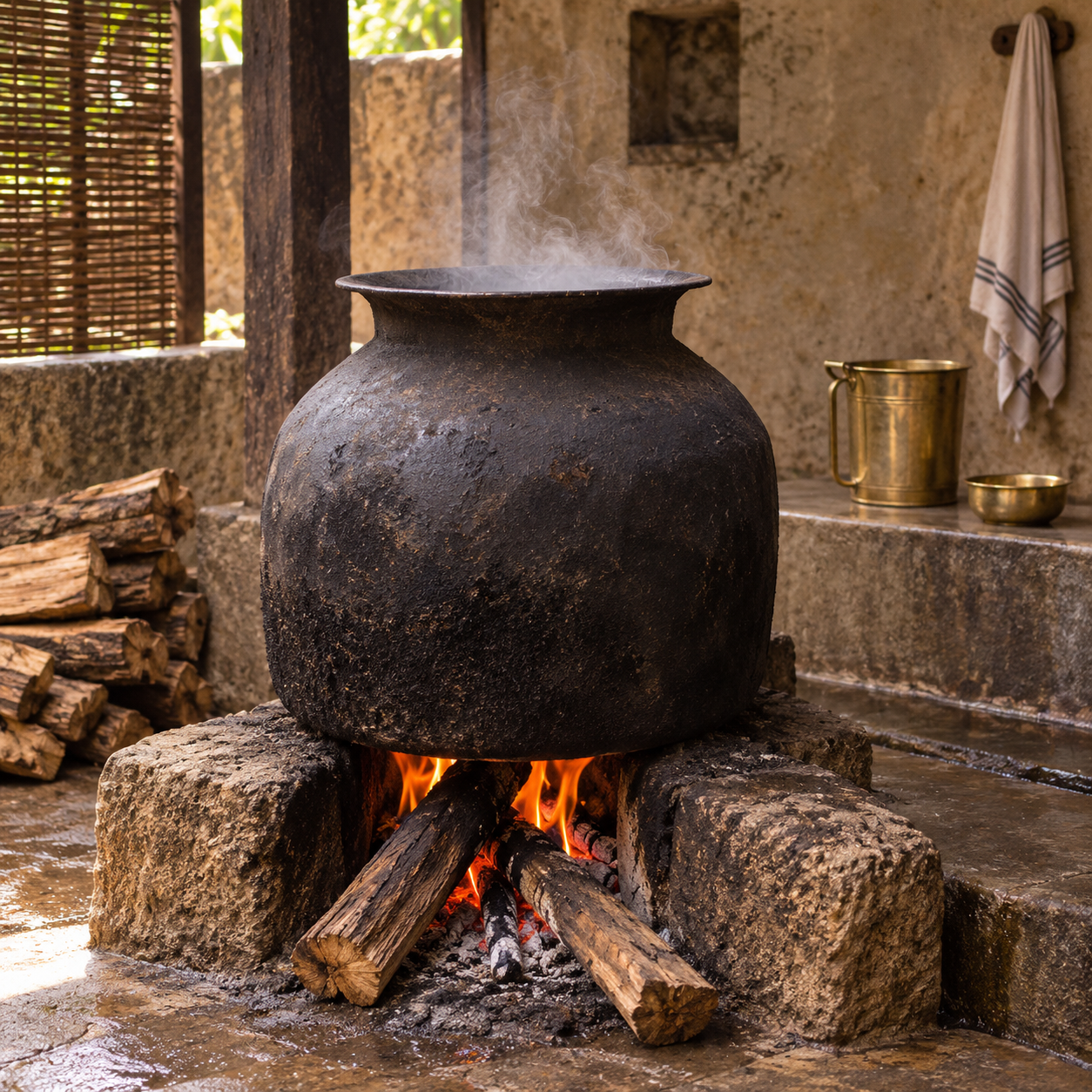
The vessel was generally broad and deep, allowing sufficient water to be heated for household bathing needs. A wood fire was built underneath or around the base of the vessel, as shown in traditional examples.
The image reference represents the characteristic old form: a large, darkened vessel with a broad rounded body, relatively small opening and heavily weathered surface resulting from repeated exposure to fire and heat
How It Was Used
Traditional use: Primarily associated with the Gudda / traditional bathroom, where the vessel would be positioned over a wood-fired hearth.
Heating water for bathing
Providing hot water for members of the household
Used in traditional bathrooms
Heated over a wood fire
Cultural significance: Hande represents the traditional system of heating bath water using firewood, before modern geysers and electric water heaters became common. It was an important part of the infrastructure of the traditional household bathroom.
Historical context: In earlier Kodava homes, bathing arrangements were closely connected to the household's use of firewood and traditional bathroom spaces. Hande provided a practical way of heating sufficient water without modern heating equipment.
Material & Making
BrassIron
Traditional Hande vessels were produced using metalworking techniques suited to creating a large, heat-resistant vessel. Heavy metal construction provided durability and allowed the vessel to withstand repeated heating and cooling.
Hande varied considerably in size depending on the household and the quantity of water required. Larger examples were suitable for heating water for several members of a household.
Who Used It? / Where? / When?
OwnershipNot yet recorded
Period
Pre-colonial
Status of traditionNearly extinct
The Tradition Today
Reason for decline: Hande declined with the introduction of electric geysers, LPG/gas water heaters, modern bathrooms and piped hot-water systems. As traditional wood-fired bathrooms disappeared, the need for large water-heating vessels also diminished.
Revival efforts: Surviving Handes can be preserved in traditional homes, heritage properties and museums. Demonstrating the traditional process of heating bath water can also help younger generations understand how domestic life functioned before modern water heaters.